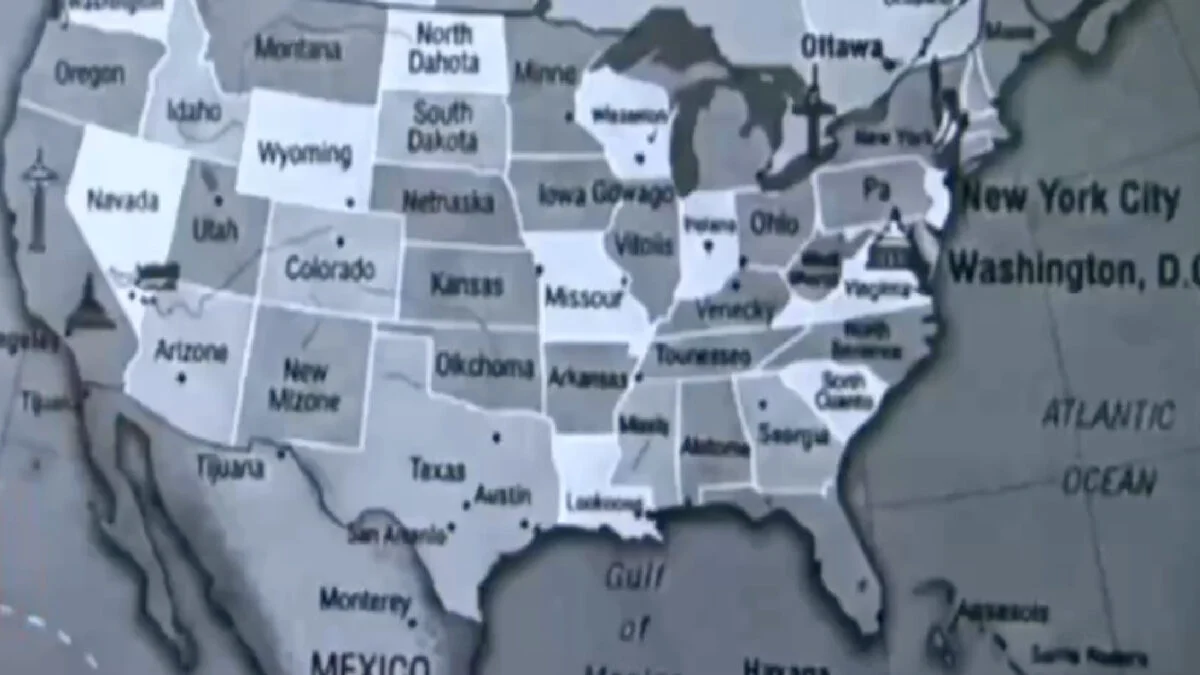
I opened the middle school agenda and felt my stomach drop. The U.S. map labeled Illinois “Vitoiis,” Kentucky as “Venecky,” and added a planet named Marc — and it had been handed to kids. You can imagine the conversation that followed in my head.
I followed the trace of the mistake like a reporter with a magnifying glass, and I want you to follow this with me: where did these images come from, which AI produced them, and how did no adult stop it?
The agenda actually called Illinois “Vitoiis” and Kentucky “Venecky” — a real school handout showed those names
The story first surfaced locally via WDRB, which posted video of the gibberish-filled Farnsley Middle School agenda. The district offered only that it was “communicating with parents about the issue.” That thin response left a gap I wanted to fill.
I don’t lay this entirely on the software. AI can make confident nonsense — like a cracked compass — but a human adult still needs to spot-check before distributing materials to students.
Which AI chatbot created the nonsense map?
I tested the usual suspects. OpenAI’s ChatGPT, Anthropic’s Claude, and xAI’s Grok all rendered normal maps and periodic tables when I asked for them; Claude even used state abbreviations instead of full names. Google’s Gemini, though, which uses Nano Banana for image creation, produced outputs that read like the school’s monstrosities.
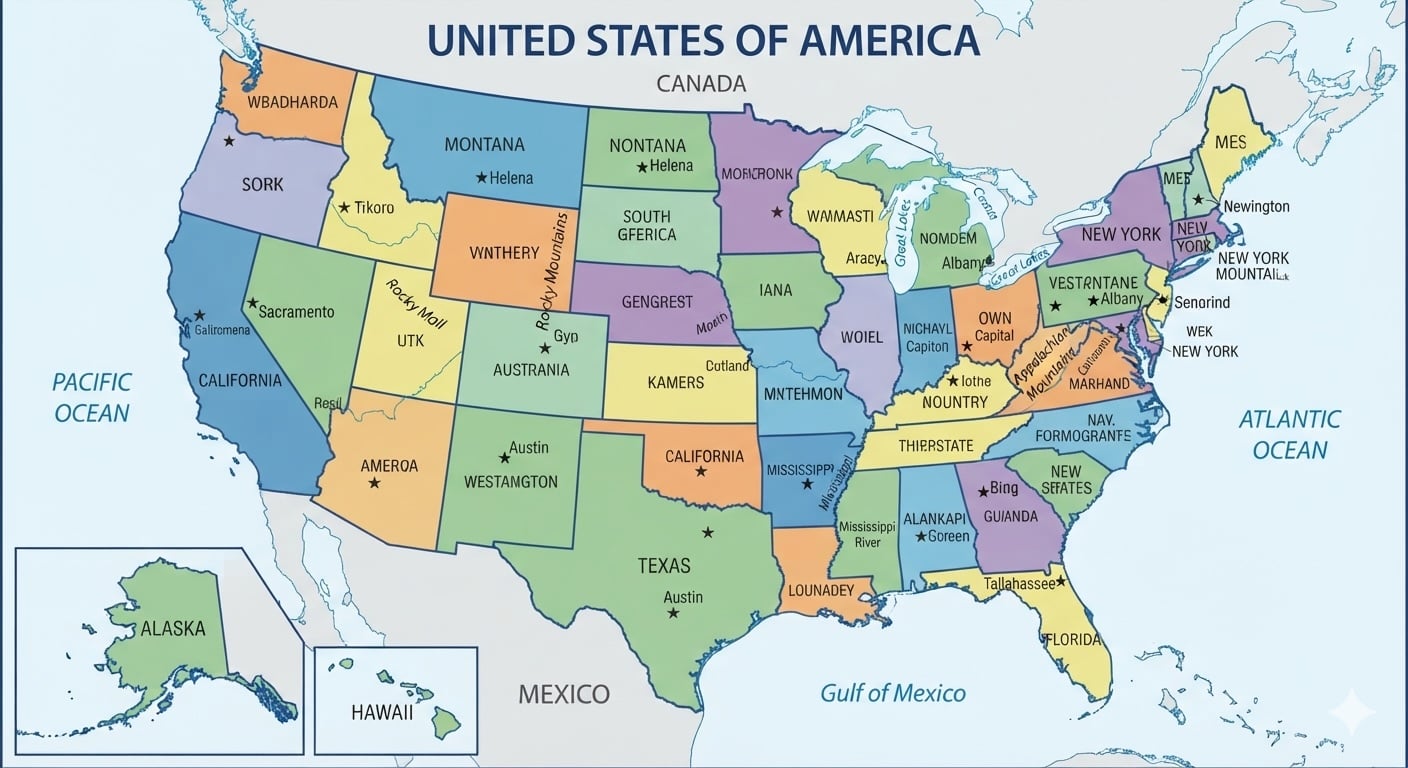
That doesn’t prove the school used Gemini, but it narrows the field. Another possibility: the images were generated months earlier with older models that were more prone to hallucination and then kept in a file folder until someone repackaged them into the agenda.
I fed the same prompts to major chatbots and got different results — real testing exposed a pattern
When I prompted several models to “generate a labeled map of the United States” and “create a periodic table for classroom distribution,” results diverged. ChatGPT and Grok returned accurate labeling. Claude prioritized compactness with abbreviations. Gemini’s Nano Banana occasionally invented names.
There are three likely explanations: the school used a specific problematic model, the images were old artifacts, or an obscure vendor sold a packaged tool with poor quality controls. The U.S. State Department recently mislabelled Africa at a global conference, per Reuters, showing these errors still crop up even in official settings.
How did this pass human review?
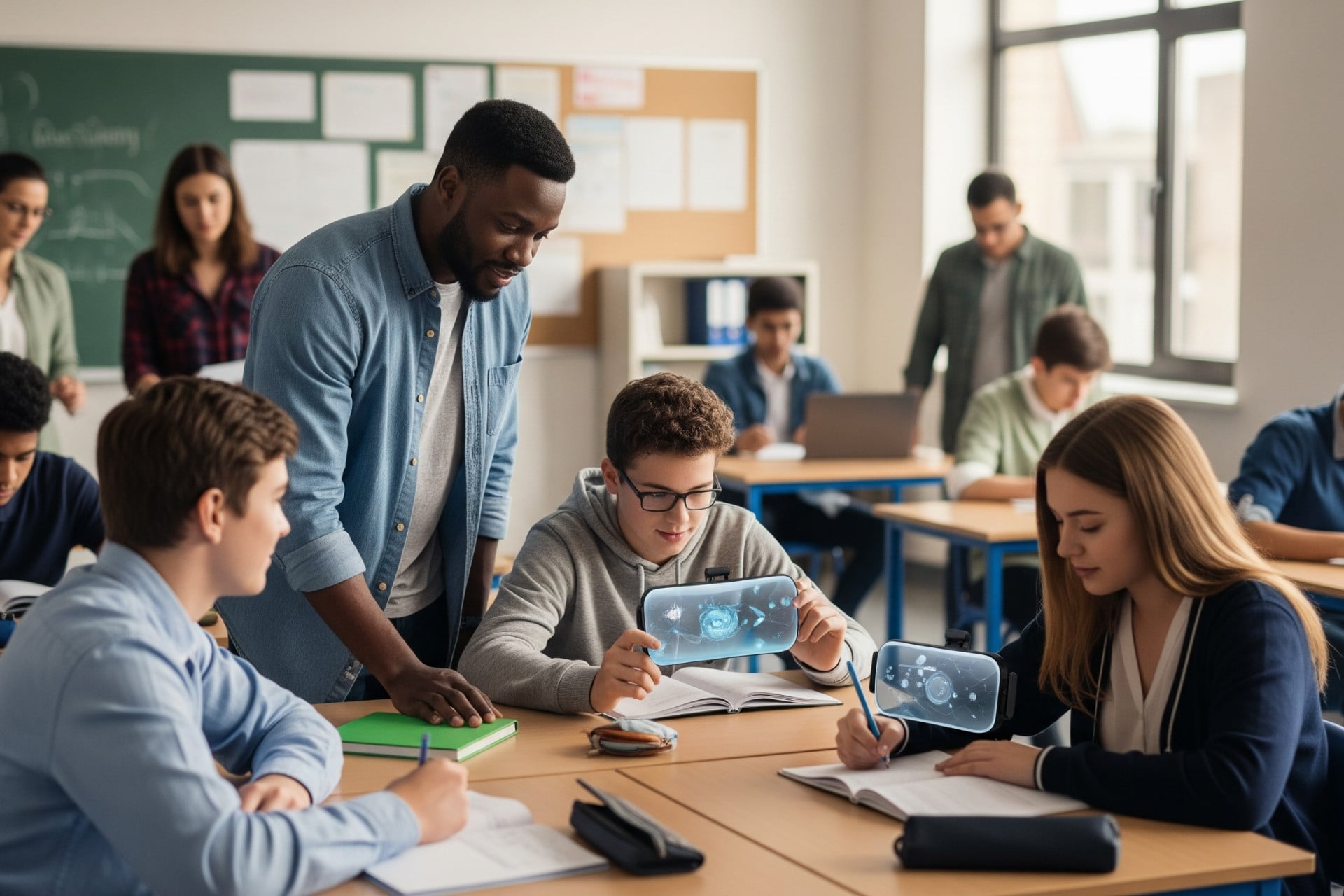
The Jefferson County Public Schools site insists that GenAI is a tool to “enhance learning, teaching, and operational efficiencies,” but the evidence on their own pages includes AI images with too many fingers and a tablet floating in midair. That suggests systemic complacency rather than a single careless employee.
If you run or advise school tech, ask these three questions: which model generated it, who reviewed the final assets, and what was the sign-off chain? If those answers are missing, the next agenda can be worse.
The district’s website itself contained AI oddities — a real sign of sloppy procurement or training gaps
Jefferson County Public Schools has an AI page with optimistic language and an image gallery showing clear generation errors. That’s not a single mistake; it’s a pattern of failing controls.
I’ve advised teams that adopt generative systems: keep an approved asset library, require human sign-off for anything distributed to students, and log model versions and prompts. Treat AI outputs as drafts, not final products. Otherwise the tool becomes a crutch and the result appears like a stage prop — convincing until someone looks closely.
Can schools use generative AI safely?
Yes — but only if the adult chain-of-command insists on basic verification. Use sandboxed models, keep human review mandatory, and document the source of every image or worksheet you hand out. Vendors such as OpenAI, Anthropic, xAI, and Google provide different quality profiles; choose the one that fits your tolerance for risk and add your own guardrails.
At this point the district hasn’t shared which tool produced the agenda, and parents are right to demand transparency. I’ll continue to ask Jefferson County Public Schools and report what I find. Which model would you ban from a classroom tomorrow?