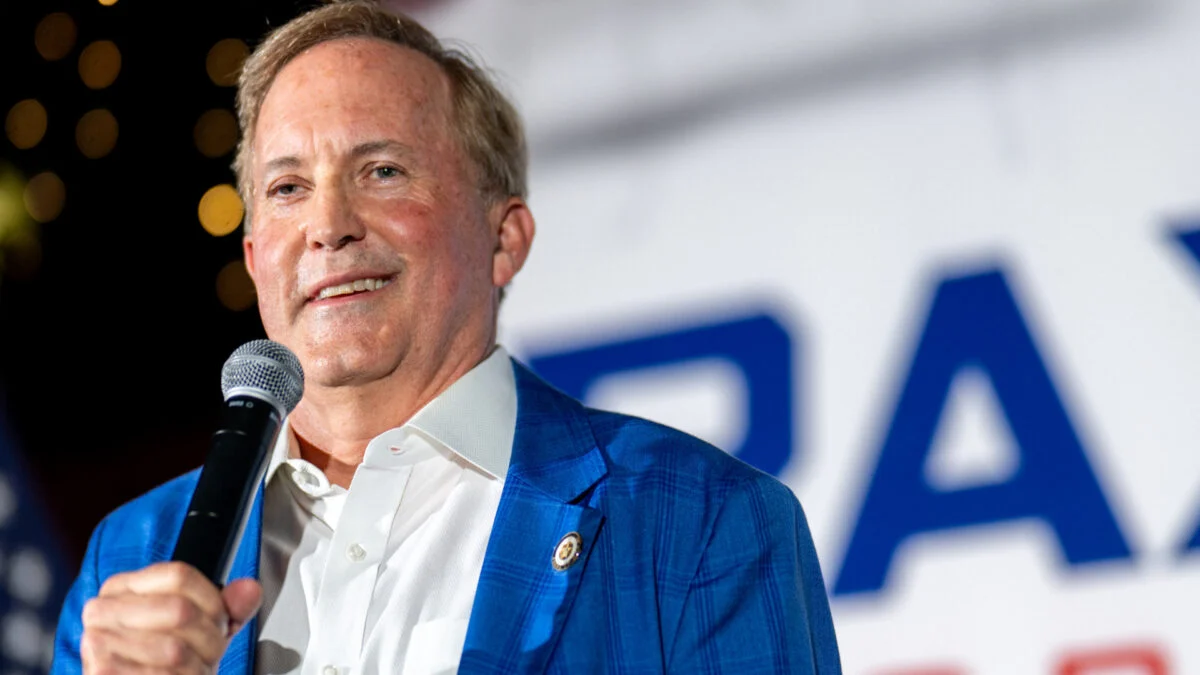
He strode onto a Texas stage and promised to clamp down on the machines that have quietly reshaped rural towns. I scribbled a question in the margin: can a scandal-scarred attorney general win back voters by targeting server farms and AI chatbots? You could feel the map of political risk redraw itself—local utility fights on one side, the White House’s pro-AI push on the other.
I’m going to lay out what Ken Paxton’s new pitch actually does, who it helps, and where it could blow up in his face. Read this the way I do stories: watch the moves, follow the incentives, and ask the hard question at the end.
A small West Texas city now hosts OpenAI’s Stargate — Paxton’s pivot is a policy play disguised as a culture-war signal
Paxton released what he calls a Texas First Data Center Plan, four points sketched to capture voter anger over AI and the sprawling server farms that power it. In plain terms: ban Chinese-made tech inside Texas data centers, push criminal liability for companies that enable chatbots deemed unsafe for kids, co-sponsor Sen. Tom Cotton’s DATA Act to encourage off-grid power, and back Governor Greg Abbott’s audits and rules.
That platform reads like a blend of national security hawkishness and local grievance politics. I’ve covered similar pivots: you swap complicated technical debates for a few visceral themes—foreign influence, protecting children, and hometown stressors—and suddenly you’ve got headlines instead of white papers.
A tractor town an hour from Austin now fields complaints about noise and power — what Paxton’s plan would actually change on the ground
Paxton promises criminal penalties for tech firms whose AI allegedly endangers kids, and a ban on Chinese hardware. Practically, that would create compliance chokepoints for vendors, push procurement decisions, and accelerate audits by the Public Utility Commission of Texas.
What is Ken Paxton’s data center plan?
Short answer: restrict certain suppliers, hold companies accountable for AI content impacts, support the DATA Act’s off-grid incentives, and champion state-level oversight. The plan pairs legal teeth with political theater—an attempt to turn technical feedlines into campaign talking points.
You should note the players: Sen. Tom Cotton’s DATA Act pushes federal flexibility that the Trump administration has favored; Gov. Abbott has already ordered PUC and grid-operator reviews; and the EPA has signaled looser pollution rules for off-grid power plants, a shift reported by Reuters that changes the calculus for generators.
A county water board meeting now ends in standing-room-only crowds — the local backlash is not abstract
Communities hosting data centers complain about rising utility bills, water drawdown, and 24/7 noise. OpenAI’s Stargate in Abilene and SpaceX’s Terafab in Austin are concrete examples of how flagship projects reshape local economies and infrastructure. The state ranks second only to Virginia in data center concentration, according to Data Center Map, and residents are starting to push back.
The data center boom has felt like a modern gold rush, with towns trading quiet fields for humming warehouses. That metaphor isn’t flashy; it explains why rural officials suddenly learn grid engineering and environmental permitting overnight—you don’t replace a municipal well as if it’s a zoning change.
A campaign stop in a MAGA stronghold now draws mixed applause — Paxton’s gamble risks clashing with Trump’s pro-AI posture
On the national stage, the White House and certain Republicans have been strong backers of the AI buildout. President Trump recently told Michael Cohen that data centers create “tremendous amounts of jobs and money” and that communities refusing them would be making a mistake. That position gives companies political cover and a high-profile ally.
Will Paxton’s stance conflict with Trump on AI and data centers?
It might. Paxton is courting voters furious about local impacts and alarmed by AI’s social effects; Trump is publicly bullish on the industry’s economic payoff. Paxton’s move is an attempt to thread a needle: satisfy grassroots anti-AI sentiment while staying within the broader pro-growth Republican coalition. I think it’s a high-risk strategy—one that could make him look independent or isolated, depending on how the national narrative shifts.
Paxton’s maneuver is like a weather vane caught between two storms: it will show the direction of prevailing winds but may spin wildly if gusts change.
An Abilene storefront meeting now includes engineers and mayors — the political math is raw and urgent
Campaigns don’t win on policy memos; they win on perceived alignment with voter pain and promise. James Talarico is already campaigning on tighter local control: sales-tax repeal for data centers, fixed water reuse requirements, and community veto power. Talarico’s pitch appeals to voters who see local consequences in their monthly bills and groundwater reports.
If you follow polls, AI has moved into public salience quickly—NBC has already added it to some survey batteries—and that network effect forces politicians to stake positions. For a candidate like Paxton, with a scandal-plagued record, the platform offers a chance to reframe his image as a defender of Texas communities. For Trump-aligned voters who prize industrial growth, it reads as an awkward detour.
A city council meeting now includes environmental lawyers — what to watch next
Watch three fault lines: local utility lawsuits and permitting fights, state-versus-federal regulatory clashes if the DATA Act passes, and the intra-party shove between pro-growth national leaders and locally anxious Republicans. The EPA’s recent move to loosen pollution rules for off-grid power shifts incentives toward private generation—something the DATA Act would accelerate—and that creates winners and losers fast.
I’ll leave you with one forced choice: if Paxton bets his comeback on painting data centers as a problem to be tamed, will voters reward a candidate who rails against an industry that promises jobs and investment or will they side with a pro-growth White House ally who says refusal is a mistake?