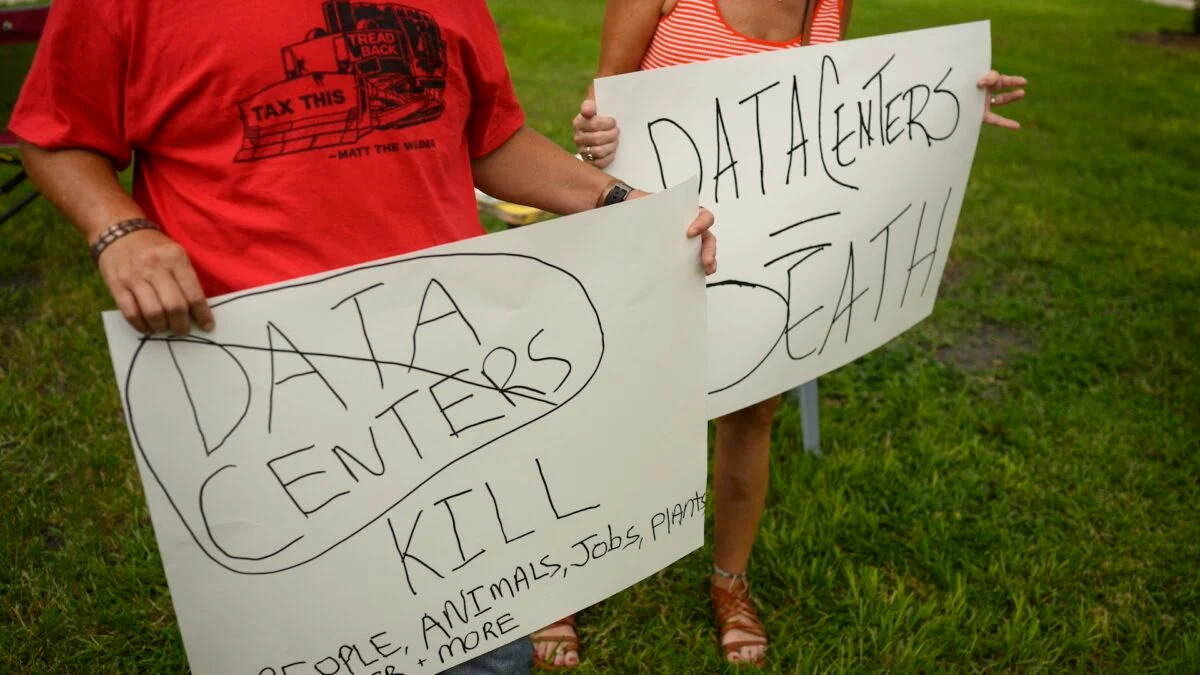
I read the permit notice at midnight and felt my town shrink. You know the sound — a distant hum, a cluster of bright industrial lights at the edge of the county line. I called three neighbors before dawn and none of them had heard a word from the county or the company.
A county planner posted a permit and residents called it a surprise
That’s the literal opening scene: a public record appears and people learn too late. I’ve covered environmental fights long enough to smell how power and speed reshape public life. The EPA’s proposal would strip the decades-old requirement that states offer a minimum 30-day public comment period under the Clean Air Act for so-called “minor sources.” If this goes through, developers could begin work before communities have had a formal chance to weigh in.
What change did the EPA propose?
The agency wants to let state and local regulators decide whether, when, and for how long to solicit public comments on preconstruction permits for minor emitters — categories that include many data centers, small manufacturing plants, and some industrial expansions. The EPA frames it as trimming red tape and putting local agencies “in the driver’s seat.” I read the press release; the language is bureaucratic and tidy, but the practical effect is to make federal notice optional.
Neighbors reported higher bills and stranger traffic patterns after a new data center opened
On paper, data centers often fall below the ten-ton threshold that defines hazardous air pollutant “minor sources.” In practice, clusters of these facilities act like a single, much larger industrial complex. The Financial Times calculated that the 60 biggest data centers under construction could emit roughly 101.5 million tons of CO2 annually once active. That scale creates regional impacts on power grids, water use, and local air quality that a single-site sticker might not reveal.
How will this affect public input?
Short answer: it shrinks the public window. For more than 50 years, preconstruction permits required public notice and a chance to comment — a sanity check that often caught underestimated emissions, faulty impact analyses, or weak mitigation plans. Attorneys general from more than a dozen states, plus the cities of Washington, New York, and Chicago, filed opposition. So did nearly 200 advocacy groups and the Southern Environmental Law Center, arguing that removing the federal baseline invites secret permitting.
A mayor read the EPA proposal and called it speeding up permits for economic growth
The rhetorical frame from the administration is familiar: faster permitting equals national advantage in the AI race. The president has presented data center objections as misinformed and suggested “smart communities” would welcome the projects. I’m not neutral about national competitiveness, but I am skeptical about silencing local conversation to get there.
There’s real money and influence in this sector — Microsoft, Google, Amazon Web Services, OpenAI partnerships, and chipmakers like NVIDIA are all stacking infrastructure bets. Those companies will lobby for speed. Local residents, by contrast, show up at council meetings with bills and health concerns. If the federal guardrail is removed, state agencies with limited staff could approve complex permits without the broader scrutiny that often surfaces errors or alternatives.
Community groups filed formal comments and legal briefs after finding out late
The reaction was immediate: coalitions filed comments on Regulations.gov, states’ attorneys general wrote a joint letter, and nonprofits appealed to the EPA to keep federal public participation standards. The Southern Environmental Law Center warned that public review improves permits by catching underestimated emissions and other mistakes before construction begins.
Are data centers major polluters?
Technically many are labeled “minor” under current thresholds. Practically, collective impact tells a different story. A single data center may register below reporting thresholds for hazardous air pollutants, but dozens in a region can stress electric grids, increase fossil-fuel generation at peak hours, and drive local emissions higher. The result is a puzzle where the parts are permitted but the whole is overlooked.
If you live near a potential site, this is personal: your tax bill, your air, your water, and the rhythm of your town can change without a full public airing. I favor innovation and investment, but I also believe local communities deserve formal, predictable opportunities to object, request mitigation, or propose alternatives. Removing that federal baseline hands more discretion to agencies that may lack capacity — or will — to hold meaningful comment periods.
Call this what it is: a curtain drawn over the town square, and inside it, a Trojan horse of speed dressed as local control. The questions we don’t yet have answers to are procedural but also ethical: who decides what counts as public harm, and who gets to be heard before the bulldozers roll?
The EPA says this is about efficiency and energy dominance; critics say it’s a way to silence community scrutiny while the AI infrastructure build-out accelerates. Which side will your local leaders choose when a permit appears in their inbox?