
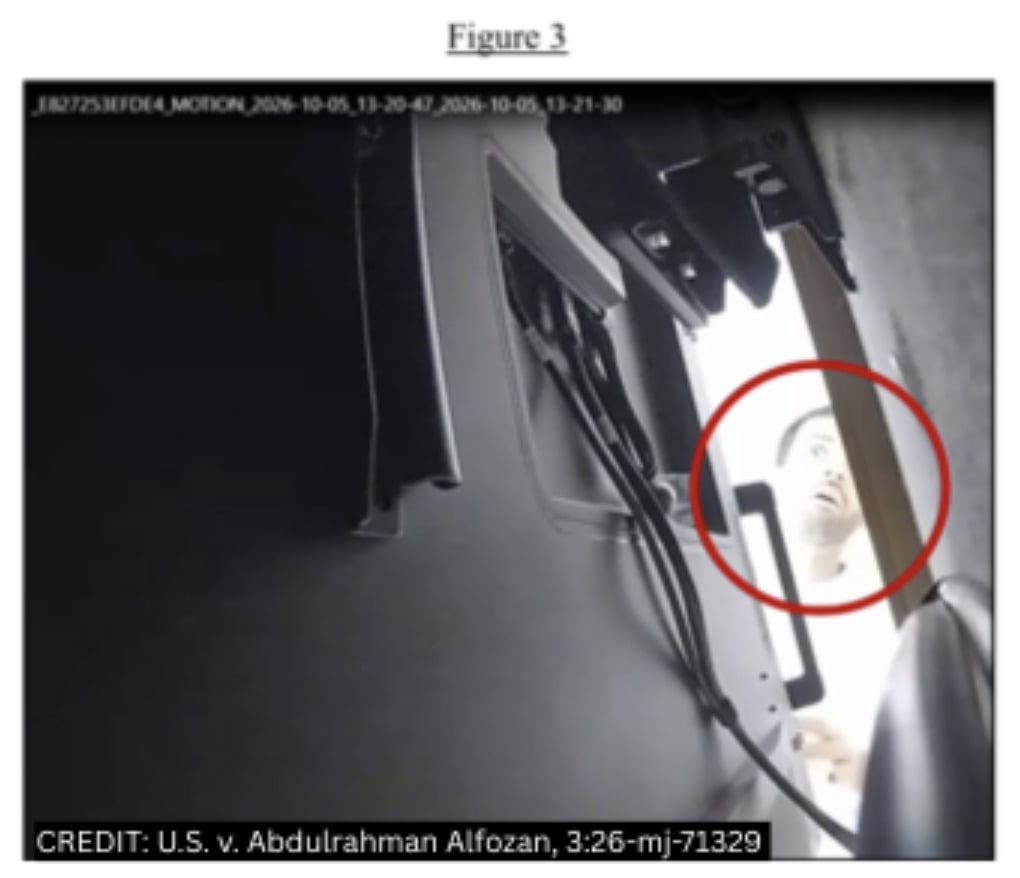
I stared at the Justice Department photo of a man peeking behind a conference-room TV and the room went small. You can almost see the circuit board, a thing the size of a thumbnail, and the word sophisticated starts to wobble. I want you to follow me: a $13.99 gadget changed the conversation overnight.
A thumbnail-sized gizmo sat behind the TV.
The device in question is the Seeed Studio XIAO ESP32-S3 Sense — a microcontroller board with a tiny camera and mic you can order off the web for $13.99 (€13). I say this because the optics of the story matter: this isn’t a bespoke spy rig from a secret lab, it’s a kit for people who like soldering and forums.
That matters to you for two reasons. First, the public imagination loves a Bond prop; second, the reality is more domestic and therefore more unnerving. The board is compact and cheap enough that, if it were a threat model, it would be a thumbtack-sized Trojan horse.
Can you buy the device used to bug OpenAI?
Yes. The Seeed product page and a handful of Arducam-sourced camera modules show you everything a tinkerer needs. The Seeed site even hosts a YouTube walkthrough turning the board into a DIY AI pin, the same class of hobby projects that birthed the Humane Ai Pin headlines.
OpenAI found it during an internal sweep.
Someone on site noticed something behind a TV on September 30, and that sighting set off an internal hunt. I’ve spoken with people who work around these processes: once a potential foreign device is spotted in a sensitive area, corporate security behaves like a pressure gauge—every sensor and log gets checked.
According to the Justice Department, the FBI’s case included chatbot prompts tied to Alfozan’s household accounts about building a continuous audio recorder, customizing Wi‑Fi, improving live listening, and encrypting storage. OpenAI says it ran its models on the device’s forensic images to stitch together who had touched what and when.
How did OpenAI find the bug?
The trail was procedural: visual detection, device seizure, forensic imaging, model-assisted analysis, and then law enforcement involvement. You don’t need my authority to see why that sequence looks like a modern detective novel where software reads the footprints left in zeros and ones.
The hardware is for tinkerers, not spy‑craft masters.
The camera module is a 2MP Arducam unit — a resolution you could call nostalgic if you owned the first iPhone. It’s blunt: blurry images, grainy video, and a 2.4GHz Wi‑Fi link that can push packets to another nearby device. That’s amateur reconnaissance, not cinematic surveillance.
The FBI alleges the device streamed data over Wi‑Fi to a second endpoint and that Alfozan later photographed himself reaching for it. The press release, and comments from FBI director Kash Patel, frame the capture as a national-security incident because of where the device sat and what was allegedly being discussed in the room.
Is the Seeed Studio XIAO ESP32-S3 Sense capable of espionage?
Technically, yes: any networked recorder can be weaponized. Practically, not without effort. A $13.99 board lacks the sensors and encryption of a professional implant; a determined attacker could improve it, but you’re more likely looking at an improvised tool assembled from hobbyist parts and online prompts than a polished surveillance platform.
I’ll be blunt: the story lands at the intersection of cheap hardware, ubiquitous AI help, and a workplace that discusses advanced research in conference rooms. Companies like OpenAI now use their own models as part of investigations, turning internal AI into an internal investigator.
For you, the lesson is simple—security has to treat humble things as potential enemies. Hobbyist boards, free cloud chatbots, and a casual Wi‑Fi configuration can combine into something that looks scary on paper and clumsy in practice. The scene leaves me with one image that won’t quit: a blurry selfie behind a TV, like a fog of static in a mystery novel.
So when you hear sophisticated in a press release, ask what that word is hiding and what it’s stretching. Is the threat the hardware, the human behind it, or the way we accept DIY tech in sensitive places—what would you change first?