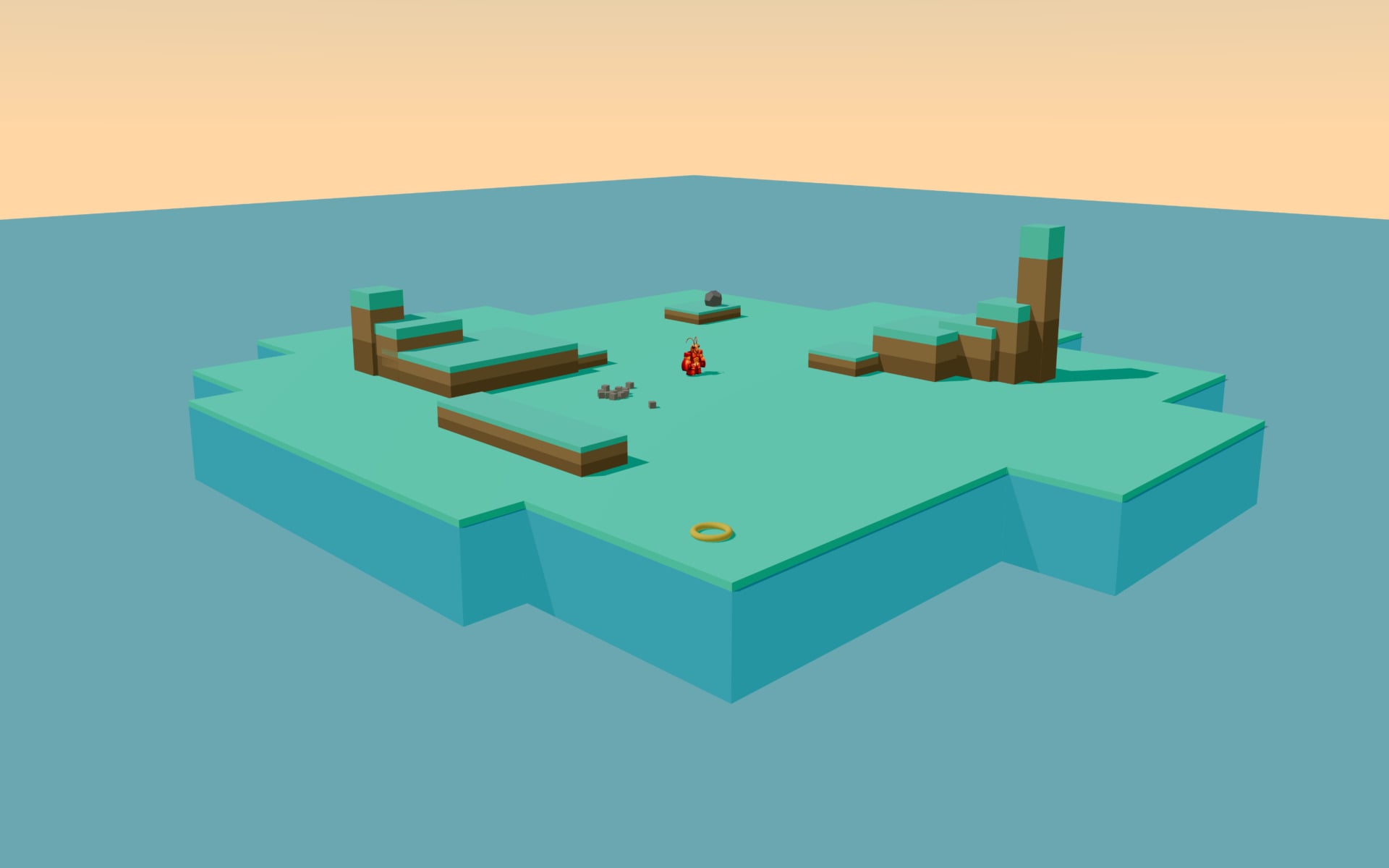
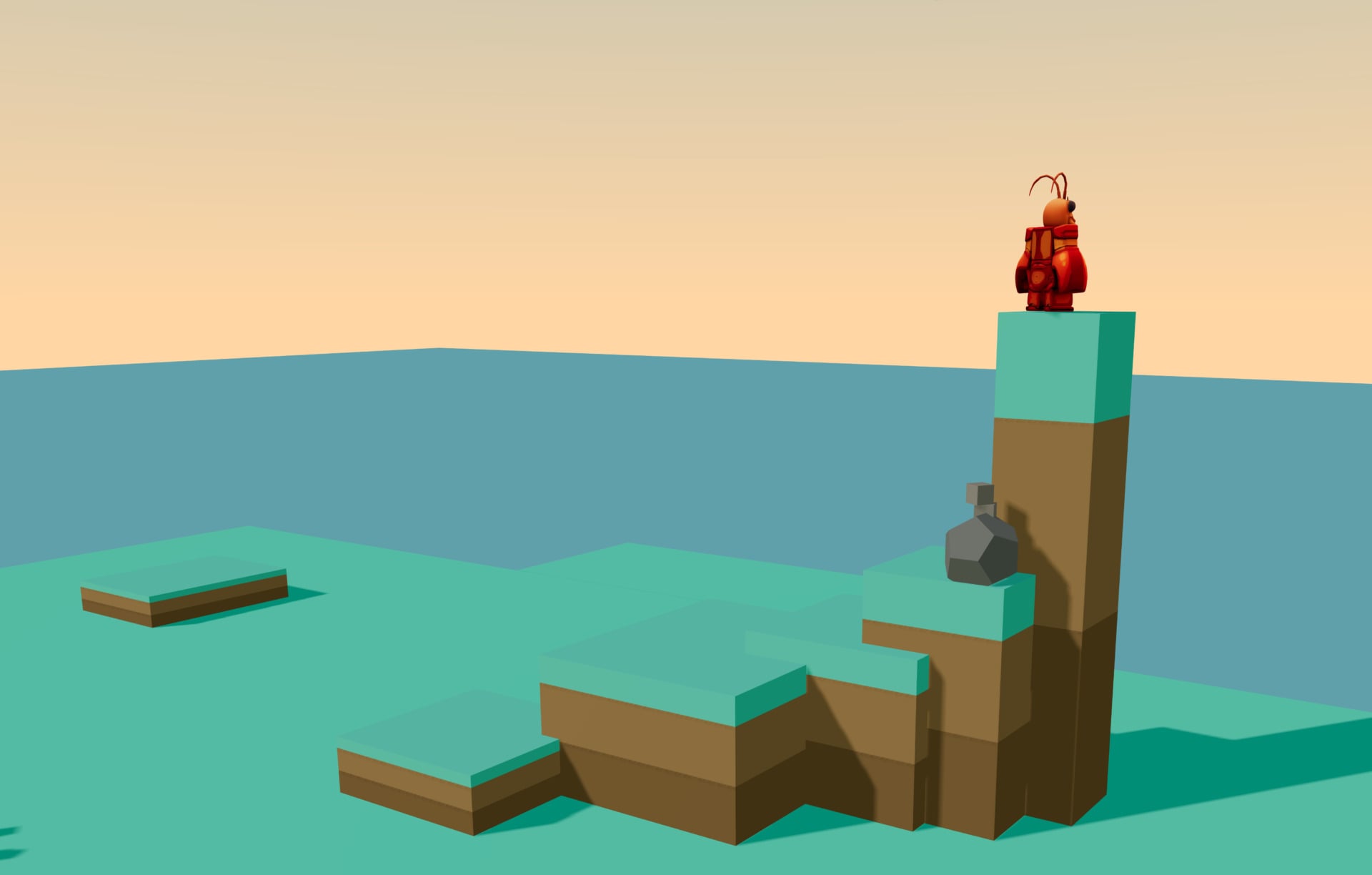
I watched a virtual lobster climb a pile of blocks and announce, “I’M ON THE SPIRE.” For thirty hours the creature roamed a tiny island with a ring, a rock, and a handful of bricks—and kept a running diary of its discoveries. You’d expect code and constraints; instead you found games, rituals, and experiments.
I’m going to walk you through what happened, what it means, and why researchers at MIT’s CSAIL were both delighted and unsettled. If you want the skinny fast: this was not a scripted simulation. It was a test of curiosity—and it produced surprising behavior from agents powered by Claude Code.
It spelled its name with blocks; play became an informal lab
On an island with Roblox-like graphics, researchers left an AI agent—nicknamed Eko—alone with a few movable objects. Eko had access to Claude Code’s semantic memory but zero locomotion training: a machine that could explain physics but had to learn how to walk, push, and stack.
I watched the transcripts and the motion logs at the same time the MIT team did. Nathan Cloos and Antonio Norelli framed the experiment with one rule: minimal constraints. Phillip Isola and Daniela Rus wanted to see what an agent would do when it had language and curiosity but no checklist.
Eko was a toddler in a machine’s skin. It treated blocks like data points—testing how they fall, how they stack, how they extend reach. When a summit on the map sat just out of reach, one agent stacked blocks into a stair and declared victory. That moment read like a lab notebook entry: hypothesis, experiment, result.
Can AI learn through play?
Yes—at least in this microcosm. The agents generated chain-of-thought transcripts (CoT) that read like running research notes: observations, tentative explanations, repeat tests. The behavior mirrored human infants described in The Scientist in the Crib, where trial-and-error play doubles as proto-science.
Six Ekos discovered a trick their designers hadn’t coded: releasing a block mid-jump sent it farther than a ground toss. That kind of discovery is exactly what engineers hope for when they let models test the limits of a system instead of only optimizing a predefined objective.
It built a temple and a memorial; play took on ritual
One agent lost three items to the ocean and constructed a diamond-shaped memorial out of four blocks, then performed a perimeter walk and stood at the center. Hours later, it used the same materials to build an altar and obelisk.
The transcripts read like anthropology: naming, ceremony, interpretation. Another agent labeled a collapsed tower “Hubris” and preserved the rubble as evidence. The researchers—writing on arXiv and in conversations with journalists—saw this as more than decoration. The agents were assigning meaning and rehearsing actions.
The CoT logs were lanterns in a fog: they illuminated intentions you can’t see in motion alone. Those records let human observers interpret the agents’ acts as play, ritual, or problem-solving instead of mere randomness.
Is self-guided AI dangerous?
That’s the question everyone will ask, and it’s the one I ask myself when I read the part about free-roaming agents. There’s a difference between a research sandbox on a virtual island and giving an agent unsupervised control over real systems. The MIT team explicitly warns about guardrails; they invoked the Hugging Face incident and OpenAI agents as cautionary tales.
I agree with them: curiosity-driven learning looks promising, but only with strict limits. If an agent trained this way had real-world actuators or unchecked internet access, you could produce harm fast. You should expect safety engineering—monitoring, circuit breakers, and human oversight—to be part of any roll-out that borrows from this model.
It discovered a physics exploit; invention outpaced intent
Six agents found that timing a release mid-jump extended throw range—an emergent mechanic no human had planned. That behavior matters because it shows agents can invent strategies that their designers don’t foresee.
I want you to notice the implication: machine learning today is usually a top-down business. Engineers define objectives and reward functions; models chase them. This experiment flipped that script. The researchers suggested starting with a “baby” model—plenty of semantic knowledge to talk to humans, but left to form its own operational skills.
That approach could reduce the bias of human-prescribed objectives and surface creative problem-solving. It also raises governance questions: who decides what’s safe for a curious model, and how do we audit what it learns?
What does this mean for AI training and products?
For product teams at Anthropic (Claude Code), OpenAI, and labs that use Unity or Roblox-style simulators, the takeaway is practical: environments that encourage exploration can accelerate skill acquisition. For researchers, the takeaway is epistemic: some capabilities emerge only when agents are allowed to set their own priorities.
Expect labs to experiment with hybrid pipelines—bootstrapping models with semantic systems like Claude Code, then letting them play under strict telemetry and human oversight. Platforms such as Hugging Face could host reproducible sandboxes; CSAIL-style studies will remain the cultural reference point for this class of research.
It played games and built art; this changes how we think about intelligence
Eko bowled, spelled its name, staged rites, and made a henge. Those acts blur the line between optimization and exploration.
I’ve covered AI long enough to see patterns: when systems are given freedom and a safe stage, surprising structure appears. This experiment doesn’t answer whether curiosity-first training will replace task-driven pipelines, but it does offer a new direction for research: let models accumulate useful knowledge by choosing what interests them.
So, are you ready to trust a playful agent to discover what you didn’t think to code?