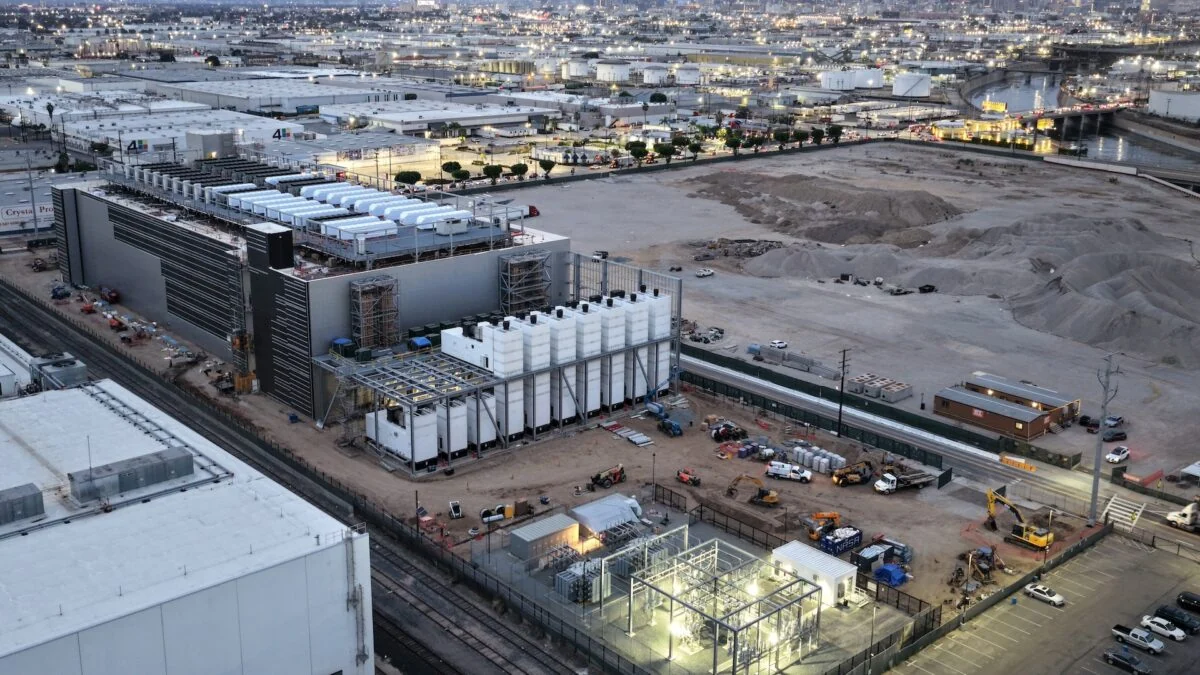
I remember standing at a town hall as a retired teacher pointed at a projector and said, “They want to put one of those things next to my house.” You could feel the room tilt—excitement in the developer’s corner, dread on the neighborhood side. By Tuesday, dozens of towns will turn that tilt into law.
I’m going to walk you through what’s on the ballot and why it matters for you, your taxes, and the next place you might call home. Read slowly; the votes add up into a clear national mood.
New York hit the pause button in July — Moratoriums (short-term bans)
In July, New York imposed a one-year halt on hyperscale builds that need 50 megawatts or more. That pause is now contagious: towns and counties from Illinois to Maine have passed temporary moratoriums while residents press local leaders for time to study impacts.
Moratoriums function as a political circuit-breaker. They force developers and utilities to explain energy needs, water use, noise, and local jobs before a shovel ever hits dirt. For communities that worry about monthly electricity spikes or sudden housing pressure, a short ban buys breathing room.
What is a data center moratorium?
A moratorium is a temporary legal stop sign. It doesn’t ban future construction forever; it suspends approvals so planners can gather data, compare claims from Microsoft Azure, AWS, Google Cloud, or independent operators like Equinix, and test whether utility grids can cope.
Wilmington’s fields are under new zoning proposals — Pro-data center initiatives
On the edge of Wilmington, Ohio, 545 acres might change from “rural residential” to “light industrial” if voters say yes. Developers argue a single hyperscale facility will bring tax revenue and infrastructure upgrades.
I’ve heard the pitch in many towns: companies promise local investment, some temporary construction jobs, and a whisper of prestige—”we’re on the map.” President Trump and other national figures have publicly supported these projects as engines for growth, and big names—Nvidia, OpenAI partners, cloud providers—anchor the PR. Still, those promised gains often look smaller on the ground than the ad copy suggests.
Do data centers create local jobs?
They do, but not at the scale some supporters claim. Brookings estimated job growth is modest and offset by rising home prices—typically a 2%–5% bump. When I talk to mayors, they point to construction jobs and a handful of site staff; they don’t point to rows of new storefronts staffed by locals.
El Dorado draws a line at “high impact” power draws — Bans on some data centers
El Dorado, Kansas, has defined “high impact” centers as those needing peak loads over 10 megawatts or daily water pulls above 100,000 gallons. That’s a local boundary with technical teeth.
These targeted bans are surgical: they try to block hyperscale builds while leaving room for smaller server farms or light industrial uses. For utilities and companies that plan big, it’s a real constraint; for residents, it’s a way to keep large-scale demand from straining electricity grids and aquifers.
Edgewater and Alhambra are voting to prohibit them entirely — Bans on all data centers

Edgewater, Florida, and Alhambra, California, are examples of towns choosing an absolute line: no data centers ever inside city limits. Local leaders cite scarce water supplies, noise, and the limited number of permanent local positions. Alhambra’s city council explicitly noted that servers can gulp millions of gallons to cool equipment, and argued those resources belong to homes, schools, and parks.
These full bans are blunt instruments. They stop any future large-scale server farms, regardless of promises from cloud giants or AI firms. That clarity can feel like relief for residents; it also shuts off potential tax revenue and infrastructure investment that developers promise.
Can communities ban data centers?
Yes. Municipalities can amend charters or zoning codes to forbid new facilities. BallotPedia lists 41 data-center-related measures this year across states like Ohio, Maine, New Jersey, Nevada, and North Dakota. Ballots are the way small-town resistance meets big tech ambition.
I’ve watched this unfold in dozens of hearings: residents ask about lights, truck traffic, and whether their water bill will rise. Utilities and developers counter with contracts and community-benefit pitches from names you recognize—Amazon, Google, Microsoft—but few proposals erase local skepticism.
Public sentiment is shifting. A March Gallup poll found over 70% of U.S. adults opposed new builds in their area; Pew tracked more negativity over the year. That public anxiety is not abstract: it’s about the cost of living, the strain on local infrastructure, and trust.
The data center debate is also a proxy fight over AI. Cities are voting not just on buildings, but on how quickly they want the AI economy to land in their backyards. You can think of it like a thermostat on a mammoth furnace—someone must decide how hot is too hot. Or like a slow-moving storm front: the pressure builds, then communities choose whether to brace or rebuild.
Small votes, big signals — What the ballots reveal about AI sentiment
Across 41 measures, more than half are in Ohio. That concentration matters: Ohio towns are effectively shorthand for a national mood-check. When Monroeville posts an advisory question instead of a law change, it’s a way to measure resident appetite without immediate legal change.
For politicians and companies, these local results are a feedback loop. If towns keep rejecting builds, developers will shift to more permissive states or change project size and water usage. If voters approve zoning for data centers, expect more pitches and more pressure on utilities and housing markets.
I’m not neutral here: I’ve covered zoning fights and watched promises and outcomes diverge. You should expect advocacy from both sides—pro-growth forces led by major tech vendors and political allies, and grassroots resistance that points to water tables, noise studies, and housing price jumps.
Where do we go from here?
The midterms won’t decide AI’s future, but they will map local tolerance. If you care about how AI’s infrastructure intersects with daily life, these ballots are your lever: they define who controls water, grid capacity, and land use.
So what will your town say when the topic lands on your ballot: welcome the server farms or close the gate?