
You refresh a flight page and the number climbs. I saw the screenshot: a $230 jump in 24 hours. That small, sharp moment is now the hook for a class action against JetBlue.
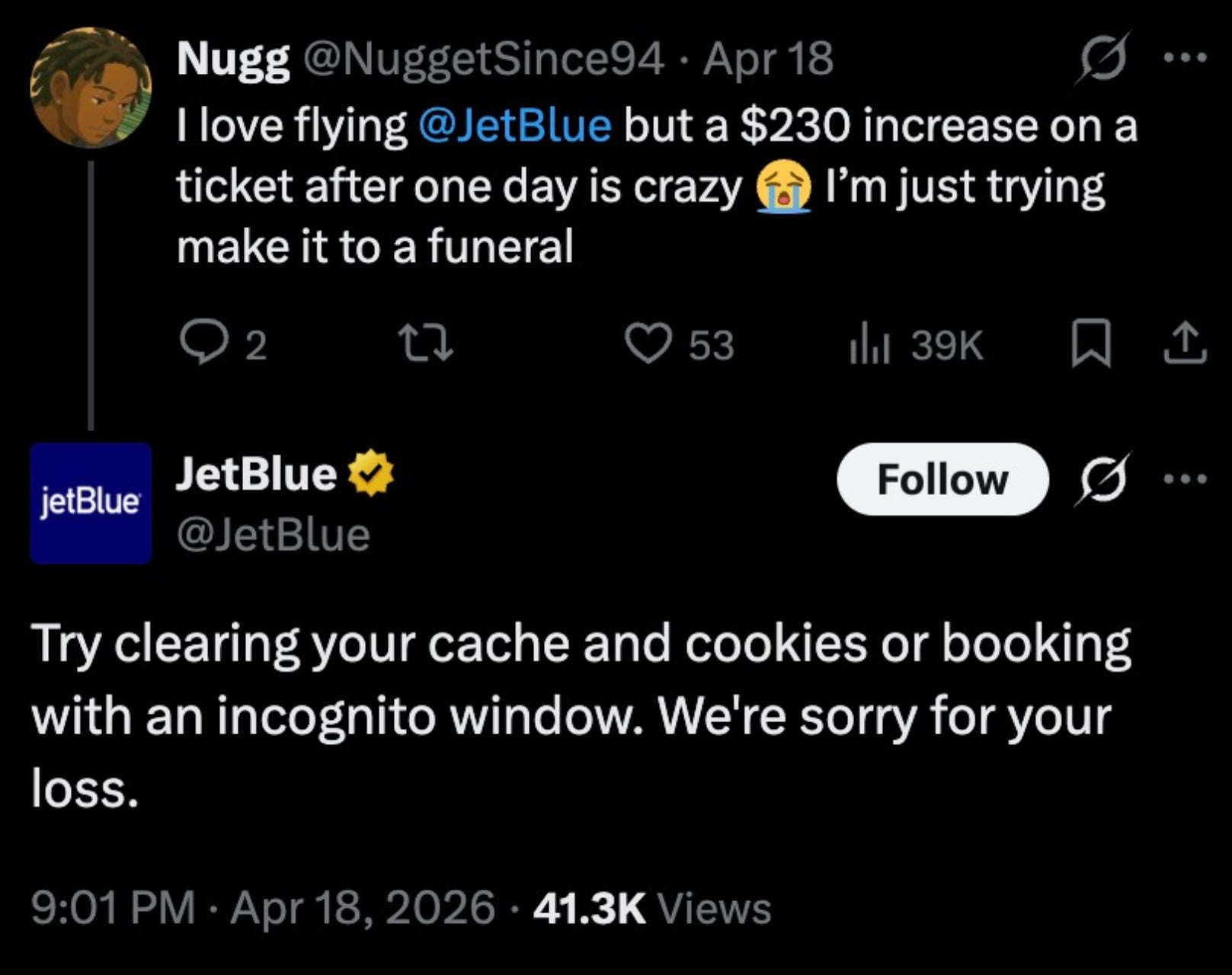
A customer posted a screenshot of a price that jumped $230 overnight.
I read the exchange: an X user said they watched a fare climb by $230 (€212) in one day while trying to buy a ticket to a funeral. JetBlue’s public reply suggested clearing cache and cookies or using an incognito window — advice it later deleted and called a mistake.
That reply detonated the conversation. You could feel the anger: grief turned into a policy question, and the simplest tool on the internet — a screenshot — forced a corporate response.
A New Yorker named Andrew Phillips has turned that viral moment into a lawsuit.
Phillips bought a JetBlue ticket in December 2025 for travel from New York to Florida and says he provided identification and other personal details to the airline. He claims he was “unaware that he was being tracked for the purpose of setting pricing” when those details were collected.
The proposed class action, filed in the Eastern District of New York, points to third-party tools and vendors: the suit names FullStory, a behavioral analytics platform, and PROS Holdings, which offers pricing algorithms that adjust fares based on “buyer behavior.” You should read that as an allegation that signals where the legal fight will aim: the plumbing of modern retail pricing.
Do airlines use my browsing data to change ticket prices?
Short answer: it’s possible, and that is exactly why this case matters. Airlines already use dynamic pricing engines that shift fares with demand and inventory. The hard question is whether those engines are being fed signals tied to an individual’s browsing history, location, or inferred income — things that would make pricing feel personal rather than market-driven.
JetBlue says its fares come from inventory and demand, not individual web history.
I asked myself whether the deleted tweet could be a rogue customer service error or admission. JetBlue told reporters: “JetBlue does not use personal information or web browsing history to set individual pricing. Fares are determined by demand and seat availability, and all customers have access to the same fares on jetblue.com and our mobile app.”
The airline also called the social-media reply a mistake from a single crewmember and insisted clearing cookies would not affect available airfares. Read closely, and you see two defenses: a technical one about how fare classes and inventory work, and a reputational one aimed at calming public anger.
I’ve watched companies plead the same script before; it’s part PR and part legal triage. Still, the lawsuit doesn’t need to show every airline secretly tracks individuals — it only needs to show JetBlue’s systems and partners collected and used personal signals in ways customers didn’t expect.
How can I avoid dynamic or surveillance pricing when booking flights?
There’s no bulletproof tactic, but you can be strategic. Shop across devices and apps, compare third-party sites, and pay attention to fare classes rather than isolated price points. Incognito windows and clearing cookies sometimes change displayed prices because they cut site personalization layers, but they don’t alter seat inventory or the airline’s back-end pricing decisions.
Regulators, lawmakers, and the market are already reacting to the wider problem.
Congressional Democrats have drafted bills to ban surveillance pricing, and Senator Ruben Gallego publicly demanded action after the JetBlue screenshot circulated. The federal response has been uneven: the Biden administration opened an inquiry in 2024 under FTC chair Lina Khan, then the study was shelved in 2025 under President Donald Trump’s direction.
State law is moving first in some places: Maryland passed a grocery-store ban on surveillance pricing last year, though experts say it leaves big loopholes. Legislation will have to wrestle with vendors like PROS and analytics tools like FullStory — the companies that make personalization work — if lawmakers want real limits.
The debate feels like a cautionary fable about data: companies can treat your online behavior like footprints to follow, and when they do the paths you take can change what you pay. Think of it like a shopkeeper watching footprints and another tool that acts like a thermostat that turns up the heat when it senses a crowd.
Is surveillance pricing illegal?
Not broadly, and that’s the problem. Price discrimination based on protected characteristics such as race or sex is illegal. But using behavioral data to personalize prices sits in a legal gray zone: consumer-protection laws are moving, but many current statutes don’t clearly ban individualized price hikes tied to browsing history, location, or inferred demographics.
The fight ahead will mix courts, Congress, and consumer attention into a messy test case.
You should expect three fronts: the courtroom over deceptive practices and data sharing; the legislature on explicit bans; and public pressure that companies badly want to avoid — just ask Delta, which briefly said it would use AI to set fares and then walked the comment back after criticism, or Wendy’s, which had to deny interest in surge pricing in 2024.
I’ll be watching the JetBlue filing for the concrete evidence it produces about vendors, data flows, and algorithms. If the suit drags out, it will reveal whether this is an isolated misstatement and a sloppy social-media reply — or a moment that catches a larger industry practice in the headlights.
How much privacy are you willing to trade for a cheaper ticket, and who should decide whether that trade is fair?