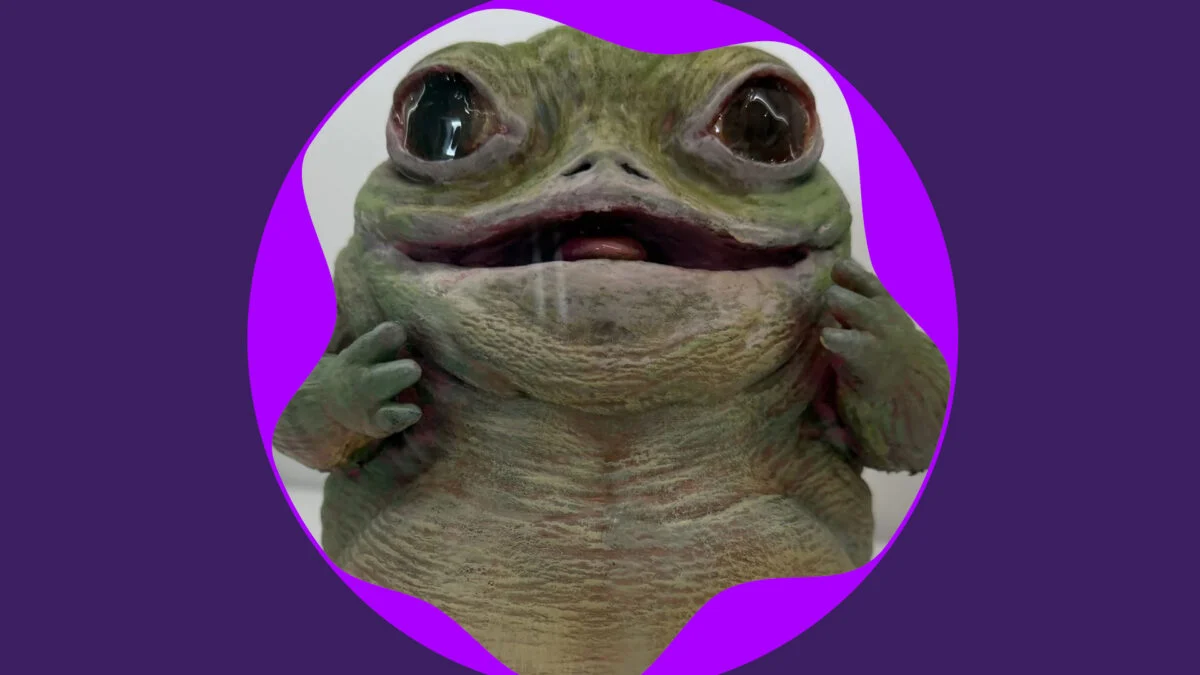
I held a photo that refused to leave my head: a small, sculpted face on a cluttered workbench. You can feel a set visit closing its fist around a single detail and deciding the story. I want you to feel the same small unease I felt.
On a workshop bench, a tiny sculpted face stared back at Germain Lussier.
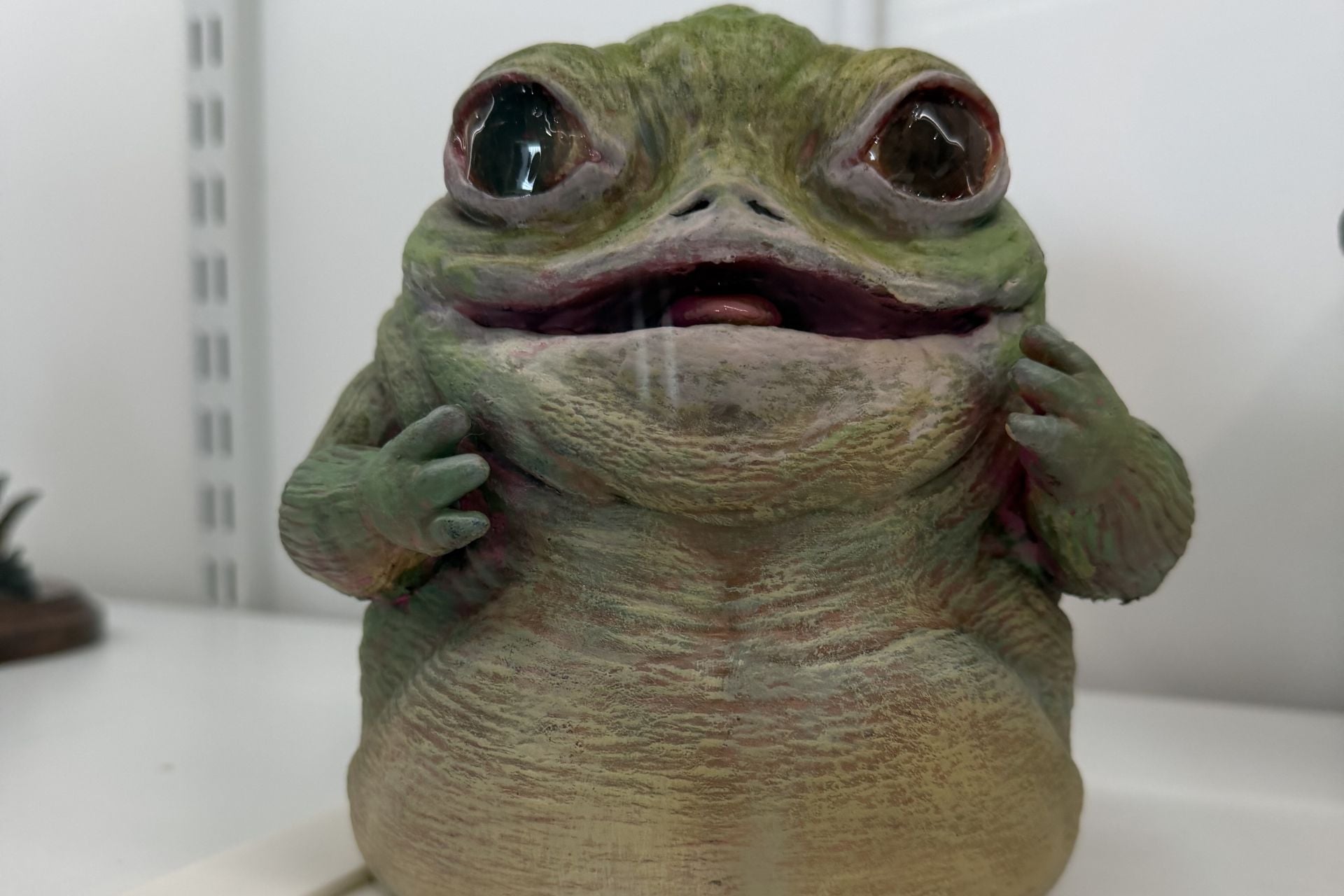
I saw the maquette Germain photographed at Jon Favreau’s studio. It isn’t concept art you glance past; it’s a deliberate object, handled, photographed, kept. That smallness is exactly what makes it dangerous: a familiar franchise can hide big gestures inside tiny props.
The figure is a baby Rotta—the son of Jabba—rendered in a way that asks a simple question: why bring this specific childhood to the big screen? Jon Favreau and Lucasfilm have made live-action choices that signal intention, and a maquette like that reads as more than fan service; it reads as promise or a promise you might regret.
Will Baby Rotta appear in The Mandalorian and Grogu?
I’ve been asked this straight: did Favreau make the maquette for the film or as a workshop curiosity? You should assume Favreau builds with purpose—his props rarely sit idle. That said, not every object in his shop equals screen time; some are experiments, some are scripts-in-waiting.
If Rotta does appear, the question isn’t merely cameo or scene time. The bigger risk is narrative weight: any return to Rotta’s youth pulls emotional and continuity baggage from The Clone Wars, and it asks audiences—both new and old—to carry that baggage into a film that should feel new in theaters.
On streaming feeds and fandom threads, people gravitate to callbacks.
Fans clip, timestamp, and argue until a moment becomes canonical by force of attention. You’ve probably watched a scene, then scrolled to see which episode it echoes; that habit is now shaping how Lucasfilm makes choices.
Recent live-action projects have done more than lift characters from animation; they’ve lifted scenes and beats. Remember Obi-Wan Kenobi echoing a duel from Star Wars Rebels? That recreation lost the original moment’s heft and felt like an acoustic echo of something better heard once. Repeating beats can hollow them out, and baby Rotta risks turning nostalgia into filler.
The streaming era gave creators permission to mine every archive. Favreau’s team knows the value of a wink to long-time fans—Germain’s set visit shows they’re fluent in that language. But a wink is different from a structural choice. Bring Rotta’s infancy onscreen and you must justify the emotional investment for an audience that hasn’t watched The Clone Wars.
Why bring Clone Wars characters to live-action?
You might think the answer is obvious: built-in recognition sells. But there’s a creative cost. When animation moments are lifted into live-action, they often lose cadence and context. A scene that worked in a serialized arc can feel misplaced in a standalone theatrical narrative.
I’m not arguing against honoring franchise history—Ahsoka and Anakin carry real weight—but borrowing minor arcs for novelty is risky. It treats theatergoers as a subset of the online fanbase, not as an expanded audience that needs a coherent cinematic reason to care.
At press screenings and box-office reports, the theater is a different animal.
I have sat in cinemas where a franchise’s return felt like a reopening night for an old restaurant: hopeful, crowded, and easily disappointed. Disney and Lucasfilm know the stakes; a theatrical reintroduction demands more than streaming-era indulgence.
Making The Mandalorian and Grogu a film after years of series-format storytelling requires a clear argument for why it belongs in cinemas. A callback to Rotta’s youth could be that argument if it expands theme or character. Or it could be a flourish that reads as safe and self-referential—a novelty snowglobe that distracts instead of deepens.
If Favreau is using Rotta to stitch together threads from The Clone Wars, he runs into a persistent knot: the same small choices that please fans can tangle a film’s forward motion until it feels overfamiliar, a knot you can’t untie without cutting context away from the audience.
Could Rotta’s presence affect the film’s reception?
Yes. Rotten Tomatoes and Box Office Mojo speak in numbers, but audience memory and critic patience speak in expectation. If the film tilts toward references and callbacks, reviews may call it indulgent; if it uses Rotta to open new emotional space, it could reframe what a theatrical Star Wars looks like post-streaming.
I trust Favreau’s instincts more than most, but I’m wary of habit masquerading as choice. You should be too—especially when a small prop can change the film’s tone more than a headline trailer ever will.
So what will Favreau choose: a harmless wink that plays safe, or a decision that makes this cinematic return matter to everyone, not just the fans who can name every episode of The Clone Wars?