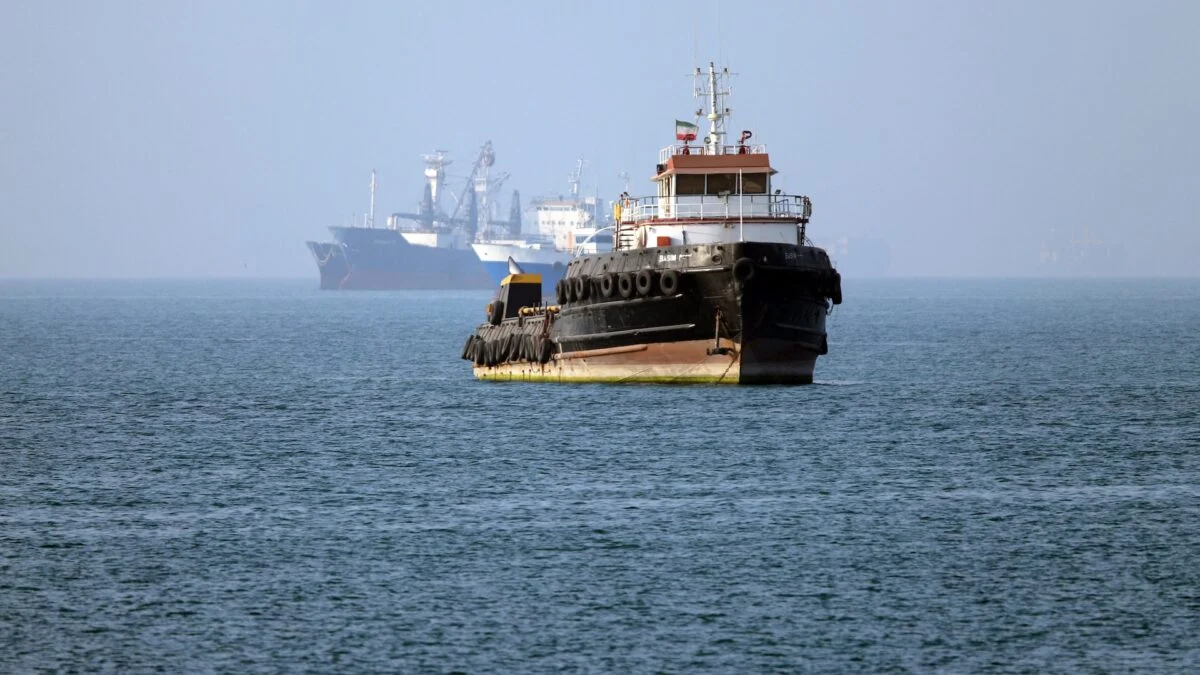
I watched a live feed of black smoke curling over Fujairah and felt the market twitch. A captain’s radio call—an explosion, a hit—cut through the feed like a warning. By midday, traders were already bidding a premium for safety.
I’m going to walk you through what happened, why I think it matters, and what you should watch next. You don’t need to follow every press briefing to understand the risk; you need to see how supply, military moves, and policy are aligning into a single pressure point.
Smoke over Fujairah: drones struck an oil hub
Smoke rose from Fujairah’s oil facilities after a drone impact that started a significant blaze.
Iran launched missiles and drones that hit targets tied to U.S. partners in the region, and at least one strike touched an oil installation in the United Arab Emirates. Shipping groups and the Wall Street Journal reported several vessels damaged near the UAE coast—one Marshall Islands-flagged ship struck by a drone and a Panama-flagged Korean cargo ship hit by an explosive. The UAE called it “renewed treacherous Iranian aggression”, even as its defenses said most incoming missiles were intercepted.
Two merchant ships moved through a cleared lane: the U.S. says it opened a path
Two U.S.-flagged merchant vessels were reported to have transited after the military said it had validated a corridor through the Strait.
President Trump announced Project Freedom, saying the U.S. would escort ships from so-called neutral countries through the Strait of Hormuz. CENTCOM and commander Brad Cooper claim they used tools to “clear a free lane” and that six to seven Iranian small boats were destroyed. You heard the same public signals I did: Trump on Truth Social, CENTCOM tweets, and a promise of a Pentagon news conference led by Secretary Pete Hegseth.
That said, CENTCOM admitted the U.S. did not physically shepherd those two ships with a visible convoy; instead, the military described the route as cleared and validated through means it would not fully explain.
What is Project Freedom and will it protect ships?
Project Freedom is being pitched as an escort and assurance mechanism backed by U.S. naval power and intelligence. But when I listen to CENTCOM and read the UN response, the message is mixed: the U.S. claims a cleared lane; the UN says it needs clarity; Iran still has missiles and drones. That combination makes any passage safer on paper, not guaranteed in practice.
Brent spiked and traders hit the sell button: markets moved fast
Brent crude jumped over $113 a barrel on Monday, and traders reacted within minutes.
Rising strikes and the threat to Hormuz sent Brent up more than 5% to about $113 (€104) a barrel. The Dow fell roughly 450 points at one point as energy risk fed wider anxiety. At home, the national average for a gallon of gas is now about $4.45 (€4.09), up from roughly $2.98 (€2.74) before the war began on Feb. 28, according to AAA.
Airfares jumped too—data tracked by Kayak shows a U.S.–Hong Kong roundtrip averaging about $1,005 (€925) before the conflict and around $1,534 (€1,412) by April 20. A U.S.–Rome ticket moved from roughly $847 (€779) to $1,266 (€1,164).
Markets are pricing what I call a supply-risk premium: when a corridor carrying roughly 20% of the world’s oil and LNG is threatened, buyers pay now to avoid paying more later. Think of the market as a nervous crowd shifting toward the exits—prices move on expectation as much as on actual supply loss.
How will this affect gas prices?
Expect more volatility. If strikes keep damaging infrastructure or if shipping through Hormuz remains constrained, retail prices rise quickly because wholesalers and refiners hedge by buying now. Policy moves or a de-escalation could relieve pressure, but while missiles and drones are in play, you shouldn’t count on stable pump prices.
Boats destroyed, missiles still in the cache: the tactical picture is mixed
On a reporter call, a CENTCOM officer said fewer small boats were visible than usual after U.S. action; he suggested their capability was degraded.
Brad Cooper said small-boat numbers fell from a typical 20–40 in a pack to six, which U.S. forces then neutralized. That matters: small boats have been used to harass shipping. But Iran still retains missiles and drones that have previously damaged oil infrastructure and commercial vessels. The UAE reported intercepting three of four cruise missiles and said one fell into the sea, an example of how defenses blunt some attacks but don’t remove the threat.
The UN’s Stephane Dujarric told reporters he needed more clarity on U.S. claims that the strait is open; his hesitation mirrors a larger diplomatic puzzle. Militaries can degrade certain threats rapidly, but the strategic picture—political will, rules of engagement, and alliances—takes longer to stabilize.
Is it safe to transit the Strait of Hormuz?
Safe is a relative term. The U.S. will encourage passage and claims it can protect ships, but until Iran’s missile and drone inventory is demonstrably reduced, any voyage through Hormuz carries risk. If I were advising a shipowner, I’d ask for ironclad rules of engagement, credible insurance cover, and a plan to avoid predictable choke points.
I’m following the signals: CENTCOM’s statements, the UAE’s defensive claims, public posts from the White House, and price moves on platforms like TradingEconomics and commodity desks at Bloomberg and the WSJ. You should watch three things closely—strike frequency, insurance premiums, and whether allied navies join the escort mission.
We are now watching a theater where military action, economic risk, and headline politics are braided together like a rope that can either hold or fray; right now the strand is taut. Will the next move be de-escalation or another costly salvo in a conflict that is already reshaping global energy prices?