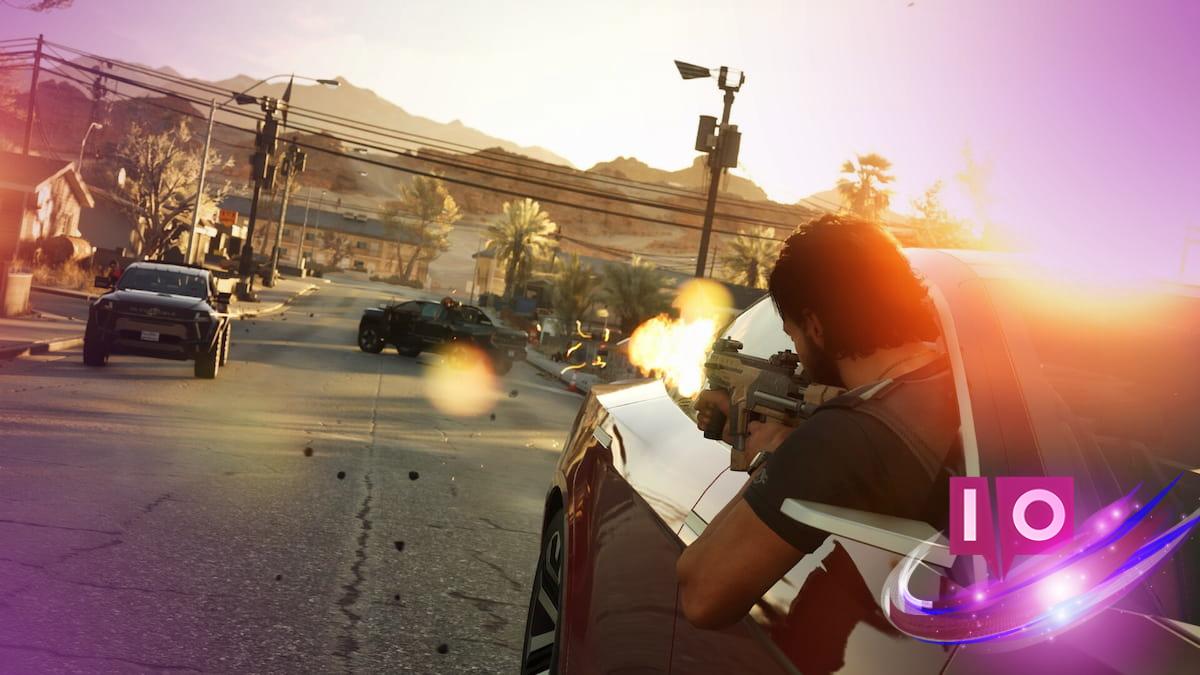
I watched the first frame of MindsEye’s “Blacklisted” mission and felt a jolt. You expect Agent 47, but the camera settles on Julia Black and the barcode is gone. That small edit suddenly explained a lot about how a deal unraveled.
I’ve followed studio disasters enough to read the signs early. You should, too — because the way this DLC landed tells a story about licensing, PR, and the fragile choreography between two studios.
In the DLC’s opening cutscene, the script still reads like Hitman — Why the mission felt like a trimmed crossover
The opening plays out with the same measured pacing and handler cues you’d expect from a Hitman mission. The goal structure, the way targets are introduced, even the staging shout “Diana” from the shadows.
At some point this was a straight crossover: IO Interactive and Build A Rocket Boy (BARB) had a partnership, and IOI later confirmed the collaboration had ended via GamesPress. What we got was a mission released early, stripped of 47’s likeness and trademark barcode, but retaining the directing and mission scaffolding.
Why does that matter? Because when licensing is removed late in production, the most obvious fix is cosmetic — swap names, adjust models, remove logos — but the spine of the level remains. The result felt like a stage play missing its lead actor.
Why was Agent 47 removed from the MindsEye DLC?
Short answer: the official partnership with IO Interactive ended before launch, and the DLC was pushed out in a redacted form. IOI’s public notice confirmed the split; the DLC kept structure and direction but lost the Hitman IP assets that required ongoing rights and QA from IOI.

On LinkedIn, a senior designer announced he was let go — What the layoffs reveal about BARB’s fallout
James Tyler posted on LinkedIn that he was affected by the “latest redundancies,” and Kotaku reported additional departures. Those public posts are the clearest proof we have that staff cuts followed the DLC’s botched roll-out.
From the outside, layoffs look like cost-cutting. From the inside they also signal reputation damage and fractured revenue expectations. The DLC was meant to reach new players via a familiar IP; when that plan frays, budgets and morale can collapse like a house of cards.
Did Build A Rocket Boy lay off staff because of the DLC?
LinkedIn posts and a Kotaku piece indicate yes — layoffs were announced after the DLC and in the wake of months of trouble around MindsEye. While BARB’s CEO has blamed external sabotage in public statements, the sequence of a high-profile misfire followed by layoffs is hard to dismiss.
On IO Interactive’s GamesPress release, the partnership was over — What this means for future IP collaborations
IO Interactive formally acknowledged the partnership’s end and the handoff of MindsEye’s publishing back to BARB. That’s a clear signal: when IP owners withdraw, the game left behind loses not just assets but a layer of oversight and quality control.
If you work on or follow cross-studio projects, watch three things: contract timing, QA responsibilities, and public messaging. IOI, BARB, Steam storefront pages, and press outlets like Kotaku and GamesPress all act as amplifiers. When those signals collide, consumer perception hardens fast.
I don’t buy blanket blame on “sabotage.” I’ve seen overambition, poor rollout planning, and missed QA gates create exactly this pattern. You can defend a studio’s reputation, but you also have to own the mistakes you can fix.
MindsEye’s Blacklisted mission is now a curious artifact: a level built in Hitman’s image but stripped of its star, released early, and followed by public resignations. I’ll keep watching how BARB, IO Interactive, and platforms like Steam and LinkedIn manage the aftershocks — will the industry learn, or will these be one more cautionary tale for studios chasing big crossover moments?