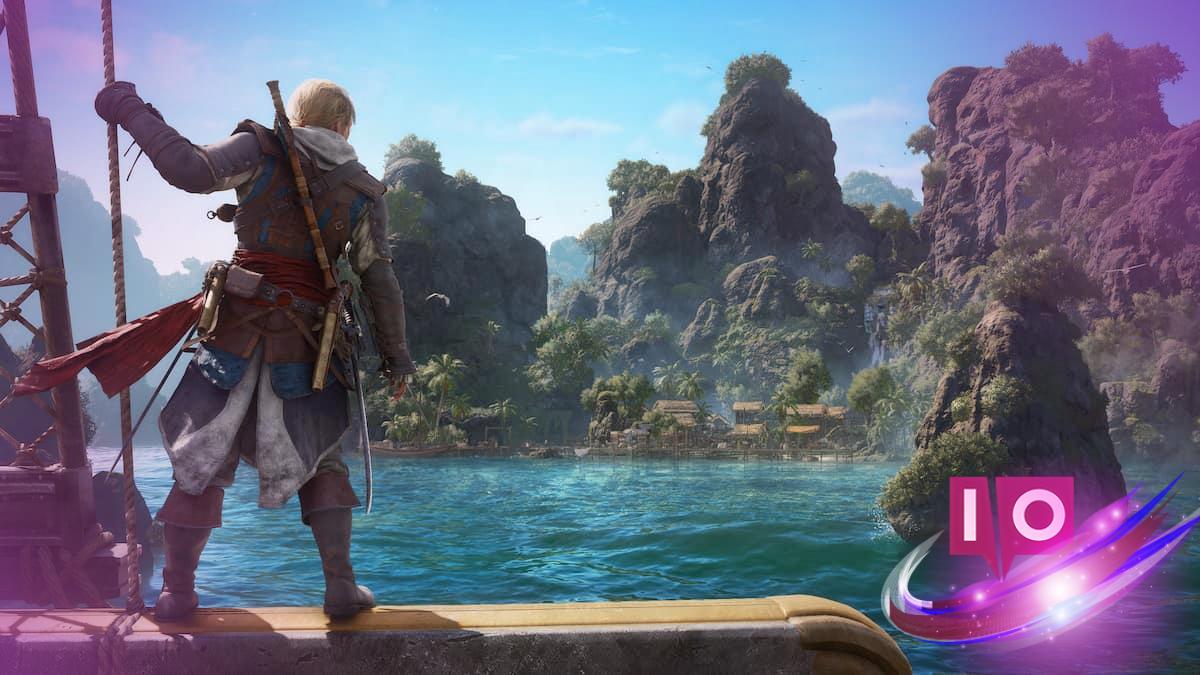
I clicked the Reddit thread and froze. The two screenshots sat side by side and rewired my expectations in seconds. You feel that tug — the sense that something you trusted has quietly become obsolete.
I opened the Black Flag Resynced comparison and stopped.
I’m not exaggerating when I say the remake rewrites the scene pixel by pixel. Edward sits the same, but the bay has been rebuilt from the ground up: light behaves as if it has weight, water moves with liquid intent, and surfaces respond to weather in ways the 2013 build could not. The remake becomes a microscope for the ocean, forcing you to admit how blunt the original really was.
How much better are the graphics in Black Flag Resynced compared to the original?
The difference is not subtle. Lighting, shaders, and textures have improved across three axes: material realism, atmospheric layering, and draw distance. Where the 2013 version presented matte planes and distant smudges, the 2026 remake delivers reflective surfaces, volumetric fog, and islands that resolve cleanly at the horizon. You can parse surface detail from a distance now; the game reads as a composed scene instead of a stitched-together backdrop.
From my desk I noticed new landmasses on the horizon that weren’t there before.
Draw distance is the quiet flex of modern rendering. Resynced extends visibility and populates it with properly lit geometry, denser foliage, and cloudscapes that actually change the mood of a moment. Shadows are richer and refuse to be flat — they anchor objects and give the ocean a readable depth. These increments add up to an immersive atmosphere, not a single flashy trick.
Does Ubisoft’s Anvil engine still hold up?
Yes, and in a way that surprised me. Anvil has always been a powerful tool for scale and world detail, but recent work shows it can produce visuals that compete with engines like Unreal. Ubisoft’s tech team polished lighting paths and materials here, and the result is an engine that feels like a sleeping giant finally stretching. If a platformer of studios standardizes on one engine, the industry risks visual homogeneity — Anvil remains an important counterweight to that monotony.
A colleague sent me a message: “Feels like For Honor all over again.”
That comparison is telling. For Honor, released in 2017, still reads as visually ambitious; Resynced suggests Ubisoft can still ship memorable spectacles. The remake’s improvements are more than nostalgia polish — they’re a practical demonstration that older IP can be modernized without betraying what made the originals sing. Reddit posts, like the one by u/Ordinary_Cap469, act as grassroots proof: a single user screenshot can reshape public opinion overnight.
Will Resynced influence future Ubisoft titles?
It could, if business choices follow technical promise. A remake that sells well and receives critical praise will incentivize studios to reuse Anvil and invest in higher fidelity art pipelines. Conversely, corporate caution or a soft launch would bury momentum. You and I know the pattern: tech capability matters, but budgets and publisher priorities decide whether it becomes standard practice.
Look at the present moment—one clear comparison has exposed a thirteen-year gap. If an old game can feel this new with updated rendering, how many other classics are waiting to be reborn and reshape our expectations for AAA releases?