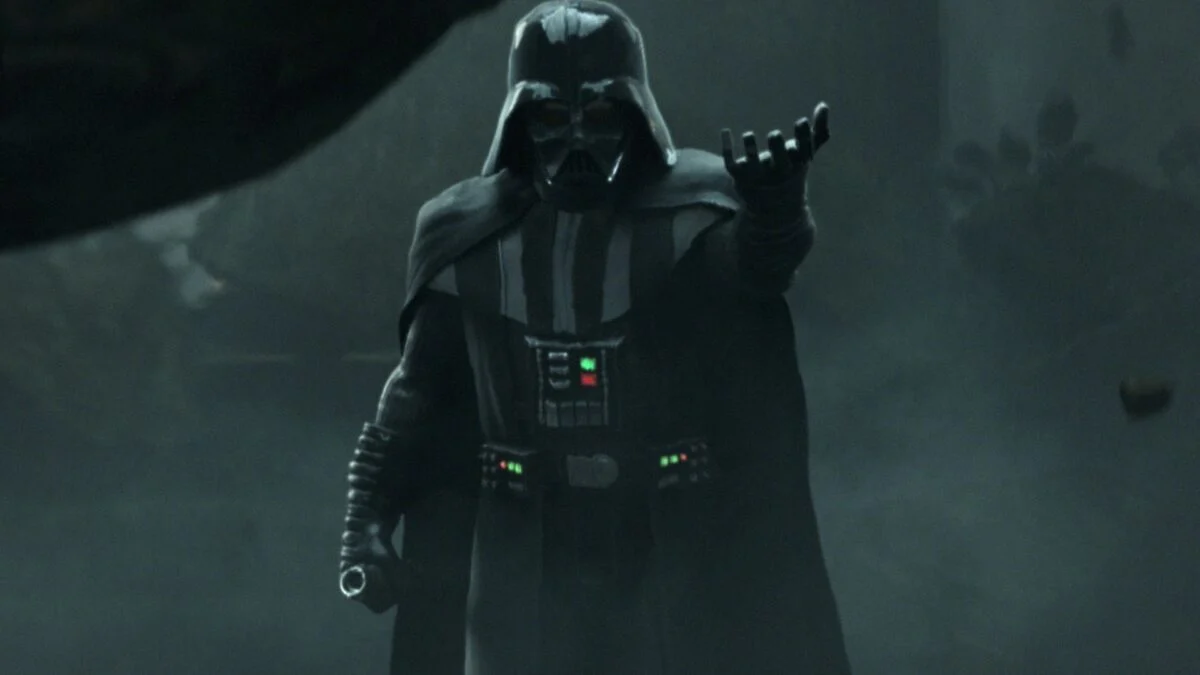
I was in a dim screening room when Vader stepped into frame and the audience exhaled like a room that had been holding its breath. Dave Filoni spoke after the show, and one sentence he dropped detonated the replies sections: “The key to Vader for me is that he’s not Anakin.” You felt the tug—anger, confusion, then a slow click as the line was unpacked.
I’ve followed Filoni since The Clone Wars. You should too if you care about how Star Wars grows beyond the films: he’s shepherded Rebels, The Mandalorian, Ahsoka, and now Maul: Shadow Lord at Lucasfilm. That background is not trivia; it’s why his phrasing matters. He’s not denying the literal truth—Darth Vader was Anakin Skywalker. He’s describing two psychological states cohabiting one skull.
At the screening, Filoni made a clinical observation that reads like a charge
He said Vader “is not Anakin” because Vader refuses anything that would recall Anakin—memories, faces, loyalties. You can feel the logic: if Anakin represents love, loss, and regret, Vader is a firewall built to erase that past. Filoni later softened the line: “Anakin’s trapped in there somewhere, and Darth Vader won’t let him surface.” That’s not revisionism; it’s narrative shorthand from a veteran storyteller.
Is Darth Vader Anakin Skywalker?
Short answer: yes, in continuity. But Filoni’s point is psychological, not legal. Think of the body as a house and the persona as tenants—one tenant (Anakin) remembers sunlight and friends; the other (Vader) has boarded the windows and burned the curtains. You don’t need to agree with the phrasing to see why a writer would separate the names: they signal which impulses dominate a scene.
At the keyboard, fans read a headline and reacted like it broke their franchise trust
Online outrage often boils down to two impulses: purity and possession. Fans want a clear throughline: Anakin becomes Vader, end of story. Filoni complicates that by treating identity as active resistance: Vader actively suppresses Anakin. That makes Vader scarier and more tragic. It also reframes scenes we’ve seen a dozen times—Vader chasing Jedi, Vader punishing allies—not as mechanical beats but as willful erasure.
What did Dave Filoni mean when he said Vader isn’t Anakin?
He meant the name signals agency. When Filoni says “Vader,” he means someone who is choosing destruction as a refuge from shame. When he says “Anakin,” he means someone who loved, hoped, and failed. You can see this in Filoni’s work across platforms—animated arcs in The Clone Wars, callbacks in Rebels, and the careful restraint he uses on Disney+ when Vader appears in shows like Maul: Shadow Lord (which is now streaming on Disney+).
At the craft level, Filoni is using character labels the way a director uses light
I’m telling you this as someone who watches patterns: names are tools. George Lucas gave us the scaffolding; Filoni and Kathleen Kennedy are filling the rooms with furniture and dust. Calling the figure “Vader” in a scene tells the audience to read a different temperature—cold, brutal, immovable. Calling him “Anakin” invites empathy, memory, fracture. The choice shapes performance, music cues, and editing.
Why are fans so angry about Filoni’s comment?
Because a single phrase can feel like erasure of a childhood memory. But anger also signals investment. If you care that strongly, Filoni’s distinction matters to you—and that means the storytelling stakes are high. He’s not trying to rewrite; he’s pointing at the tension that makes Vader terrifying: the man he once was is trapped behind walls he built.
Filoni’s quote is also a lesson in craft: labels steer interpretation. I’ll admit a personal bias—I prefer stories that respect contradiction. Vader as a living vice, Anakin as a ghost, that binary is a narrative engine. The metaphor is simple and brutal: it’s like a cracked mirror showing one face on one side and a shadow on the other.
Here’s the practical takeaway if you care about continuity and storytelling: treat Filoni’s line as a directional note, not a doctrine. Watch how Lucasfilm positions Vader across media—comics, games, and shows—to see which “name” serves which scene. Platforms matter: Disney+ episodes will frame Vader differently than a Marvel-style comic arc, and that framing is a deliberate choice by creators who work with the estate of George Lucas and the production oversight of Lucasfilm.
I’m not asking you to accept every framing without pushback. I’m asking you to read slightly farther than a headline and notice what the writer intends. A character can be legally the same person and narratively split into two forces inside a single skull, like a bell that has lost its tone but still rings when struck.
If Filoni is right about Vader and Anakin, what does that mean for the stories we still want to tell about regret, responsibility, and who gets to name someone’s soul?