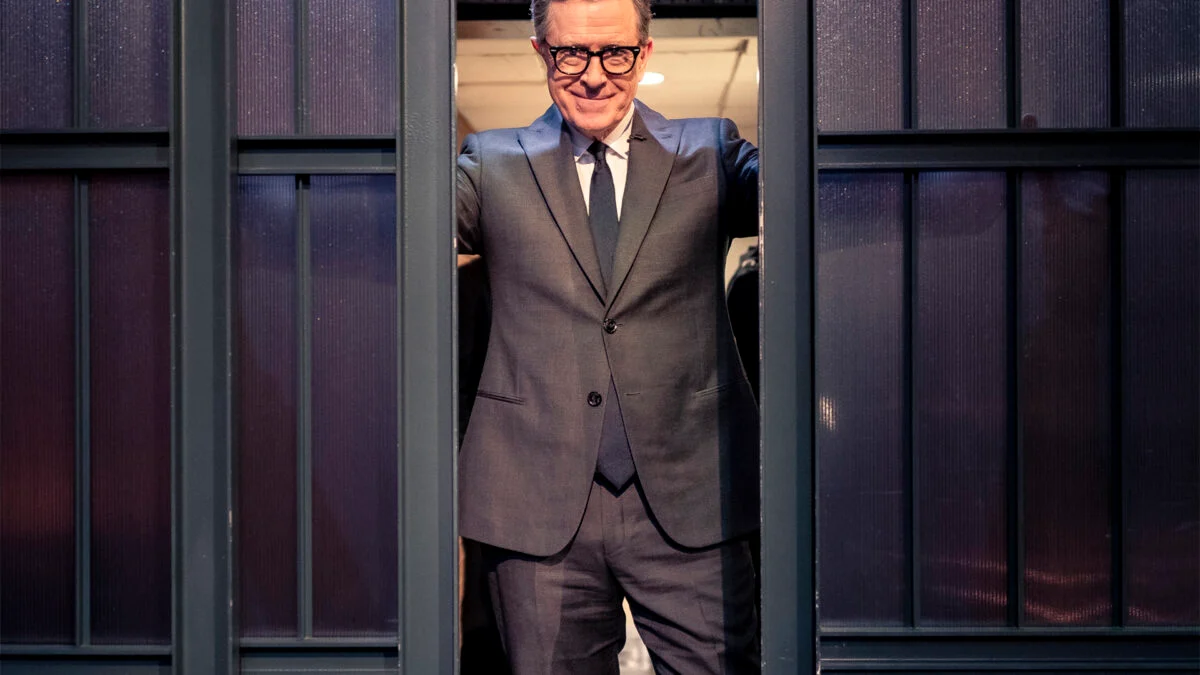
I watched Stephen Colbert grin and quote Elvish on a late-night stage, and for a second I felt my chest tighten. You know that small alarm that goes off when your favorite film universe gets handed to an unlikely steward. That flicker is the whole story here.
I’ve covered TV and film for years, and I’m going to be blunt with you: fandoms are fragile, and you should be skeptical when a comic walks into Middle-earth. But skepticism and curiosity can sit in the same room, and if you let me, I’ll explain why this particular gamble matters more than the headlines.
At Comic-Con, people clap when anyone mentions Tolkien’s name — why the panic?
Colbert has been public about his obsession with The Lord of the Rings for years. You’ve seen him correct scholars, host panels, and show off encyclopedic knowledge on The Late Show and at fan events. He told The Hollywood Reporter that he doesn’t expect automatic trust: “There’s no reason to [trust me],” he said, and then leaned on his collaborators, naming Philippa Boyens and Peter McGee.
Here’s the practical bit: Warner Bros. hired Colbert to co-write a film tentatively titled The Lord of the Rings: Shadow of the Past, and Boyens—who worked closely with Peter Jackson—acts as a creative anchor. Colbert is a compass for this story.
Is Stephen Colbert writing a Lord of the Rings movie?
Yes. He’s credited as a co-writer alongside Philippa Boyens and Peter McGee on a Warner Bros. project set 14 years after The Return of the King. The announcement followed talk of next year’s shoots beginning on The Lord of the Rings: The Search for Gollum, and the press release spelled out a plot that reconnects Sam, Merry, and Pippin with new stakes involving Sam’s daughter Elanor.
At a press junket, every sentence becomes lore — what’s in the script so far?
The official synopsis nods at an omission from Peter Jackson’s films: early chapters skipped in The Fellowship of the Ring. The movie is described as a story where Sam, Merry, and Pippin retrace early steps, while Elanor discovers a buried secret that shows the War of the Ring nearly failed before it began. That framing flips the comfort of nostalgia into a mystery.
Philippa Boyens’ involvement signals creative continuity with Jackson-era storytelling, and her presence reassures some skeptics who fear fan service over story. Warner Bros. will want a script that functions as drama, not mere fandom tribute, and that’s the promise Colbert has publicly made to himself and to viewers.
When will Stephen Colbert’s Lord of the Rings movie be released?
There’s no official release date yet. Industry chatter places the earliest reasonable window around 2029 or 2030, after filming on related projects starts. Studios like Warner Bros. often schedule these tentpoles years ahead, especially when they intertwine with other franchise shoots, so patience is part of the fan trade.
At a reunion table, old friends feel different — will the original actors return?
The announcement didn’t confirm casting, but the natural assumption is that Sean Astin, Dominic Monaghan, and Billy Boyd would be asked back to play Sam, Merry, and Pippin. The press release leans into that expectation without promising it, which keeps the door open while managing hype.
From a creative standpoint, bringing those actors home would be smart: it preserves continuity and lets the story mature with characters fans already love. From a logistics view, schedules and budgets will shape how that plays out; Warner Bros. will balance nostalgia with new narrative goals.
At my desk I asked whether I trusted a comedian with Tolkien — here’s how I parsed it
You’re allowed to be suspicious. Colbert’s public persona is comedic, and comedy doesn’t automatically translate into epic drama. He even admits as much. But skepticism alone doesn’t answer the real question: will the writing, collaborators, and studio architecture produce a film that feels true to the source?
There are industry safeguards: experienced co-writers, veteran producers, and the studio’s franchise playbook. You can also judge by outputs, not promises. If the script reads like drama and Boyens’ fingerprints are visible, that shifts the calculus from a fan worry to a guarded optimism. Fan trust is a porcelain vase—admired until it’s cracked, and painfully difficult to repair.
I’ll keep following the reporting from The Hollywood Reporter, Warner Bros., and the talent announcements, and I’ll tell you what matters as the first drafts land on desks. For now, you’re right to watch the bylines, the collaborators, and the tone of the early scenes—because those will tell you whether this is stewardship or stunt. Do you think Colbert can shepherd Tolkien’s story without turning it into a sketch?