
I hit refresh on PlayStation’s X post with my controller in one hand and a three-month renewal in the other. The notification landed like a small betrayal: prices rising, again. You can feel the math in your wallet before the tweet finishes loading.
At launch I saw the post pop up on X — Sony is raising PlayStation Plus prices
I’m telling you the numbers first so you can make the math quick and painless. Sony said the PlayStation Plus monthly price will rise starting May 20 to $10.99 (€10) in the US, €9.99 across Europe, and £7.99 (≈€9) in the UK. The three-month tier moves to $27.99 (€25), €27.99, and £21.99 (≈€26) respectively.
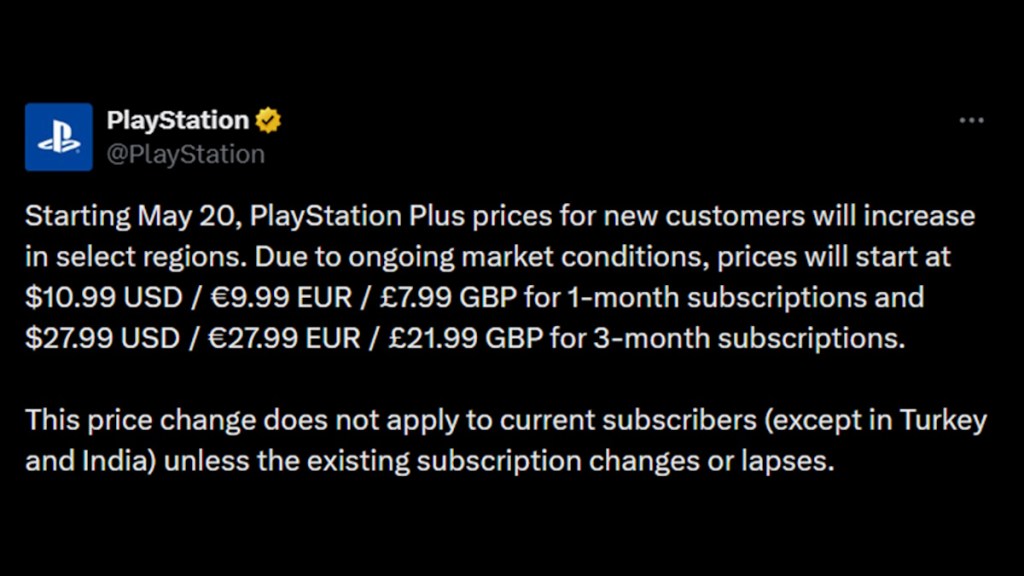
The community noticed immediately — the reaction was fast and blunt
You don’t need me to tell you the comment threads filled up. Gamers flagged the mild nominal increase but larger context makes it sting: PlayStation recently raised console prices for the PS5 and PS5 Pro, and a string of underperforming first-party releases—Concord, Marathon, and even the praised Saros—haven’t softened the blow. When a subscription nudges higher after your hardware got pricier, habits change.
How much is PlayStation Plus now?
Short answer: monthly is now $10.99 (€10) / €9.99 / £7.99 (≈€9). The three-month option is $27.99 (€25) / €27.99 / £21.99 (≈€26). If you’re comparing tiers, that difference feels small per month but stacks quick when you hold multiple accounts or preferred renewal cycles.
I checked the official line — Sony called it “market conditions”
Sony pointed to market pressure and component shortages—RAM being singled out because of AI demand—as the reason for price movement. You’ll hear companies frame price changes this way when inflation, supply chains, and competitive bets collide. It’s a standard corporate script, and you should treat it like a press release that needs a second look.
Why did Sony increase PlayStation Plus price?
Because they say market conditions squeezed margins: component costs, AI-driven RAM demand, and broader economic pressure. I’m skeptical that’s the whole story; subscriptions buy goodwill and perceived value. When that goodwill frays—after console bumps and middling game sales—the conversation becomes less about hardware and more about trust.
I tracked what this means for players — small increases can compound quickly
For casual players a dollar feels trivial; for households with multiple gamers it’s another monthly line item. PlayStation Plus still delivers discounts and monthly freebies, but it doesn’t match the breadth of Xbox Game Pass. Think of these hikes like a slow leak in a tire: you don’t panic at first, but eventually you’re on the shoulder checking the rim.
Will PS Plus games improve after the price increase?
That’s the million-euro question — and one you’re justified asking. Sony’s price move doesn’t automatically mean better content. If PlayStation wants to justify the change, we need clearer signals: stronger first-party releases, more meaningful perks, or better cross-generation value. At the moment, the promise hasn’t matched the price tag.
I’ve been writing about platform economics for years — here’s what I’d watch
Keep an eye on three things: Sony’s upcoming release slate, PlayStation Store discounts, and any bundling or loyalty credits that soften renewals. If Sony pairs price rises with visible improvements—exclusive early access, richer libraries, or more live-service support—the raise will feel less punitive. If not, subscriptions erode into an automatic cost people cancel when corners get tight.
Sony is banking that the Playstation brand and exclusive franchises will hold the line; you’re deciding whether that’s worth another euro on your monthly bill. Are you renewing, trimming, or switching platforms?