A folded invitation sat on the Resolute Desk. The chairs stayed empty, the cameras still. Reporters turned silence into a story.
I watch these moments because they tell you more than a press release ever will. You should pay attention when the absence of a decision becomes the decision itself.
Signing that never happened
On the South Lawn there was a scheduled signing that dissolved into a photo op nobody got to take.
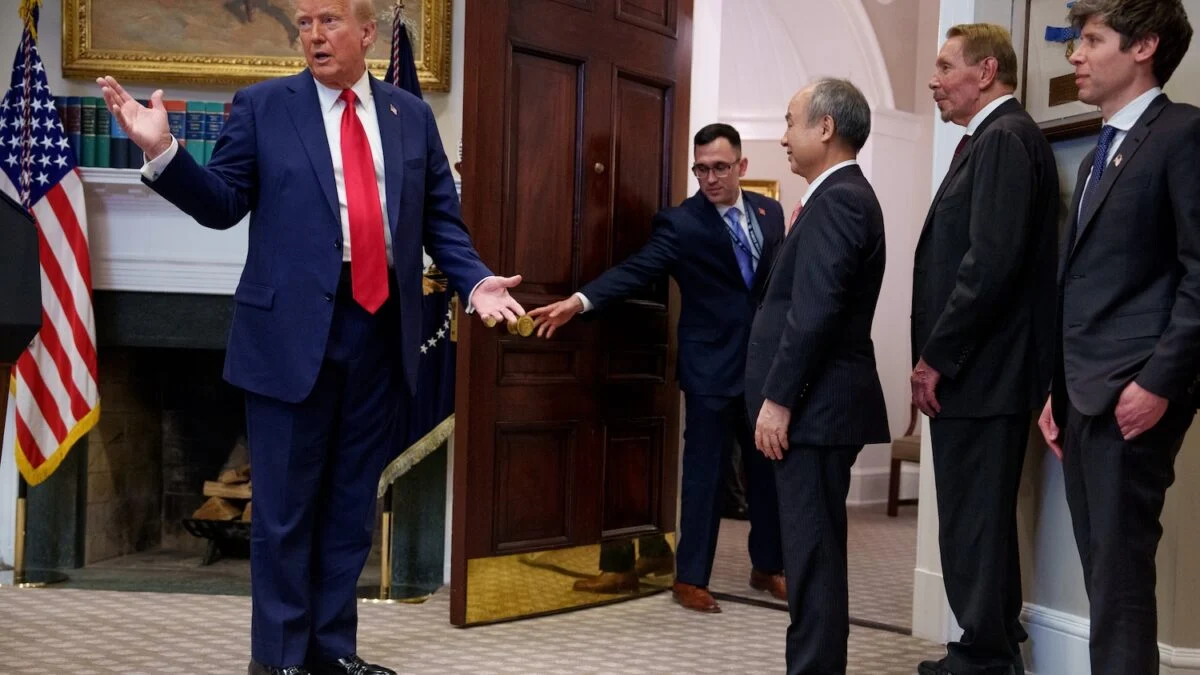
The White House had planned an executive order to create a voluntary review system for frontier AI models. Then it vanished—officially because the president said he “didn’t like certain aspects” and didn’t want to obstruct America’s AI competition with China, and unofficially because executives didn’t make it to Washington in time for the picture, according to Alex Heath and PunchBowl News’ Diego Munhoz. The result: a federal pause and a state-by-state fight filling the void.
OpenAI’s new play: reverse federalism
Lobbyists showed up in Sacramento and Albany with drafts of laws rather than slogans.
OpenAI’s chief global affairs officer, Chris Lehane, calls the tactic “reverse federalism.” In plain terms, the company is trying to replicate a near-uniform rule set by winning enough state-level fights that the country feels regulated without a single federal statute. You’ve seen this before in other industries: where federal movement stalls, the map gets redrawn locally. OpenAI has already backed the AI safety laws in California and New York and is now pushing into Illinois.
OpenAI’s plan is a map redrawn in invisible ink. It looks like decentralization on paper, but it produces predictable, company-friendly guardrails in practice.
What is reverse federalism and how does it work?
Reverse federalism is the strategy of shaping similar laws across multiple states so that, taken together, they feel like national policy. OpenAI drafts model language, endorses bills that mirror the language it prefers, and leans on relationships with state lawmakers to seal the deal. The payoff for companies: consistency without a single, potentially hostile federal regulator.
Illinois: the tug-of-war
In Springfield, two camps are quietly pressing competing drafts into staffers’ inboxes.
OpenAI has publicly endorsed an Illinois bill that would require frontier labs to submit to audits—an echo of the measures it supported in New York and California. But Anthropic, OpenAI’s chief rival, is backing a competing bill. The scene in Illinois is more than local politics; it’s a national template battle between two companies that want to write the rules they will answer to.
How much is the tech industry spending on AI lobbying?
California alone saw roughly $40 million (€37 million) in tech lobbying last year, according to CalMatters, and the spending has only accelerated.
That $40 million (€37 million) figure understates the total influence campaign: millions more are flowing to pro-AI super PACs and PR operations meant to shape public opinion and legislative appetite. Lobbying dollars are fertilizer on a young sapling—they speed growth and bias the canopy toward the interests that paid for them.
Why absence becomes rule
When Washington steps back, private power fills the vacuum with policy drafts and legal blueprints.
Trump’s explicit skepticism about regulating AI and proposals to block state rules for a decade have created an environment where companies can be both architects and clients of the law. You should be skeptical when the entities writing the rules are the ones that will be judged by them. OpenAI and Anthropic aren’t just lobbying for safer AI; they’re wrestling to define what “safe” means, who audits, and how much access regulators get.
You can follow the legislation, the filings, and the press releases, but the deeper story is how modern regulation is being outsourced to the people who stand to profit. That matters if you care about competition, public safety, or the long arc of power—so which side of the rule-writing table do you want to be on?