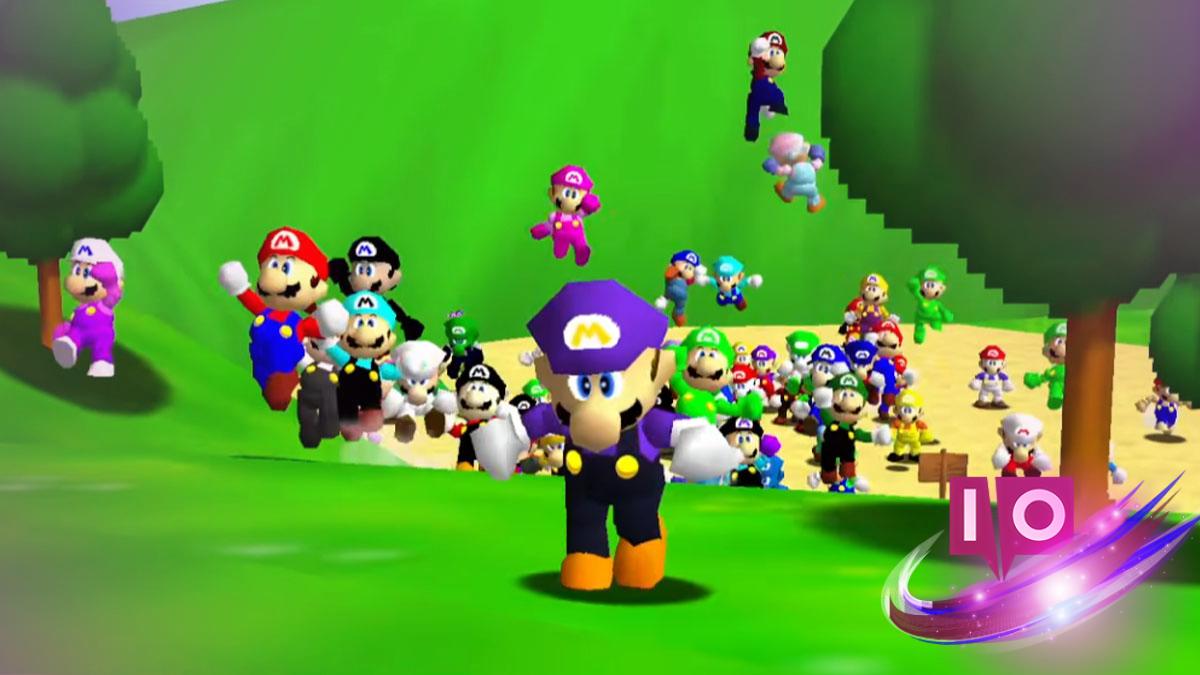
I was in the YouTube stream when the Bob-omb arena filled up: one Mario tripped, another detonated a bomb, and a hundred tiny voices swelled into a single, ridiculous howl. For three minutes the camera couldn’t keep up with the chaos, and then—somehow—the game counted another clear. You could feel something old getting a new heartbeat.
I watched with the kind of nerdy, slightly guilty grin you get when a familiar thing surprises you. You should know I follow speedruns and mod scenes—pars1k_live and louis64_live were in the mix—so I’m not pitching this as novelty. This was a designed mess, and I’ll tell you why it matters.
The loading lobby looked like a subway car at rush hour — how GermGames stitched multiplayer into a solo classic
GermGames took Super Mario 64 and inserted a social engine where none existed. The mod syncs player inputs, spawns 100 Mario avatars, and runs a single shared world across clients. It’s not a polished Nintendo feature; it’s community engineering that borrows from peer-to-peer play, Twitch-run events, and the speedrunning toolbox you already trust.
This was not random chaos for chaos’ sake. The people invited were expert players and known streamers, so when the screen flooded with movement it read more like coordinated anarchy than ignorance. If you follow Twitch or scour YouTube for runs, you know the exact tension: flawless execution meets total unpredictability.
How did 100 players play Super Mario 64 at once?
The short answer: a custom multiplayer mod that relays positions and actions between clients while leaving the original game logic intact. That design keeps collision, physics, and level scripting native to the ROM, while an overlay layer handles avatars and synchronization. Think of it as a wrapper that tricks the game into believing it has more players than it was built to support.
The first star fight looked like a carnival mirror — what happens when precision speedrunners meet controlled chaos
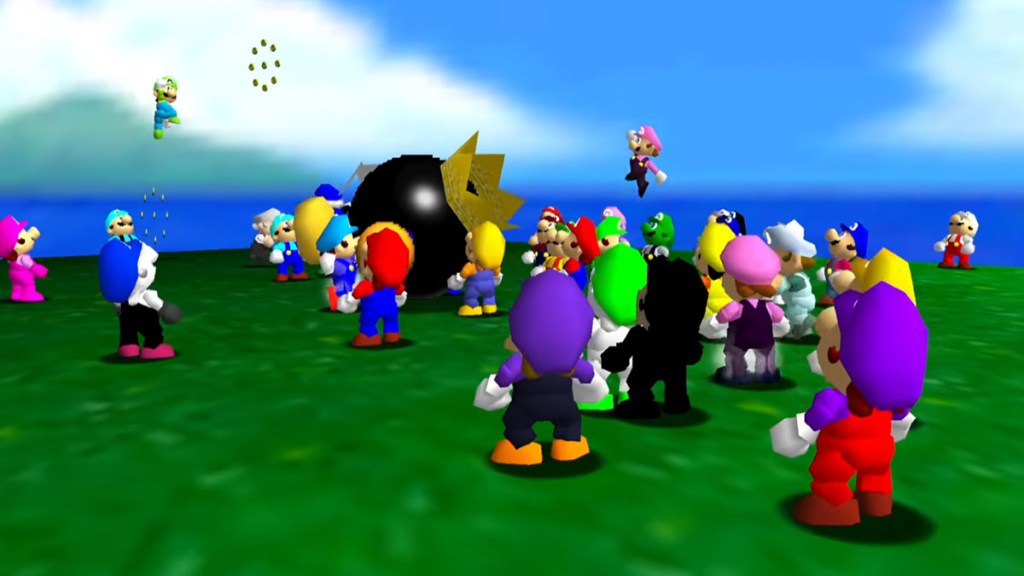
Real-world observation: a room full of friends hitting the same side of a table at once usually produces broken mugs. In the mod, dozens of Marios crowd the same platforms, bumping each other, stealing jumps, and accidentally suiciding off cliffs. Still, the invite list—speedrunners, modders, community figures—meant skill raised the floor. They cleared stages fast enough that the spectacle never grew tedious. It stayed electric.
There are limits. Star collection mechanics in the original game are single-player assumptions made multiplayer, which forces turn-taking for some objectives. To get every player a star they coded a quirky rule: each person needs to beat King Bob-omb individually. The result is equal parts cooperation and competition, and the chat loved it.
Each individual Mario has to kill King Bob-omb for the star?? bro in a genjutsu pic.twitter.com/v2cpj7mPbW
— Pill (@PillMcCawk) May 29, 2026
Can the original game handle multiplayer without breaking?
Yes and no. The core engine continues to run single-player checks, so modders route around those by applying social rules at the client layer. The game doesn’t natively support quorum-driven events, so the mod enforces fairness with turn rules and spawn logic. That keeps race conditions manageable but creates comedic bottlenecks—100 people sometimes means being first is pointless because someone else will grab the star for you.
The crowd behaved like a marching band stuck in the same song — why this is a community triumph
Real-world observation: hobbyist communities often build better parties than corporations because they care more about play than profit. This event showcased exactly that. The mod, the stream, and the guest list read like a love letter from the modding community: engineers, runners, joke-makers, and a few absolute lunatics all gathered to see what would happen.
There’s a humility to this kind of work. GermGames and the participants didn’t try to sell it, they staged it, filmed it, and let the internet decide. The result is one of those joyful experiments that amplifies why modding keeps older games alive: creativity plus constraint often yields something we didn’t know we wanted.
Is Nintendo likely to intervene or allow this kind of play to persist?
Nintendo has historically been protective of its IP, but enforcement varies. Community projects that stay non-commercial and clearly respect platform rules often survive longer. The safe play here was visibility: the event was public, hosted on Twitch and YouTube where pars1k_live and louis64_live have audiences, and that puts it squarely in community spectacle territory rather than a hidden server pulling in cash.
The tiny technical miracles that kept the session moving — a quick tour of the toolkit
Real-world observation: when a live event runs smoothly, it’s because a few people sweat the details you’ll never notice. Netcode wrappers, synchronized state servers, and clever spawn arbitration kept the 100-player session readable. Tools from the speedrunning community—frame-accurate inputs, replay sharing, and Twitch chat coordination—played a huge role.
If you’re curious where to start, look at mod hubs, Twitch streams, and GitHub repos where these projects are discussed. Follow streamers who run mod showcases and check community Discords for playdates. You’ll see the same builders who made this happen: coders, runners, and people who refuse to accept that classics are finished.
This was more than nostalgia. It was proof that classic games can be reframed, stretched, and turned into something social without erasing their identity. I’ll keep watching streams for the next experiment—will Nintendo let a hundred Marios crash Smash Bros. next?