
The thunder of a planet-busting promise lands before a single blue blade sings. You feel the room tilt—fans whisper a name they haven’t heard from the official saga in years. I stood up straight when I heard it: Revan.
I’ve spent years tracing how games and animation borrow each other’s darkness, and you should expect purposeful echoes here. What Star Wars: Visions Presents – The Ninth Jedi teases isn’t cosplay; it’s an idea borrowed, sharpened, and staged by creators who know the old myths as well as the new canon.
At crowded conventions fans still chant the name Revan — why The Ninth Jedi’s villain feels like a direct line to KotOR
On-screen, Nowaam arrives as a shadowy strategist with a helmet and a cloak, but his moves are less Vader costume and more Revan playbook: a commander who trades moral purity for a single, irresistible goal—lasting peace. You see it in the speech about sacrifice, and you hear it in the quiet confidence when he lifts a saber that burns blue.
Nowaam is a moon caught in Revan’s gravity. The resemblance isn’t just visual; it’s psychological. Where Vader leaned on fear and personal vengeance, Revan—and now this new figure—argue for unity through force. That argument changes how you read every heroic response the episode sets up.
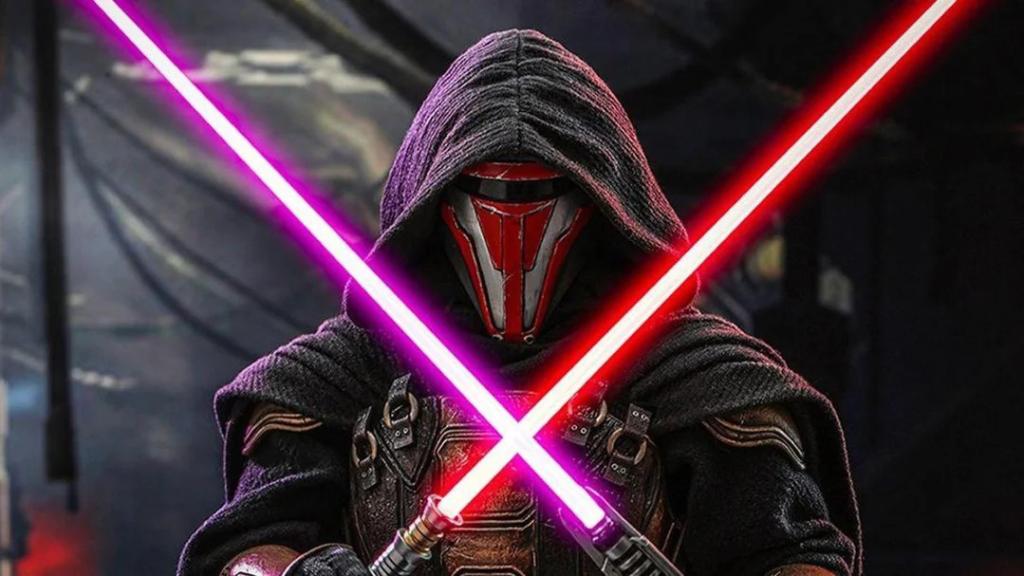
Is Nowaam inspired by Darth Revan?
The short answer is: yes, in tone and moral logic more than in name. Revan’s arc in Knights of the Old Republic—a veteran who chooses authoritarian means to end war—has become a template for sympathetic antagonists. The Ninth Jedi borrows that template and asks you to finish the sentence: when a savior uses terror to make peace, who counts as the villain?
At your desk you can pull up KotOR and see the same moral questions — how the episode borrows the game’s philosophical muscle
The episode’s world plays the same moral ledger BioWare wrote: a war-battered galaxy, a leader willing to cross lines, and heroes forced into impossible choices. That mirror is deliberate. The trailer is a cracked mirror reflecting the same moral math, and it asks you to reconcile sympathy with horror every time the blue saber hums.
Who made The Ninth Jedi and why does it feel different?
Production credits point to studios steeped in anime history—think Production I.G. as a shorthand for the Ghost in the Shell lineage—and Lucasfilm Animation’s decision to hand creative control to outside anime houses is the reason this episode sounds and looks unlike a Skywalker epic. Disney+ distributes it, but the creative fingerprints are studio-level: seasoned directors, animators, and composers who treat Star Wars like a myth ripe for reinterpretation.
At fan Discords you’ll already see theories about Revan and remasters — the industry connections that matter
If you’ve followed the KotOR saga, you know the name Revan is guarded by fans and companies alike. BioWare built the character’s lore; Aspyr and other publishers have handled modern ports; Hot Toys makes collectible figures that cement a character’s cultural weight—some Hot Toys figures regularly retail around $250 (€232). Those commercial and creative threads keep Revan’s influence alive across media.
How does this episode connect to Knights of the Old Republic lore?
The connection is thematic and ethical more than canonical. Expect nods: war-scarred settings, leaders who rationalize mass control, and sabers that reveal character rather than simply align color with morality. Lucasfilm has been careful about direct canonical crossovers, so what you’re seeing is resonance, not a retcon of Old Republic history.
I’ll say this plainly: the episode trusts you to hold two uncomfortable truths at once—you can admire a strategist who stops wars and still recoil at the methods he chooses. That tension is the engine of the story, and it’s why the trailer landed so hard for longtime KotOR devotees and new viewers alike.
If The Ninth Jedi is a tribute, it’s also a conversation starter—between game studios like BioWare, animation houses tied to Ghost in the Shell, and Lucasfilm’s modern custodians—about whether moral compromise can ever justify wholesale control. Where do you draw the line between a peace that saves lives and a peace that steals them?