
The handshake felt small under the stadium lights. I watched a prospect slide away because I hadn’t spent an extra week on him. You can feel it: recruiting flips from luck to leverage the moment you treat it like a project.
I write this as someone who has lost a recruit and learned how to stop losing them. You and I will use the game’s tools—Dynasty Mode, the Recruiting Board, and your available Hours—as instruments, not wishlists. Treat recruiting like a chess match; every move counts.
How does College Football 27’s recruitment work
I’ve watched rosters implode when staff ignored positional need lists during an offseason. In College Football 27, the Recruiting section hands you the same responsibility: spend limited resources to scout, court, and lock prospects that fill holes on your roster.
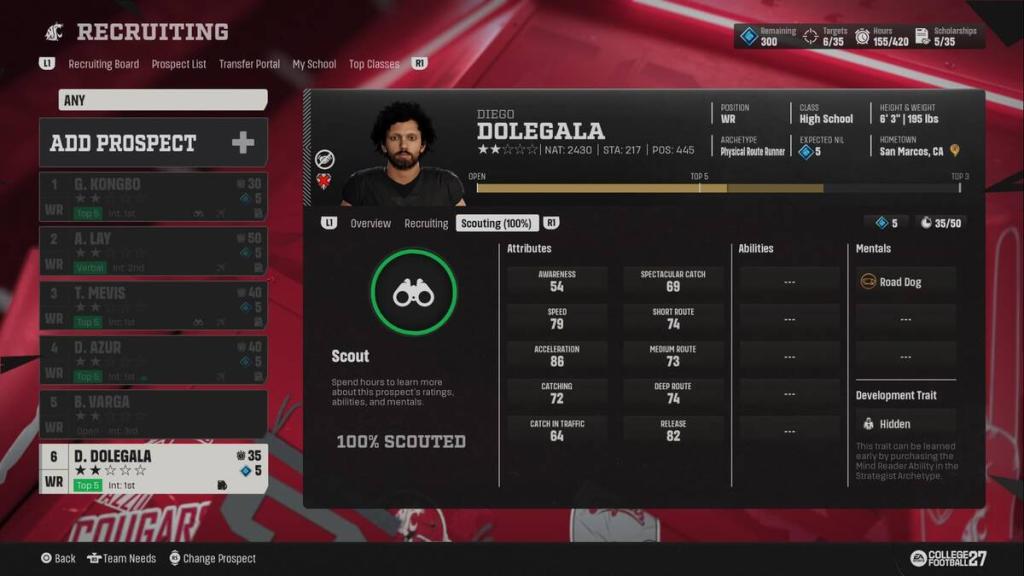
Every prospect comes with a handful of numbers that actually mean something in-game:
- Rank: Where the prospect sits inside their recruiting class.
- Need: How well they patch a gap on your roster.
- Rating: The 1–5 star shorthand for perceived talent.
- INT: Interest level — how likely they are to choose your program.
- Stage: How far along the recruitment is toward a decision.
How does College Football 27 recruitment work?
Short answer: you scout to reveal traits, add prospects to your Recruiting Board, spend Hours and Dynasty Points to raise interest, and push them from Open to Verbal to Hard commits. The system rewards focus: pouring resources into positions of real need gets you usable players faster.
How to recruit in College Football 27
I still start every Dynasty season with the Team Needs screen; it shows where the roster will crack under pressure. From the home page hit Recruiting, then Add Prospect, but don’t add names like you’re collecting trading cards—add them because they solve a problem.
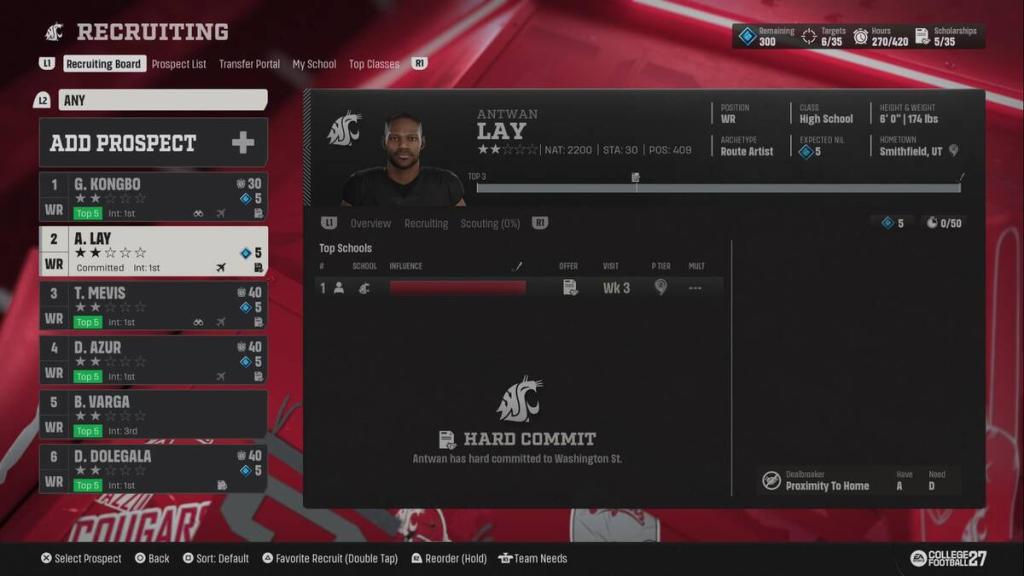
I always start from Recommended. It filters prospects by fit and gives you a faster route to impact players. Add receivers if you need explosive plays; add defensive talent if you’re bleeding points. The Recruiting Board fills with the prospects you append, and that board is a magnet — it shows you where to spend your limited Hours and Points.
How do you recruit players in College Football 27?
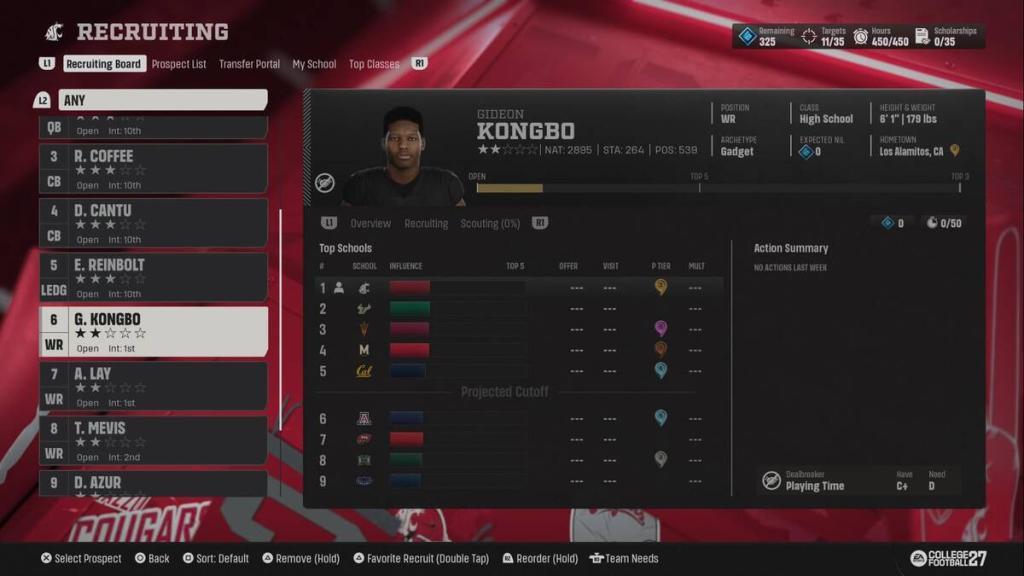
Scout first. Spend Scouting Hours to reveal attributes, Abilities, and Mentals before you offer a scholarship. After that, offer the scholarship and use Dynasty Points to lift their interest if needed. Different athletes require different investments; some will take small nudges, others a sustained push.
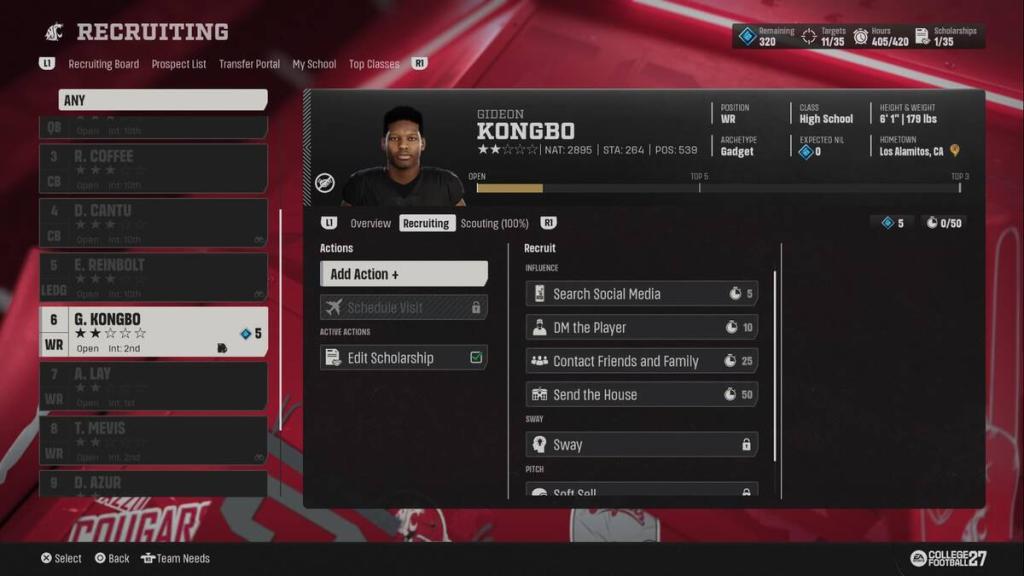
Actions raise interest at different costs. Sending the House costs 50 Hours, so weigh that against other Month-to-Month priorities. There’s an overall limit on Hours, and Dynasty Points are finite, so split your spending: spend enough to lead the race, but save some to push a closing sprint when the prospect nears a decision.
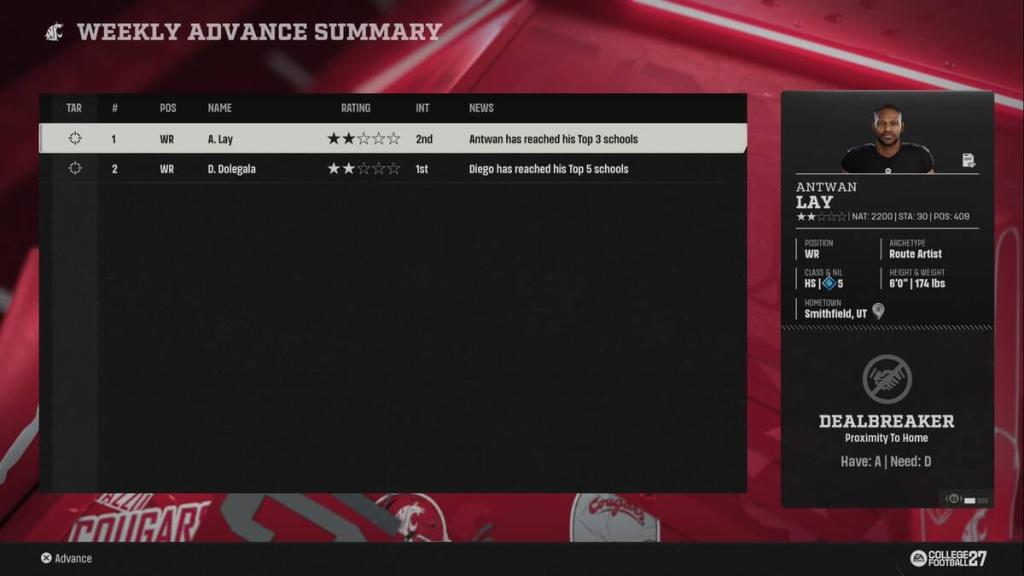
If you sit in a prospect’s Top 5, the game may open a Visit option. Visits accelerate decisions and are usually worth the Hours. If you reach the top of someone’s list, press the advantage: invest more to speed up their decision rather than hoping others fumble.
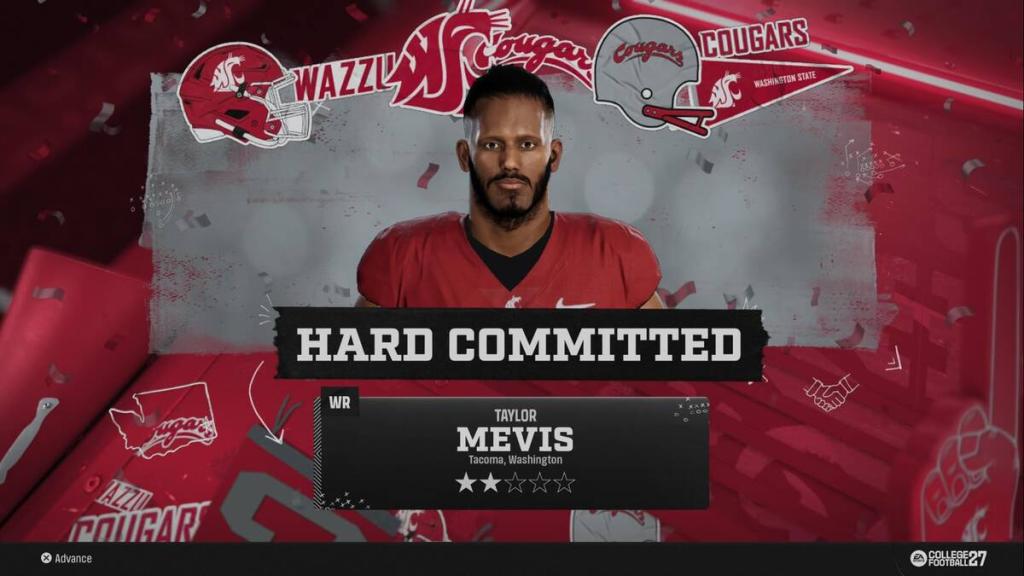
What are Dealbreakers in College Football 27?
Dealbreakers act like vetos: if your school grades worse than a prospect’s minimum on a Dealbreaker, they will never sign. There is no bypass. Pay attention to academic standards, facilities, or location preferences listed — those markers will silently remove candidates from your pool if mismatched.
Commitments come in two forms: Verbal and Hard. A Verbal means the prospect is leaning toward you but can be stolen; a Hard commit is locked and cannot be taken away. Build your calendar and spend strategically to convert Verbals into Hards when you can.
Tools outside the game help you judge real-world fit: sites like 247Sports and Rivals map trendlines and recruiting chatter you can mirror in your decisions, and outlets like Moyens I/O often show screenshots of the interface so you don’t waste Hours learning what a button does. Use those signals, not as gospel, but as a directional compass.
If you want one rule to carry into every recruiting cycle: prioritize need and information. Scout to learn, then spend to lead. Will your next class be defined by a single push or by quiet patience?