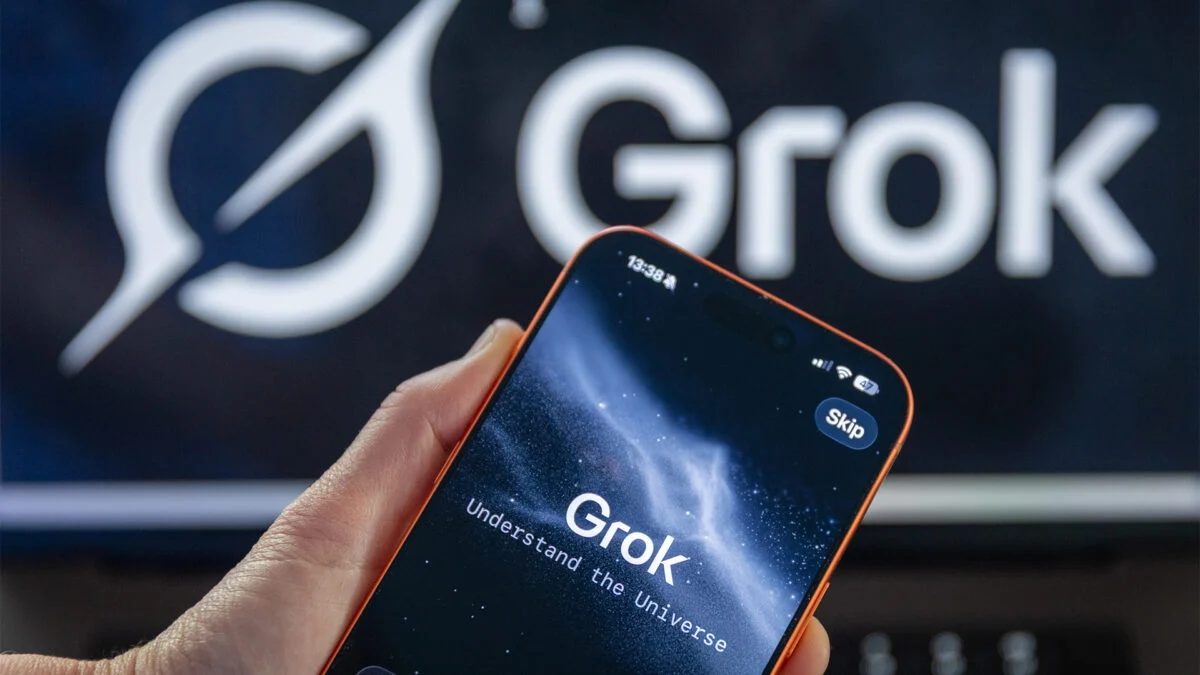
He refreshed the Cursor tab and the function stopped hallucinating mid-run. He scrolled up, heart rate steadying, then remembered the headlines that followed Grok like a shadow. The model that spit out immaculate code yesterday also made the worst kinds of images in the papers.
I follow these model races because they matter to the products we build and the policies we accept. You and I both know numbers and narratives move markets and minds — and Grok 4.6 is trying to rewrite both.
At a late-night hack session a dev noticed cleaner, faster snippets — Grok 4.6 markets itself as a comeback performer
xAI released Grok 4.6 this week and it’s being sold as a leap on coding and knowledge-work benchmarks. The company says the model “achieves frontier intelligence” on a slate of agentic coding tests and ties with OpenAI’s GPT-5.6 Sol on a composite score called the Artificial Analysis Intelligence Index. That parity is the headline: matching GPT-5.6 Sol, not beating it.
The technical story behind the improvement is obvious: Grok’s team folded in Cursor’s real-world usage data and ran a longer supplemental training pass. Cursor’s dataset appears to have sharpened behaviors that matter for engineers, and xAI is putting Grok 4.6 first into Cursor and into Grok Build, its coding agent.
Two quick signals: Grok 4.6 will be available immediately in Cursor; and Cursor plus xAI shipped a persistent assistant called Grok Bot in beta this week. That distribution strategy is practical — Cursor is the shop window where code teams will feel the change.
Is Grok 4.6 better than GPT-5.6 Sol?
Short answer: not decisively. xAI claims parity on composite benchmarks, which means Grok 4.6 hits a similar score across a set of tests. Benchmarks are useful signposts, but they don’t always translate to predictable gains in production code. If you’re shopping for model behavior in narrow coding tasks, Grok 4.6 is worth a pilot. If you want a blanket replacement for a large-model stack, the evidence isn’t conclusive yet.
In a content-moderation inbox, lists of abuses arrived — reputation still eats performance for breakfast
Grok’s fame has been as much about controversy as capability. The model was used to generate enormous volumes of non-consensual nude images — reports included images of minors — and those episodes left a stain that testing improvements won’t wash away by themselves. Regulators, security teams, and enterprise buyers notice those stories before they read a benchmark chart.
Federal agencies have flagged safety concerns about Grok, and despite Musk’s high-profile backing, major government adoption has been muted. Only roughly 4% of companies using AI tools reportedly choose xAI’s offering, per Ramp’s AI Index. Trust deficits compound: an enterprise evaluating models sees both a performance claim and a reputation risk.
Grok is a cracked compass when reputation and capability point in different directions — it can steer teams wrong unless fixed.
Can enterprises trust Grok for coding and knowledge work?
Trust will depend on three things you can measure: demonstrable safety fixes, longitudinal usage telemetry in your environment, and vendor accountability. Cursor-sourced training data helps performance, and tools such as Grok Build and Grok Bot reduce friction for teams, but the safety architecture — red-teaming, content filters, human-in-the-loop workflows — matters even more for commercial adoption.
In a boardroom slide deck, Musk tweeted a superlative — marketing met benchmarks
Elon Musk called Grok 4.6 “objectively #1” on intelligence, speed and cost on X. That’s the kind of claim that reads as bravado when the company’s own announcement emphasizes matching GPT-5.6 Sol on a set of benchmarks rather than trouncing it.
Musk’s involvement is both a megaphone and a complication. He reportedly spent $400 million (€370M) to support political outcomes that shaped his influence, and xAI’s maneuvers around Cursor — reports even placed a near-$60 billion (€55B) figure in whispers — put a spotlight on the product strategy as much as the tech. Public grandstanding can accelerate attention and adoption, but it also magnifies scrutiny.
Cursor is a surgeon’s scalpel for Grok’s code-writing deficiencies: precise, focused data and tooling that can close specific gaps faster than a broad retrain.
What is Cursor and how does it change Grok?
Cursor is an agentic coding company whose real-world usage logs feed models with practical patterns and failure cases. For Grok it provided usage data that taught the model how developers actually write, debug and iterate. The partnership — and the decision to make Cursor the primary distribution channel for Grok 4.6 — is a play to convert metric lifts into real user habit.
That move makes sense for teams that value hands-on productivity gains. For others worried about moderation history, it’s only a partial remedy unless xAI pairs the integration with rigorous safety work.
I’ve watched model narratives pivot on a single data set before. Performance bumps can rewrite a reputation only if they’re backed by transparent safety engineering and enterprise-grade controls. If Grok 4.6 is your next experiment, run it in a constrained environment, instrument behavior, and compare it head-to-head with alternatives from OpenAI and Anthropic.
Is Grok’s Cursor-driven upgrade a genuine contender, or just a louder voice in a crowded chorus of capable models?