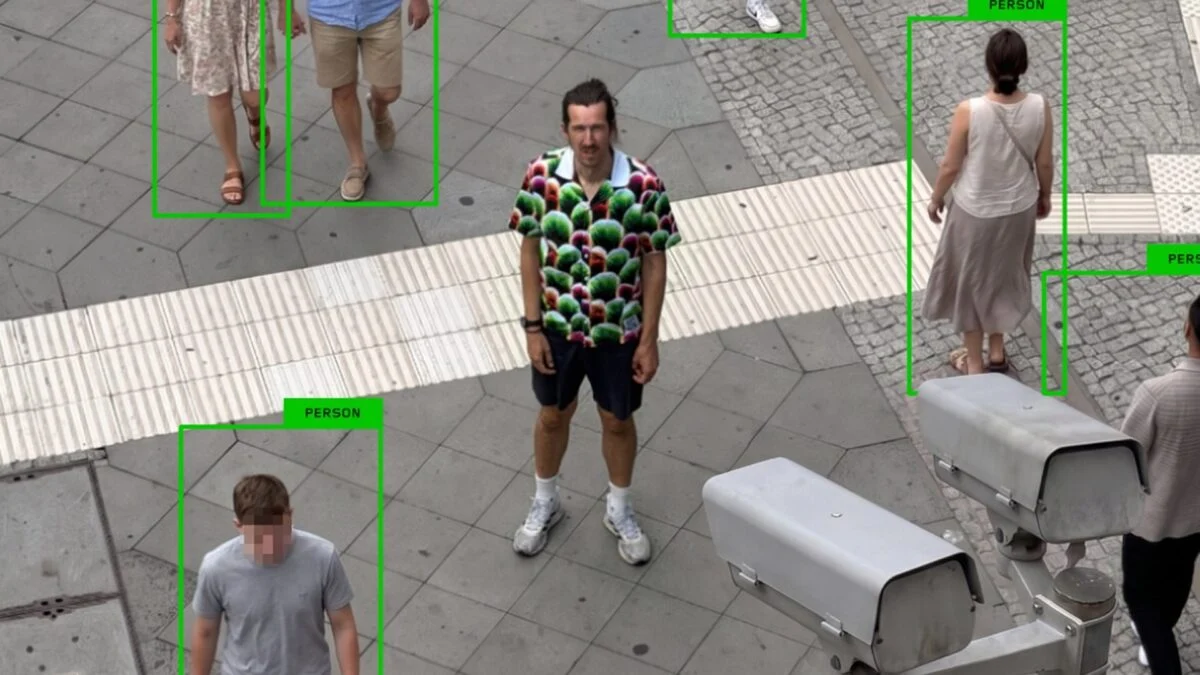
I watched a man in a garish shirt walk under a Flock camera and vanish on my laptop screen. The room smelled faintly of coffee and municipal anger—someone had just suggested hanging a CEO on live record. You feel that split-second panic: the cameras are everywhere, and fashion may be the only thing moving faster than the algorithms.
I’m writing to you because you want options that don’t require lawsuits or sledgehammers. I follow designers, hackers, and the tools they use so you can decide what’s worth buying, what’s theater, and what actually bangs the AI’s head against its own code.
At a Sullivan County meeting a commissioner called for a CEO to be hanged — why the backlash feels personal
People are furious because something intrusive appeared on streets without a town vote: roughly 130,000 automated license plate readers and an army of AI cameras. That anger feeds everything you see now — protests, ballot measures, vandals with bolt cutters, and a cottage industry offering camouflage in fabric instead of graffiti.
Public fury is the audience; the cameras are the antagonist. Companies like Flock sit at the center of the story, and political pressure has pushed surveillance into election-season airtime. You can’t wave away the fact that legislation moves slowly while outfits and hacks iterate overnight.
What is adversarial clothing?
Adversarial clothing is deliberately patterned or constructed to confuse machine vision models — the same models used by surveillance systems. Designers produce images or textures that force object detectors to misread or ignore the human form, turning a person into statistical noise.
The most visible name here is Simon Weckert, who made a short-sleeve button-up called Digital Camouflage. He didn’t guess at pretty patterns; he fed candidate prints into object detectors and tweaked them until the detector’s confidence imploded. The result reads to a human as a neon protest sign sewn into a dress, and to a detector as nothing at all.
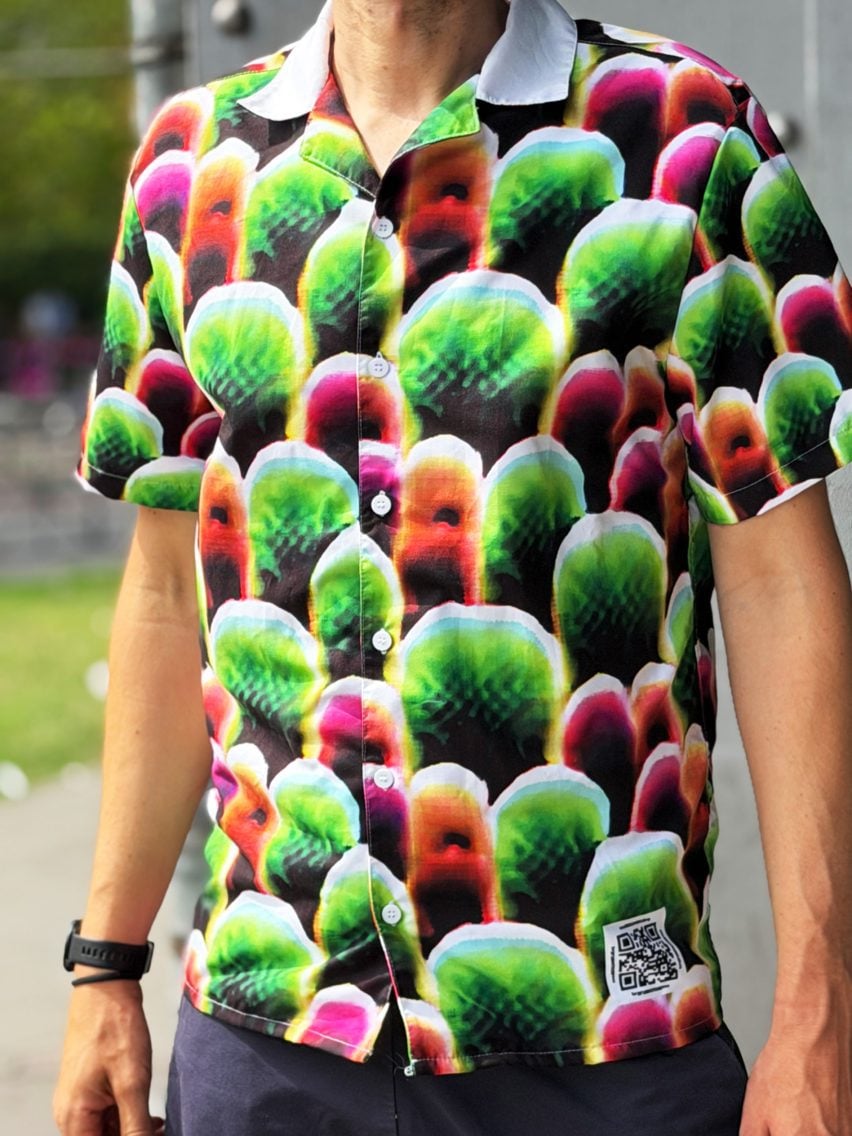
I ran the tests in a browser and the shirt’s wearer disappeared from the detector
I took Weckert’s approach into a local experiment: I fed a detector frames where background pedestrians were boxed and one patterned subject wasn’t. The pattern works because detectors learn statistical averages from millions of images, not an essence of “human.” When you flip those statistics, the detector hesitates.
The trick is adversarial training: generate a candidate, show it to the detector (for example, an open-source model like YOLO), measure detection confidence, tweak the pattern, repeat — an iterative loop that defeats the model’s assumptions.
Does anti-AI clothing actually work?
Short answer: sometimes. In controlled tests with YOLO or browser-based detectors the effect can be dramatic — people in patterned shirts are ignored while others in the frame are detected. But performance drops with angle, resolution, or when models are retrained on adversarial examples. Context matters: a CCTV rig tuned for license-plate capture will behave differently than a body-detection model used in a mall.
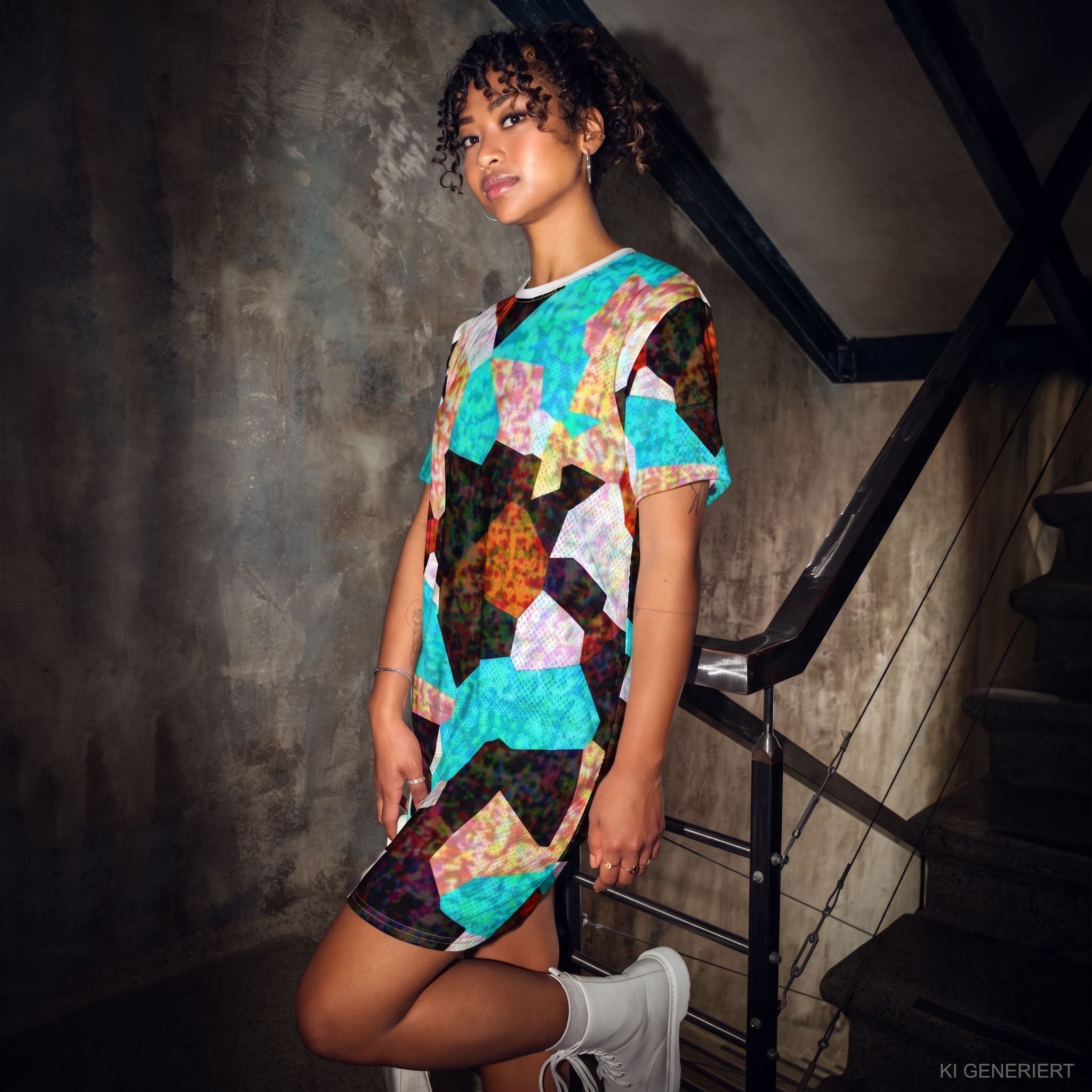
On e-commerce sites small brands sell scarves and hoodies next to expensive knits — here’s what they cost
Urban Privacy advertises scarves and tees that aim to scramble cameras; Cap_able markets a knit capsule with a design-forward pitch. You can buy a budget scrambler for about $60 (€55) or a designer knit for roughly $350 (€322).
Prices matter because fashion needs to scale to matter. If anti-AI garments stay boutique, they’ll read as political props. If they become everyday options, they change how surveillance behaves on a street-by-street basis.
Where can I buy anti-surveillance clothing?
Start with Simon Weckert’s Digital Camouflage and scan independent shops like Urban Privacy and Cap_able. Read the product tests, ask the seller which detector models they targeted, and remember: one pattern won’t fool every camera.
On a subway platform a patterned shirt is now a political act
These garments are protest, armor, and art at once — and that combination is why the movement spreads. Designers weaponize training sets; cities respond with policy talks and, sometimes, criminal charges over altered license plates or obfuscation shields.
Adversarial clothing is a rapid experiment in public privacy. Some pieces will be fads, others will force re-training of models and new laws. The bigger test is social: will these garments normalize resistance, or will they push surveillance to higher resolutions and stranger data-collection techniques?
I’ve shown you the tests and the vendors. You know the risks and the payoff is messy. Are you going to wear defiance as a button-up, or wait for the lawmakers to catch up?