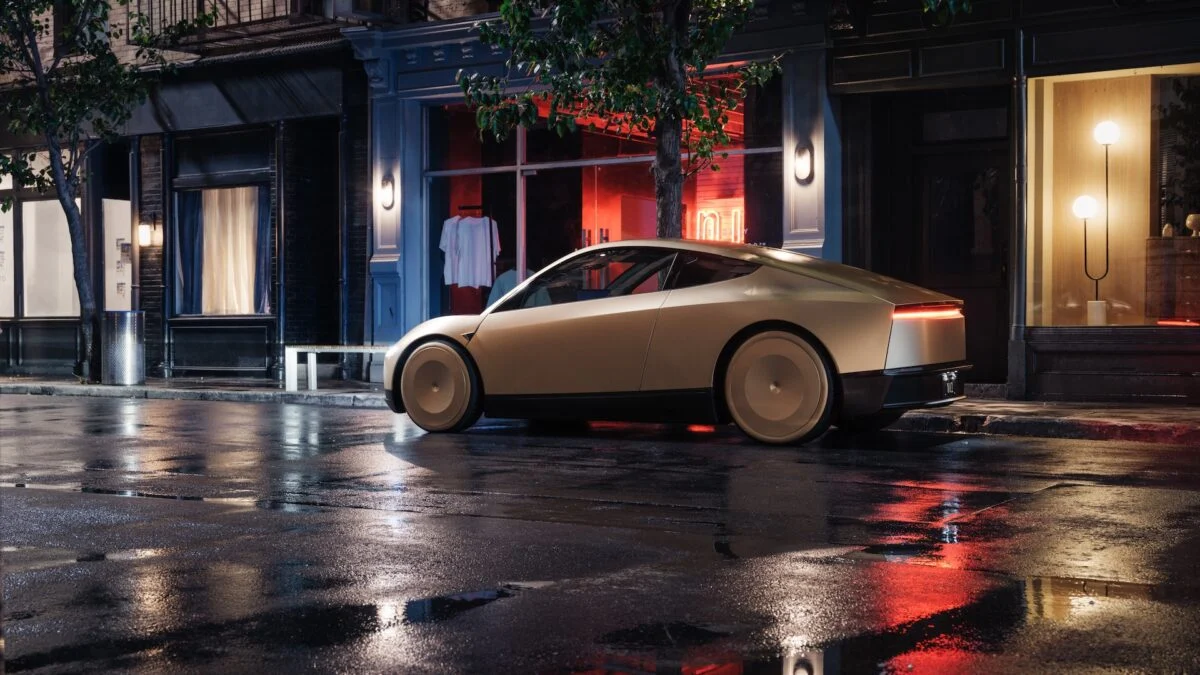
The Cybercab rolled into Austin at dusk. Within hours, federal headlights blinked on. I watched a tiny fleet hit its first bureaucratic pothole.
I’ll walk you through what happened, what the feds are asking, and why you should care — in plain language and short steps you can follow. If you’re thinking about riding—or buying—this matters to you.
The Cybercab arrived in downtown Austin and immediately drew attention
Tesla staged a brief launch in downtown Austin and put a few robotaxis on the street the same week. The event itself was short, CEO Elon Musk was absent, and the company quietly posted a form for fleet buyers on its site.
The rollout was like a curtain rising on a risky act. Engineers gave a sub-15-minute presentation, cameras caught the interior, and Tesla claimed the broader Robotaxi fleet has logged more than 1 million miles of unsupervised driving.
Cybercab is democratizing clean transportation for all pic.twitter.com/Raz5dy2Q3Z
— Tesla (@Tesla) September 3, 2026
Is the NHTSA investigating Tesla’s Cybercab?
Yes. On Thursday the National Highway Traffic Safety Administration opened a probe into the process and technical data Tesla used to certify the Cybercab under federal rules.
I read the NHTSA summary: Tesla told the agency it had certified a small number of Cybercabs as meeting all applicable Federal Motor Vehicle Safety Standards (FMVSS). The tricky part is that the Cybercab lacks traditional controls—no steering wheel, no pedals in the cabin many of us expect—and some FMVSS call for equipment the vehicle does not have, like a brake pedal and rearview mirrors.
Regulatory scrutiny felt like a chess clock ticking; the agency wants to know whether Tesla was right to decide certain standards did not apply. NHTSA Administrator Jonathan Morrison framed it plainly: the agency supports automated vehicle development, but laws still have to be followed.
The future has arrived in Austin pic.twitter.com/RTCb0O5sez
— Tesla (@Tesla) September 3, 2026
What safety standards does the Cybercab need to meet?
At the center are FMVSS rules that assume a human driver with pedals, mirrors and manual controls. Tesla has to show — to NHTSA — why certain rules either don’t apply or how the vehicle achieves an equivalent level of safety without that hardware.
There’s precedent: Amazon’s Zoox, another robotaxi without traditional controls, secured a demonstration exemption in 2025 and a temporary exemption this July allowing up to 2,500 robotaxis annually for two years after NHTSA accepted an equivalent safety case. The agency has also proposed updating brake-pedal requirements for vehicles intended to be driven only by automated systems.
NHTSA’s probe summary says investigators will examine Tesla’s certification process and technical data to see how the company reached its conclusions.
A small fleet began carrying passengers and a corporate message popped onto the site
Tesla quietly launched a handful of Cybercabs into Austin service and posted a fleet-interest form on its website. The company also touted rider experience in social posts.
Musk has said individuals could eventually buy a Cybercab and add it to Tesla’s network so the car could operate as a robotaxi when the owner isn’t using it. Right now there’s no firm date or price for consumer sales, and Tesla did not immediately respond to requests for comment about the NHTSA probe.
Cybercab is designed to be a great experience for every rider pic.twitter.com/wG0jrvJ6pX
— Tesla (@Tesla) September 3, 2026
Regulators opened an investigation while cars were still on the curb
The NHTSA probe is a reminder that rapid technological rollout and regulatory comfort rarely move at the same speed. You should care because this affects who gets to say what’s safe on your street and under what evidence.
I follow these threads professionally: exemptions, proposed FMVSS updates, and precedent cases like Zoox are the levers regulators use when new vehicle designs don’t fit old rules. For you, the point is simple—claims about safety and millions of miles of testing are one thing; documentation submitted to NHTSA is another.
So as Tesla markets robotaxis and auctions ride data as proof, the agency is asking for the paperwork and the technical reasoning that let Tesla certify the Cybercab as compliant. If you ride one or own one someday, you’re effectively putting yourself into a live experiment where federal rules and corporate judgment intersect.
Who gets to decide when a car without pedals is safe enough to carry you?