
The monster erupts through a neighbor’s chest under a flickering streetlight. I read that panel in the quiet hours and felt my breath hitch. You won’t be able to unsee the way the pages grin at you while they shred the world.
I’ve followed Muneyuki Kaneshiro since the Blue Lock explosion, and I read early English pages of his earlier shocker, Jagaaan, so you don’t have to wander blind into it. Think of this as a guide from someone who’s seen how the gears mesh — the author, the artist, the publishing route — and what the book is trying to pull out of you.
On the commuter train people scroll past flashy covers; why Jagaaan hooks you
The premise is aggressive and immediate: a frog-like parasite burrows under skin and turns ordinary people into monsters that embody their secret selves. Kaneshiro takes a small-town neighbor’s boredom and turns it into a public emergency, and your attention is the target.
The story wastes no time asking moral questions. Instead it forces you into spectacle and then lets your unease catch up. If you’ve felt the twinge of petty violence in a polite life, Jagasaki’s sudden conversion into a murderous, gun-armed force will land with an electric jolt.
At a backyard barbecue you notice the quiet guy smiling too much; why Jagasaki is unsettlingly familiar
Jagasaki is a “nice guy” with a boiling interior. He has a girlfriend, a steady job as a local cop, and a persona that keeps social friction at bay — until the world hands him permission to act on violent urges.
I watched the character shift and felt the hairline cracks widen into canyons. Kaneshiro writes the internal monologue of somebody who’s been gaslit by normalcy; the result reads like a blender of Kamen Rider and Parasyte. The moral mirror it holds up is ugly and hypnotic.
In a comic shop a bold cover will split opinion; why Kensuke Nishida’s art makes the book sing and scream
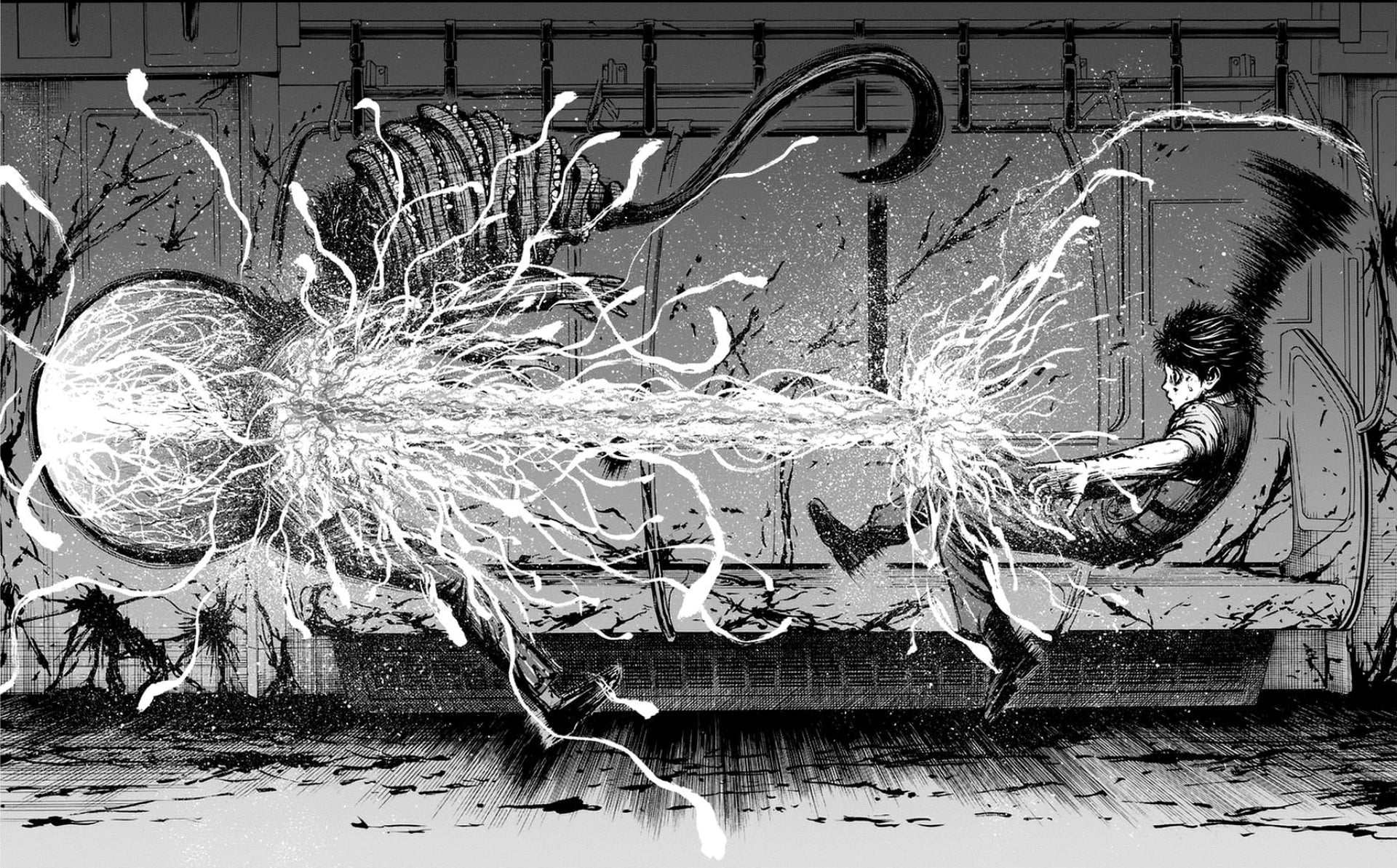
Nishida’s visuals are contorted, grotesque, and precise. Faces droop into caricatured panic, limbs twist into instrument-grade horror, and the contrast between everyday furniture and mutated flesh is grotesquely elegant.
The pages feel theatrical and intimate at once. Nishida’s layouts throw you into motion, and the shock panels land like a carnival funhouse — you laugh, you flinch, and you keep turning pages to see how ruined the next face will be.
Is Jagaaan similar to Parasyte?
Short answer: it shares DNA with Hitoshi Iwaaki’s Parasyte — an invading organism, intimate body horror, and a protagonist forced to reconcile violence with identity — but Kaneshiro bends the tone toward manic pleasure and social satire. Where Parasyte often philosophizes, Jagaaan delights in the messy human breakdowns and grimly comic payoffs.
At a publishing meeting people ask “what will sell?”; how Jagaaan made its way to English shelves
The series ran in Shogakukan’s Big Comic Spirits from 2017 to 2021, then caught international eyes because Kaneshiro later wrote Blue Lock, which the anime helped explode on Crunchyroll and streaming chatter. Kana Manga (an Abrams ComicArts imprint) is now releasing an official English edition, so physical copies will be straightforward to find.
Where can I buy Jagaaan in English?
You can pre-order through major retailers and the publisher: the first volume is listed at $14.99 (€15) and ships on September 29. That price point puts it in the same aisle as other mainstream single-volume manga releases from Abrams, so buyers who follow Kana Manga will see it pop up alongside other curated catalog drops.
At a late-night forum someone will compare creators; why Kaneshiro and Nishida’s pairing matters
Kaneshiro’s plot instincts — the social sting, the moral abrasion — meet Nishida’s visceral linework and the result is tightly calibrated chaos. If you follow manga creators, this pairing reads like two artists who know how to prod the reader and then pull the rug.
That chemistry recalls collaborations such as Kaneshiro’s willingness to push tonal extremes (seen later in Blue Lock) and reminds me of other bold teams like Akira Hiramoto’s shock-value runs. The publishing pedigree and the art direction make this one of the more audacious horror reads to arrive in English this fall.
Practical note: If you’re a collector, Kana Manga’s print run will probably move faster than a typical midlist title thanks to Kaneshiro’s name recognition. The release timing — late September — puts it squarely into Halloween attention cycles, which retailers and social platforms will amplify.
I’ve told you what stings, what makes you chuckle at the wrong moment, and where to find a copy — but here’s the final provocation: are you ready to cheer when a man with a gun-arm starts cleaning up monsters, or does the thrill tell you something darker about who you are?