
I caught a late-phase boss attack and watched a perfect run evaporate in the span of a heartbeat. I sat there, controller warm in my hands, and realized the game had just taught me its rules—brutally and quickly. You’ll feel the same tug: this is one of those games that demands attention and rewards precision.
I’m writing as someone who has lived through the roguelite shuffle, and Morbid Metal surprised me. It’s not a robe-and-dagger roguelite with a safe loop; it’s a character-action experiment wearing a roguelite structure, and the results are electrifying more often than they’re frustrating.
At 2 a.m., I learned the combat the hard way — and then I loved every brutal second
The first thing that grabs you is the combat. Inputs land instantly. Animations are crisp. The whole system pushes you to string moves together, punish mistakes, and reward stylish play.
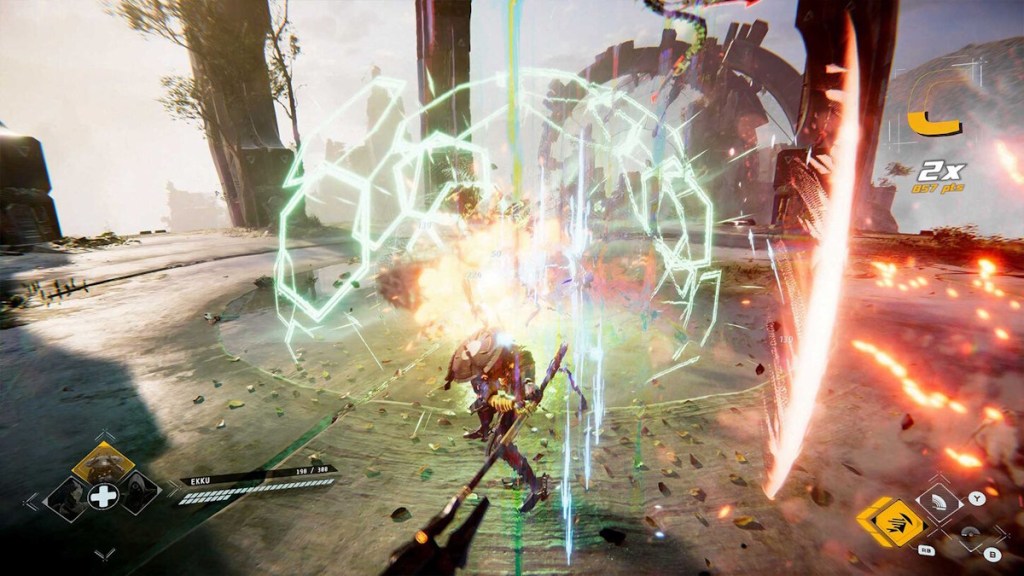
The combat hits like a freight train, which is to say it lands heavy and refuses to be ignored. You can open with Flux for speed, tag with a ranged ability, then switch to Ekku for a violent finish. The style-rank system nudges you toward clean, varied play: stay nimble, avoid damage, and your rank climbs; get sloppy, and it tumbles back down.
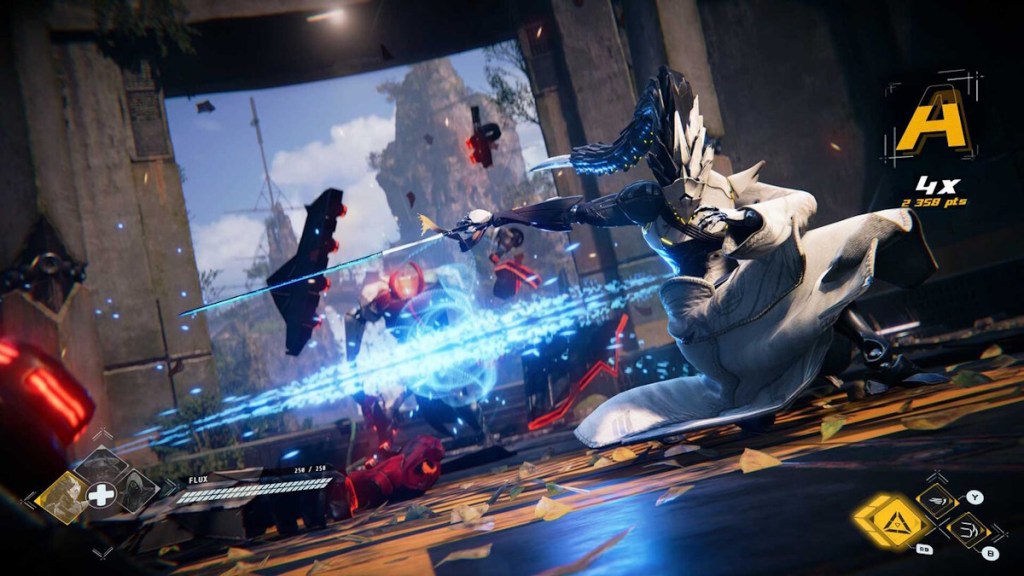
I found myself mid-air switching characters like it was the obvious move — and it usually was
Morbid Metal’s identity lives in the swap mechanic. It refuses to treat switching as a novelty; it’s the spine of combat. You jump between Flux (speed), Ekku (power) and Vekta (control), and your choices dictate how a fight resolves.
The swap mechanic is a jazz solo: improvised, risky, and glorious when it locks. Since characters share a health bar, wild swapping without thought will get you killed, but deliberate rotations can trivialize encounters and raise your style score. I found myself chaining mid-air juggles by swapping characters—chaos that feels purposeful.
How does the swap system work in practice?
Each character carries unique kit and movement. You’ll tag enemies, land a few hits, then switch to exploit openings. It’s part timing, part read, and part muscle memory. SCREEN JUICE designed it so that smart rotations win fights more often than sheer power upgrades.
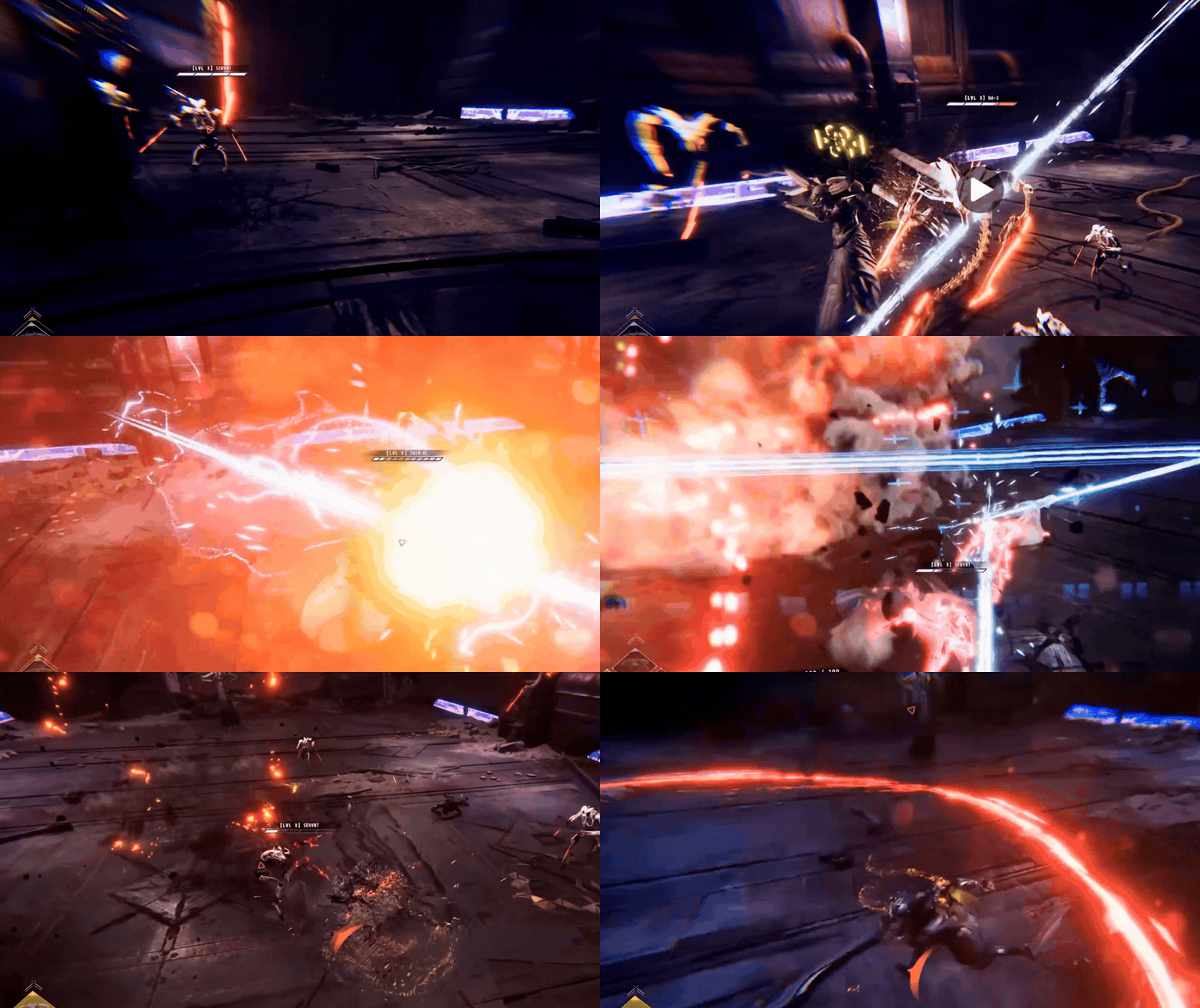
I noticed my hands moving before my brain did — the game forces momentum
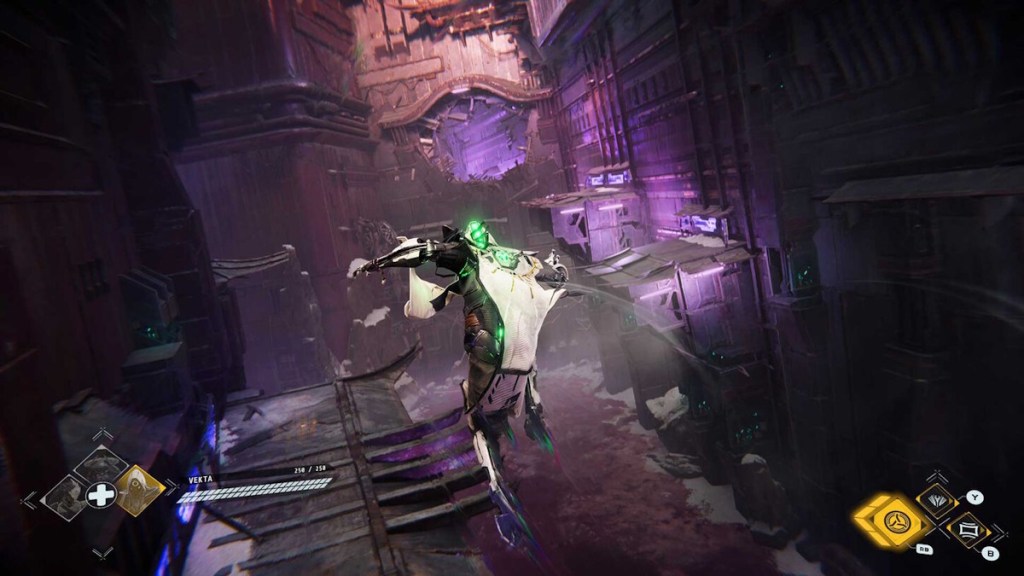
Movement is as important as attacks. Dashes, double-jumps, and constant repositioning are the baseline. Standing still is a fast way to get punished; the game rewards motion. Even simple corridor traversal has a rhythm you’ll learn to respect.
That momentum is intoxicating until it isn’t. Pacing sometimes hiccups: a brutal multi-wave room can be followed by a long, empty hallway. The silence looks good, but it breaks the loop. More mid-run events, branching paths, or tighter pacing would patch those gaps without changing what’s already working.
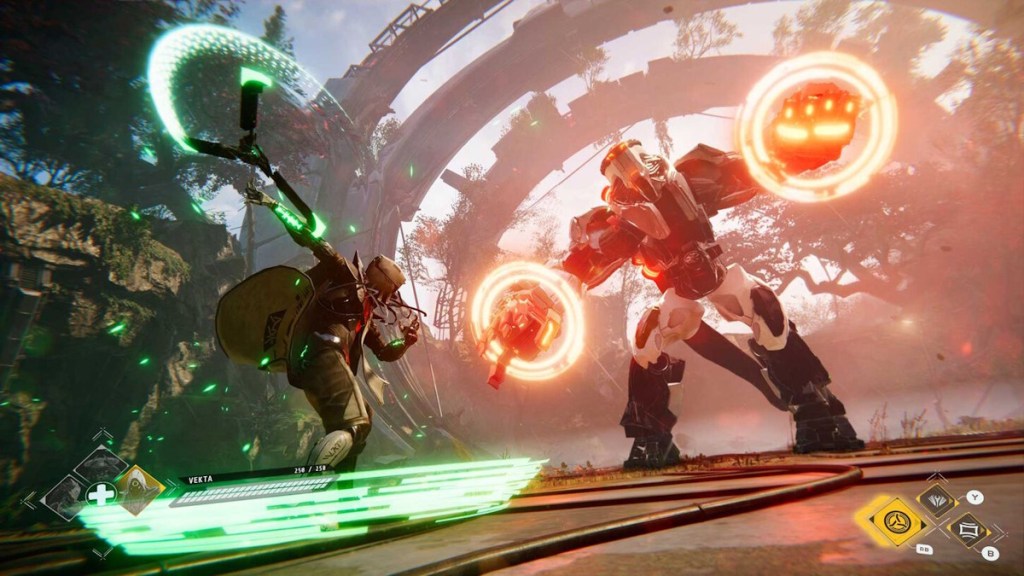
I got bodied by a boss that taught me to read patterns instead of muscle memory
Boss fights are demanding and fair. Multi-phase encounters force you to adapt mid-fight. I had a run that felt locked until a late-phase attack clipped me; that loss stung, but it felt earned rather than cheap.
Design here favors readability. If you study moves, you can react and counter. Optional arenas and timed trials add variety and rewards, though some of them repeat similar setups. They’re useful training grounds for the kind of high-skill play the game encourages.
I watched the game run silky-smooth on both PC and handheld — performance rarely got in the way
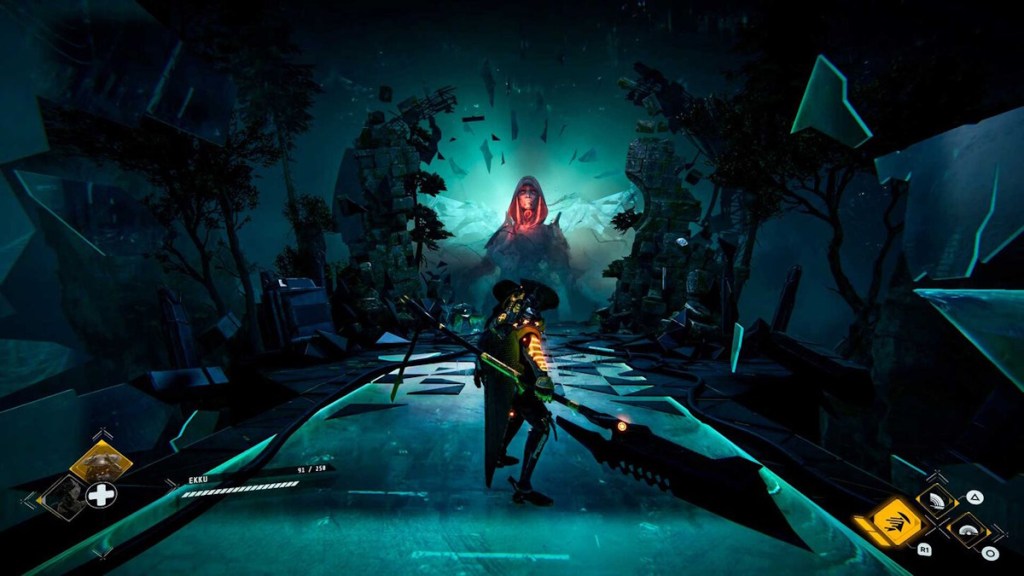
Visually, Morbid Metal favors clean dystopian design: machinery, concrete, and scattered vegetation that keeps spaces readable. Characters pop in fights, which matters when split-second reads decide whether you live.
Animations and sound sell hits. The developers tuned performance to match combat speed: on my rig (AMD RYZEN 7 5800X, ASUS GEFORCE RTX 4060 8GB), Ultra hovered around 75 FPS, and NVIDIA DLSS nudged that higher. If you own a Steam Deck (starting at $399 (€370)), the game is an excellent fit for handheld runs.
Can I play Morbid Metal smoothly on a Steam Deck?
Yes. The title runs admirably on the Steam Deck OLED and the baseline model. Expect settings tweaks for the best battery life, but the core experience transfers well to handheld. Steam and SCREEN JUICE optimized for this use case; DLSS helps on NVIDIA hardware for desktop players.
I wish the upgrade loop had the same personality as the combat — small decisions feel generic
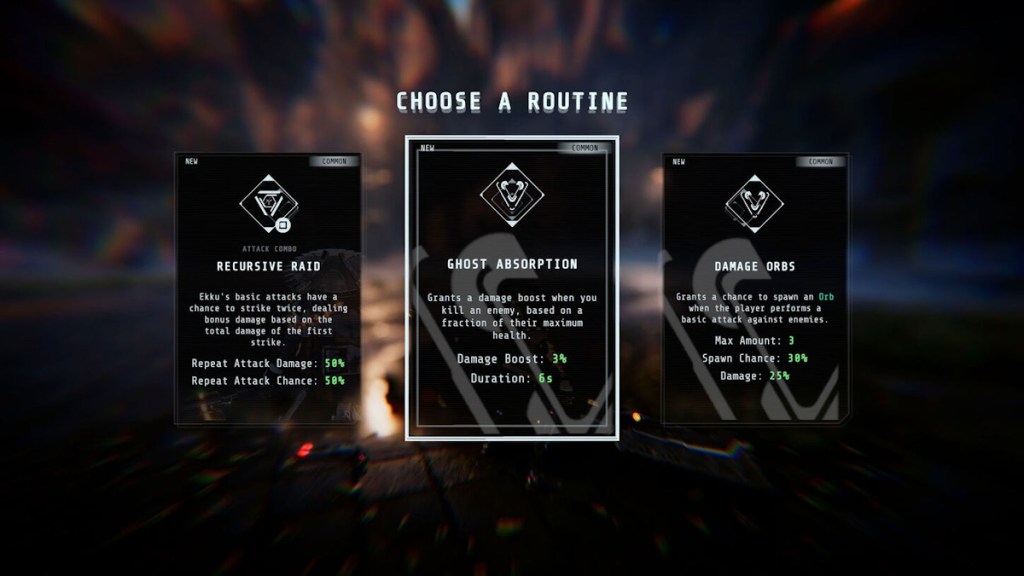
Skills and upgrades currently feel familiar: stat boosts, predictable modifiers, and passives that mirror other roguelites. That’s not fatal, but it limits long-term curiosity once you’ve mastered the combat. If the devs iterate on build variety, this could become a lasting staple.
Is Morbid Metal closer to Devil May Cry or Hades?
It borrows energy from both. The movement and action cadence echo Devil May Cry’s precision and flair (Capcom set that bar), while the roguelite progression and run structure nod to Hades’ (Supergiant) loop. The result is a hybrid that feels like a fresh take rather than a copy.
I expected a playable prototype; I found a foundation that could become exceptional
Morbid Metal is early access, and it shows. The combat, swap system, and movement are already excellent. What’s missing are the connective tissues: snappier pacing between fights, bolder upgrade options, and more variety in mid-run events.
Is Morbid Metal worth buying in Early Access?
If you care about crisp action and high-skill loops, yes. Buy it for the combat and the swap system, and be honest about what you’re getting: a game with a strong core and room to grow. If you crave endlessly varied upgrade paths today, you might wait for a fuller build.
I expected a competent action roguelite. I walked away thinking Morbid Metal could be a defining hybrid if SCREEN JUICE commits to fixing pacing, expanding upgrades, and adding mid-run variety. It already asks you to learn fast and punish you when you don’t—do you think that kind of design still belongs in Early Access, or should it ship only when the loop feels complete?