I opened Twitter and saw a countdown: “Player count down to 3,000” beneath screenshots of a game I loved. My stomach dropped—this wasn’t news, it was a verdict. You don’t have to scroll far to feel the pressure pressing on every studio and every launch.
I scrolled past dozens of countdowns today: The Player Count Problem That’s Ruining Good Games
I watch feeds the way some people watch weather—looking for storms. Player-count posts started as innocuous status checks, then metastasized into daily obituaries for new releases.
I remember the Highguard reveal at The Game Awards 2026: hype, mystery, then a shadow launch. The game had fresh ideas and a room to grow, but the chorus of screenshots showing falling concurrent users became a narrative faster than patch notes could change it. That chorus operated as a digital gravestone for a team that might have used time and feedback to iterate, and instead they were buried.
Here’s the pattern you’ve probably seen: someone screenshots SteamDB or Steam Charts, adds snark or Schadenfreude, and suddenly the story writes itself. Streamers, forums, and even some outlets amplify it. The effect is social and self-fulfilling—players see lower numbers and assume the game is dead, then they don’t try it, which lowers the numbers more.
So yes, you can check concurrent users before installing a live-service title. That’s sensible when a game is free-to-play or when you’re choosing where to spend limited time. But turning transient player snapshots into a moral judgment about a studio’s competence? That’s corrosive. Developers who need runway for fixes and content get shorter leashes when every dip is framed as failure.
What is player count and why should I care?
Player count is a snapshot of how many people are in a game right now—concurrent users. It matters if you need a populated match or a live co-op population, but it doesn’t measure quality, story, or long-term potential. Single-player hits naturally shrink after launch because people finish them; that’s normal, not a crime.
On my Discord a streamer posted screenshots: Player Count Was Meant for Data, Not Defining a Game’s Worth
I play CS2 every week and still love the game, but even the giants have reasons their numbers look the way they do. There’s a bot problem, an active skin economy, and multiple platforms feeding different metrics. SteamDB only shows Steam concurrent users; it doesn’t capture consoles, third-party launchers, or external ecosystems.
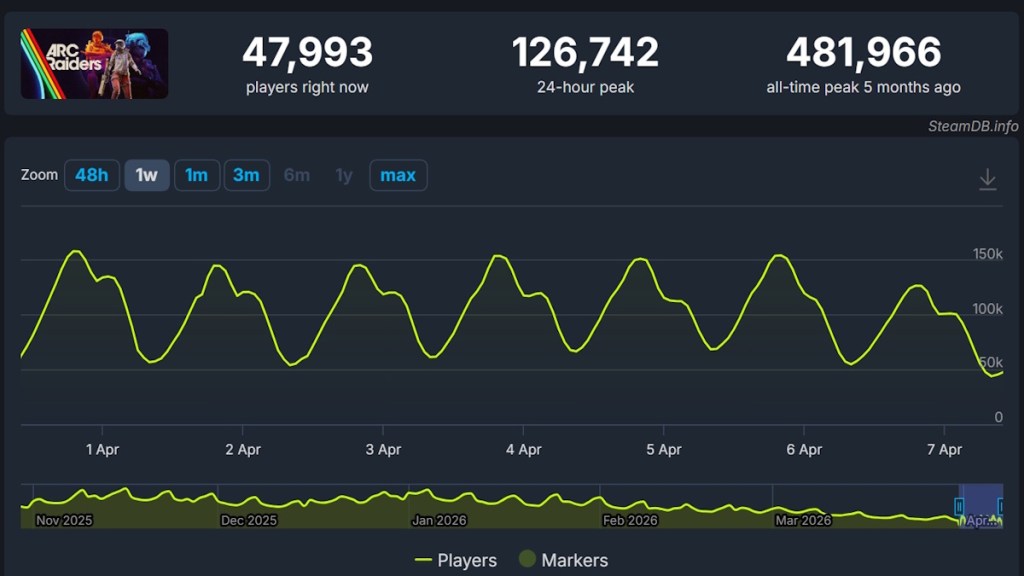
Take Counter-Strike 2: a headline number can include bots, server anomalies, and trading activity. Arc Raiders or other titles may have sizable player bases on non-Steam storefronts that never show up in a single chart. The result is a fragmented, noisy dataset being treated like a verdict from on high.
When you judge a game solely by a chart, you ignore context: seasonal trends, cross-play, marketing cycles, and even time zones. You also ignore the simple fact that some successful games sustain smaller, intensely loyal communities—those titles don’t always register as spectacle, but they matter.
How reliable are SteamDB and player trackers?
Tools like SteamDB and Steam Charts are useful for trends, but they’re imperfect. They report concurrent Steam users, not total ownership, and they can’t filter out bots or capture activity on non-Steam platforms. Content creators such as 3kliksphilip have highlighted these limits; numbers are a starting point, not a final judgment.
Does player count matter when buying a game?
It depends on your goals. If you want competitive matchmaking tonight, current population matters. If you’re hunting story, atmosphere, or a single-player achievement, the count is mostly noise. If a game costs $70 (€64) at launch, skepticism makes sense—budget your time and money—but cynicism over every dip kills the chance for games to evolve.
Here’s what you can do instead of doomscrolling charts: try a short session of the game, watch a handful of gameplay videos, read a thoughtful review, or follow the developer’s roadmap. Offer critique that helps teams improve; that keeps the conversation productive and the industry healthy.
Player-count obsession is a social pressure that nudges studios toward panic patches, shuttered teams, and layoffs. We’ve already seen it with Highguard and whispers around other studios; when people treat a single statistic as the full story, careers and communities lose more than a headline can measure.
Numbers are a smoke mirror—reflections that hide the real reasons people return to games: design, community, and the unpredictable chemistry that turns an hour into an obsession.
So what will you do the next time you see a falling player chart—retweet a funeral or fire up the game and give it an hour?