
I remember sitting at the character select, pulse quick, the cursor hovering over three words that would shape the next six hours of play. You can feel the weight of that single click—relief, regret, or the steady hum of a challenge accepted. I’ll walk you through what each choice actually does so you don’t learn the hard way.
People often change difficulty while the tutorial is still playing. All 007 First Light: All Difficulty Settings Explained
IO Interactive shifted from the intricate sandbox of Hitman to a linear, story-first Bond adventure with 007 First Light. You don’t need to be an expert to pick a setting that fits how you want to play; you just need to understand what each mode is rewarding—and punishing—you for. I’ll give you the practical trade-offs, compare them to the tone IOI designed, and flag what kind of player each mode actually serves.
When people want downtime after work they often choose easy settings. Novice Difficulty Explained
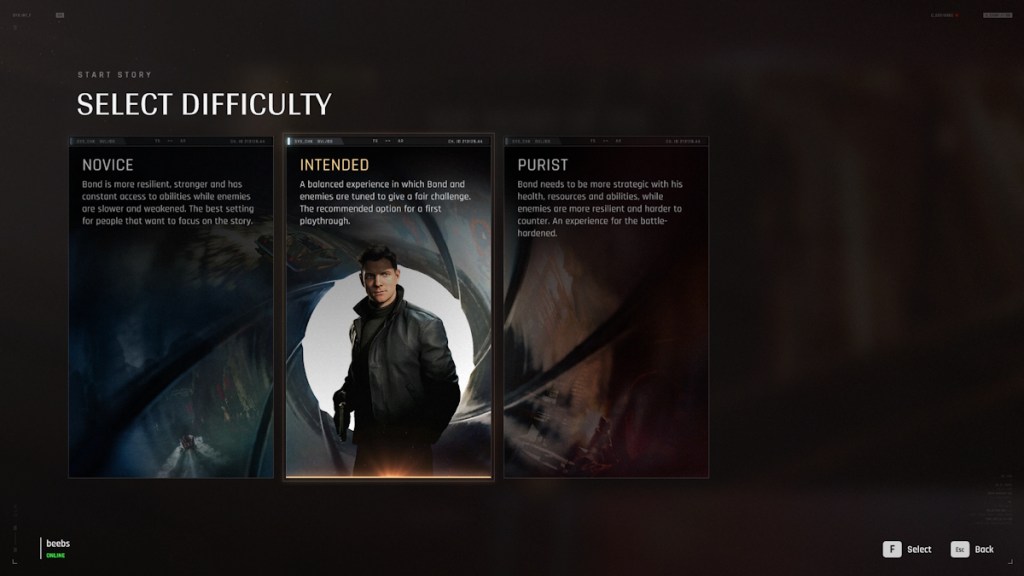
You press Novice when you want the plot without the punishment. In this mode Bond feels like a movie hero with every gadget ready; abilities and devices have no cooldown and enemies are noticeably softer. Think of it as playing with a generous checkpoint system and a forgiving enemy AI—perfect for focusing on story beats, exploring set pieces, or running the game on Steam, PlayStation, or Xbox without frustration.
If your priority is the narrative and the cinematic moments—especially if you’re trying the game on a console after a long day—Novice removes friction. I’d pick this for first-time players who care about atmosphere over leaderboard bragging rights.
Many reviewers recommend playing the middle setting first. Intended Difficulty Explained

IOI describes this as the intended way to experience the game, and for good reason: Intended is balanced for pacing and suspense. Enemies behave predictably but pose a steady threat; your gadgets have reasonable cooldowns so timing matters without becoming a chore. If you’ve played Hitman and enjoy planning your approach but don’t want to be punished for a single mistake, this is the sweet spot.
Play this mode if you value the cinematic tension and want the satisfaction of outsmarting encounters rather than out-muscling them. It’s the version reviewers at outlets like Metacritic and IGN are most likely to base their impressions on, and it’s tuned to show the game’s design intent.
Players chasing completion marks often tighten their resource use. Purist Difficulty Explained
Purist is the hard line: enemies hit harder, your tools are scarce, and mistakes cost more. This is where the game stops holding your hand. You’ll need to conserve ammo, ration abilities, and treat every doorway as if someone is waiting on the other side. I liken it to handling a scalpel in a surgeon’s hand—precision over force.
If you want an experience that rewards discipline, timing, and planning, Purist delivers. Seasoned players will enjoy the clarity of rules and the fierce satisfaction of clearing a mission without slipping up. Newcomers will likely find it brutal; treat it as an achievement for a second or third playthrough rather than the default selection.
What is the hardest difficulty setting in 007 First Light?
Purist is the hardest mode and it’s available immediately. There’s no unlock barrier—if you’re the kind of player who enjoys complete control over risk, you can select it from the start and test your mettle against IOI’s toughest enemy tuning.
Is there an easy mode in 007 First Light?
Yes. The easy option is called Novice. It removes cooldowns on Bond’s gadgets and makes enemy encounters forgiving, which is perfect for following the story and appreciating the world-building IO Interactive put into the game.
What are the difficulty modes in 007 First Light?
The game offers three settings: Novice (easy), Intended (middle), and Purist (hard). Each shifts enemy behavior, resource availability, and gadget cooldowns—you pick the level of friction you want between you and the narrative.
If you’re on the fence, think about how you played Hitman: did you savor experimentation or prefer clean runs? Which approach will make the story feel worth your time—and are you willing to trade comfort for bragging rights across Steam, PlayStation, and Xbox leaderboards?
Which difficulty will you choose first, and will you regret it when the credits roll?