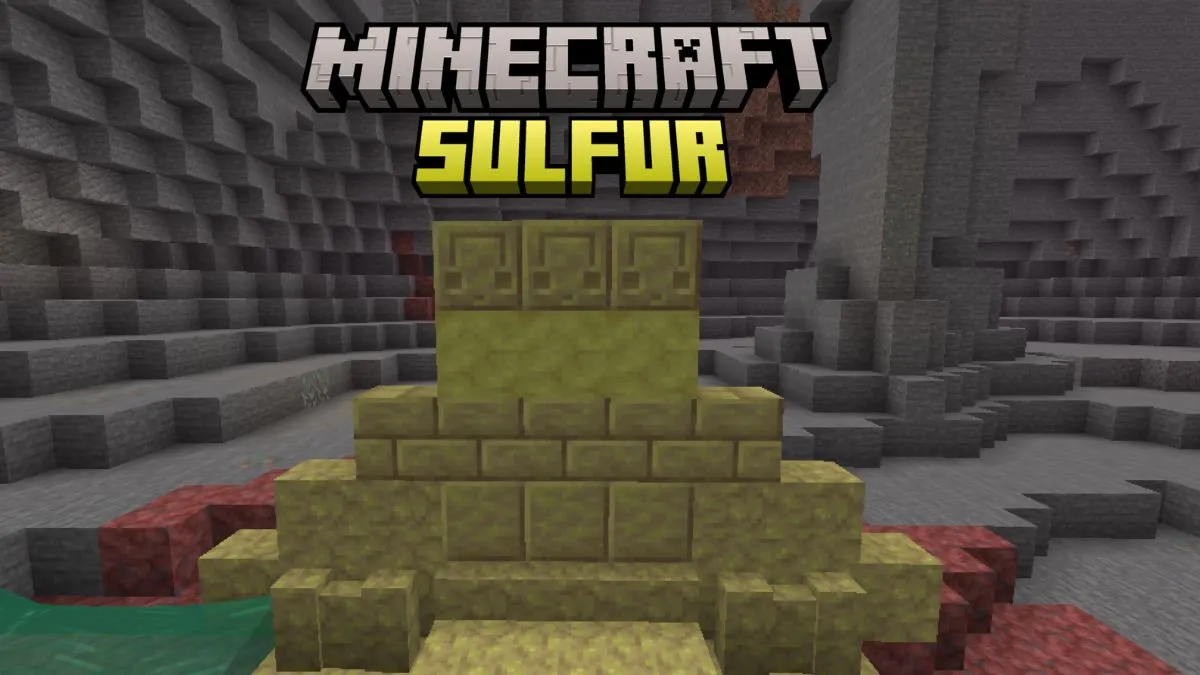
I was mining on a late-night stream when a slab of yellow stopped me cold. It wasn’t glowstone or a shader trick—this was Sulfur, loud and new. In that moment I realized the update had quietly handed us a fresh building toy with strange uses.
I’ll walk you through where Sulfur hides, the fastest ways players and creators find it, and what to do once you’ve got a cartful. Read this like a short field guide from someone who’s spent too many hours underground and has the map bookmarks to prove it.
How to Obtain Sulfur Blocks in Minecraft
On my stream I traced a yellow vein from a surface spring straight down and found a cavern full of bright blocks.
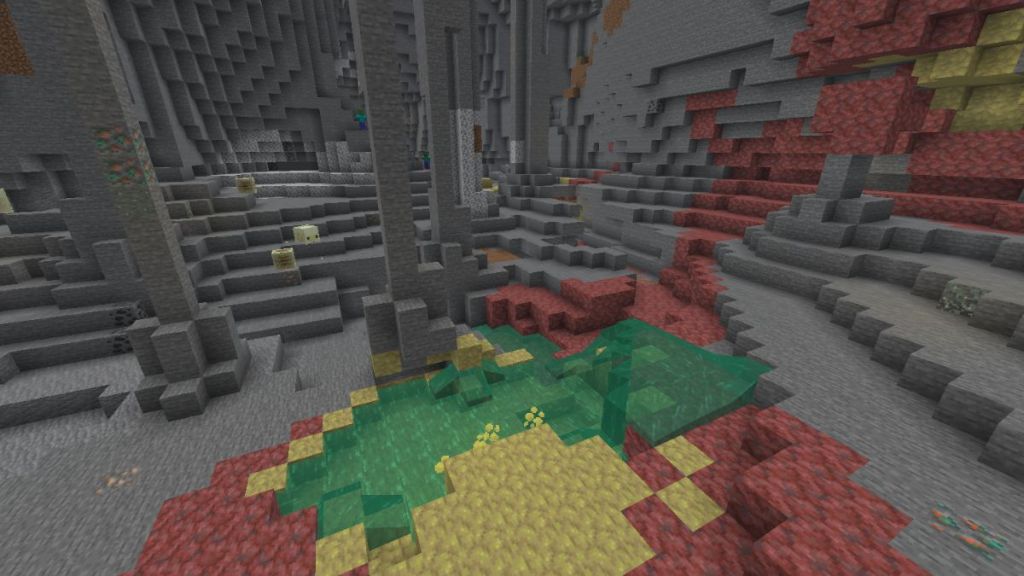
Sulfur spawns in the new Sulfur Caves added with the Chaos Cubed update. The biome stands out because of bright yellow Sulfur and the nearby red Cinnabar—those two together are your best visual clue. The Sulfur Springs on the Overworld surface also hint at deeper deposits; they’re small surface pockets made of Sulfur and Magma blocks and often lead directly into cave systems.
The Sulfur Cave itself feels different in-game: the ground sometimes hosts toxic pools and water tinged green. The Sulfur Cave is a neon cathedral carved into rock.
- Dig down from Sulfur Springs: If you find a spring on the surface, mining there or digging straight down (safely) often drops you into a Sulfur biome.
- Explore cave openings: Natural cave mouths can intersect Sulfur Caves. Follow yellow patches and Cinnabar clusters; a small sulfur pool can be a gateway to a larger pocket.
- Use commands and mapping tools: In Creative or single-player with cheats you can run /locate minecraft:sulfur_cave (or similar biome name depending on version) and /tp to the coordinates. For survival players, tools like ChunkBase or seed viewers and communities on Reddit and the Minecraft Wiki can point you to seeds that expose surface springs or shallow Sulfur Caves.
Mining rules: any pickaxe (Wood or higher) will drop the Sulfur block. Breaking it by hand yields nothing. Fortune enchantments do not increase the drop count, so don’t waste those levels hoping for extra blocks.
Can you find sulfur on the surface of a Minecraft world?
Yes, but it’s rare. Sulfur Springs spawn on the Overworld surface alongside Potent Sulfur and Magma blocks—those surface pockets are the quickest visible sign that a Sulfur biome may be nearby.
How to Use the Sulfur Block in Minecraft
During a build marathon I swapped a sandstone wall for Sulfur and the room suddenly read as modern and loud.
Sulfur is primarily a decorative and interaction-driven material. It crafts into a family of blocks and feeds the new Sulfur Cube mob to change its behavior. Below are the crafting and usage details I use when planning builds or experiments.
What is Sulfur used for in Minecraft?
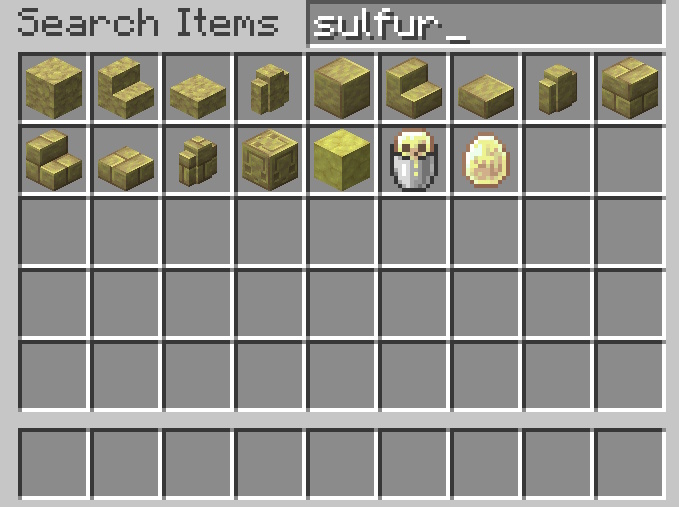
Sulfur crafts into polished, slabs, stairs, walls, Potent, and Chiseled variants, and it can be fed to Sulfur Cubes to alter their archetype and physics.
- Polished Sulfur: 4 Sulfur blocks in a 2×2 = 4 Polished Sulfur.
- Sulfur Slab: 3 Sulfur blocks on the bottom row = 6 slabs.
- Sulfur Stairs: 6 Sulfur blocks arranged in two rows = 4 stairs.
- Sulfur Wall: 6 Sulfur blocks in the bottom two rows = 6 walls.
- Potent Sulfur: 9 Sulfur blocks filling the crafting grid = 1 Potent Sulfur.
- Chiseled Sulfur: Place a Sulfur block on a grindstone and choose the Chiseled Sulfur option.
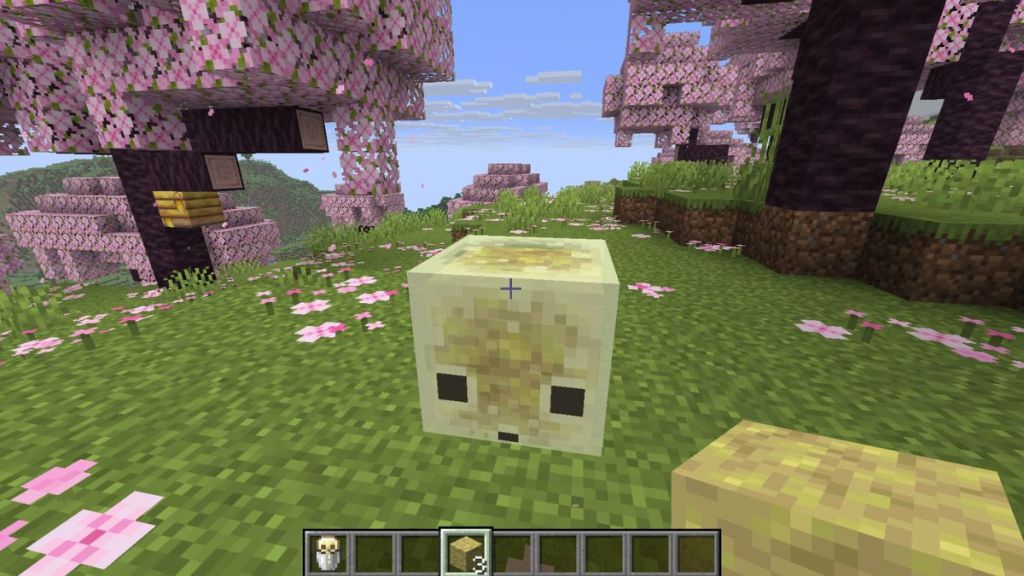
Feeding Sulfur to the Sulfur Cube changes it into the Regular archetype: think medium speed, medium bounciness, medium ground friction, and low air drag. It becomes buoyant on water and behaves exactly like a football in motion—perfect for minigames and creative transport. A fed Sulfur Cube turns into a living trampoline.
Practical uses: build bright marker lines for caves, design modern interiors with Polished Sulfur, or create Sulfur Cube arenas and travel rails for the End. Streamers and YouTubers are already staging Sulfur Cube soccer matches and timed bounces—check creators on YouTube and communities on Reddit for seed calls and rulesets.
If you want predictable locations fast, consult the Minecraft Wiki for biome names and ChunkBase for seed mapping, or use /locate and /tp when cheats are enabled.
So, will you dig for Sulfur to craft a museum of yellow blocks, stage a Sulfur Cube league, or test a rude elevator in the End?