
I watched the Wolverine gameplay reveal twice in one sitting. The first time I felt the rush you expect from a big reveal; the second pass left a quiet doubt. You should feel that tug when a studio’s name begins to do your thinking for you.
I’m not asking you to cancel your fandom. I am asking you to notice a pattern and decide before your wallet does the talking. I’ll tell you what I saw, why it matters, and where your skepticism actually serves you.
Combat Looks Right out of past Insomniac Games
At a launch party last year, a room full of players cheered the same beats that have carried Insomniac titles for a decade.
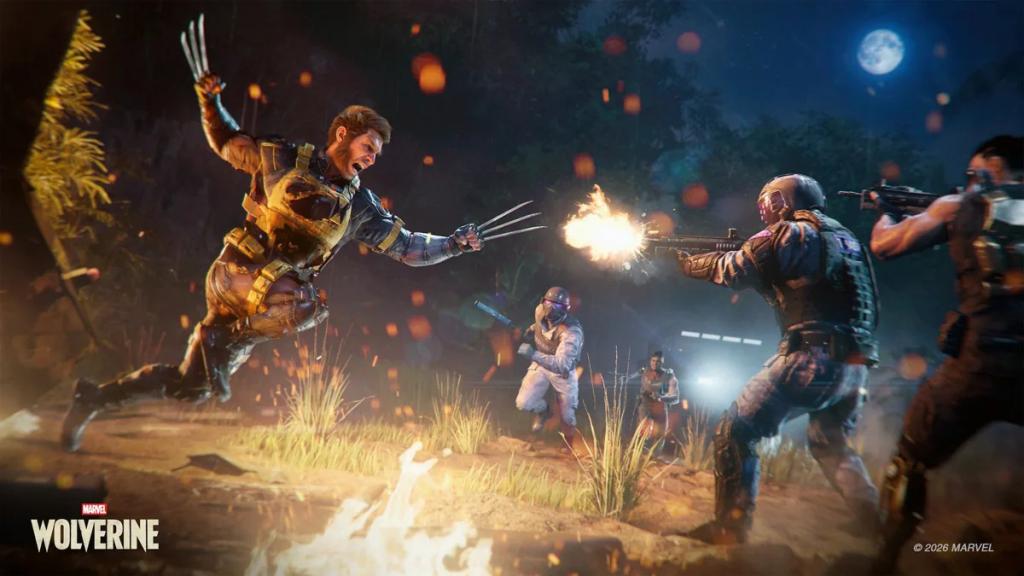
Insomniac’s tech makes hits feel sharp and satisfying. Parry windows register, hit reactions land, and the rage meter promises carnage. That said, what I watched felt like a known choreography: waves of enemies, standard telegraphed attacks, and set-piece finishers. You notice entertainment value, then you notice the absence of surprise.
Insomniac’s reputation is a velvet shield—it deflects early critique and buys goodwill. But goodwill shouldn’t replace scrutiny. When defenders lean on past Spider-Man success as proof that Wolverine must be great, they’re making a logical leap: heritage is not the same as evidence.
Is Wolverine’s combat just Spider-Man re-skinned?
If your question is whether the core mechanics echo the Spider-Man games, the answer on previews is yes. The systems feel shared: readable enemy telegraphs, cinematic camera beats, and accessible inputs. What’s missing are the little options that made those Spider-Man fights sing—movement tricks, gadget improvisation, environmental improvisation.

When Bosses Feel 20 Years Old, and People Still Buy It
At a friend’s desk I replayed the Proto Sentinel footage and watched the same patterns repeat across several clips.
The boss plays out as a set of telegraphed moves that you learn, react to, and then sit through until the health bar empties. It’s a design with a long pedigree—God of War, classic arcade bosses, even console-era licensed games used variants of this. Nostalgia doesn’t automatically make a mechanic compelling.
Wolverine’s combat is a playlist stuck on the same track—it’s satisfying for a moment, and then the repetition becomes the story. That’s why complaints about predictable boss choreography matter: they point to a risk of prolonged tedium rather than escalating creativity.
Does Insomniac reuse its combat systems?
Yes, and for good production reasons: shared tech, established pipelines, and repeatable workflows. Those efficiencies buy the studio time and scale. But efficiency can also calcify design choices when teams default to what worked before instead of asking what fits Logan’s instincts and brutality.
Insomniac Still Has a Creativity Problem
I sat through a developer Q&A where team members described shared engines and staggered teams as a badge of honor.
That operational polish shows. It does not replace creative risk. The studio’s design language—cinematic beats, readable encounters, and hand-crafted progression—has been refined across Spider-Man, Spider-Man: Miles Morales, and Spider-Man 2. Now Wolverine strips away many traversal and gadget layers, leaving fewer levers for emergent play. When your toolset narrows, surprises are harder to invent.
Remember: Wolverine was announced at the Sony PlayStation Showcase 2021 and lands in September 2026. Five years in, shared tech should produce room for experiments, not just speed. The team says criticism is “unnecessary.” I say it’s necessary if it helps push the studio beyond its comfort zone.
Should I pre-order Marvel’s Wolverine?
If you’re deciding now, ask what you value most: story, character work, or mechanical novelty. If narrative and characters—young Logan, Team X, Mystique, Sabretooth, and Nathaniel Essex—are your priority, pre-order risk feels lower. If you want mechanical surprises, wait for reviews and player impressions.
If a retail pre-order costs $69.99 (€65), you’re paying for certainty that you might not need. Let the early hands-on impressions accumulate before you commit.
The Community Is Not Wrong About Everything
At a Discord thread I read both reasoned critique and ugly attacks within five comments.
Harsh, personal attacks on developers are unacceptable and they distract from legitimate discussion. But dismissing every critique because it’s loud is equally lazy. Insomniac’s own preview conversations acknowledged fans’ questions about interactivity and combat complexity. Those are fair flags to raise.
I’m still keen on Wolverine’s story beats and quieter Lowtown scenes, and I’ll happily admit I misread the game if it deepens once full systems are in place and Game+ arrives. But a studio’s halo should not be a substitute for asking hard questions about design.
So tell me: are you going to let a studio’s halo do your thinking for you?