
I jumped into a Quick Play match with the overlay on and my heart sank for a moment — the internet’s mockery of Nvidia’s RE9 demo was ringing in my ears. Then the scoreboard froze, the ball blurred, and my FPS counter told a different story. After twenty matches, I closed the game convinced: DLSS 5 was staying on.
I’m going to be blunt with you: you don’t judge a neural renderer by a trailer. I tested DLSS 5 with an RTX 5080 Founder’s Edition and an Intel i7 14700K on NBA 2K27, and I’ll walk you through what changed, what didn’t, and what you’ll probably want enabled when you play.
I saw players shimmer and edges jag — DLSS 5 graphics: AI rendering isn’t as strange as the early demo suggested
At GTC 2026, that Resident Evil Requiem clip made a lot of people recoil. I get it — those early facial models looked like an over-eager filter had taken over. But what Nvidia showed at Gamescom and what ships in NBA 2K27 are not the same thing.
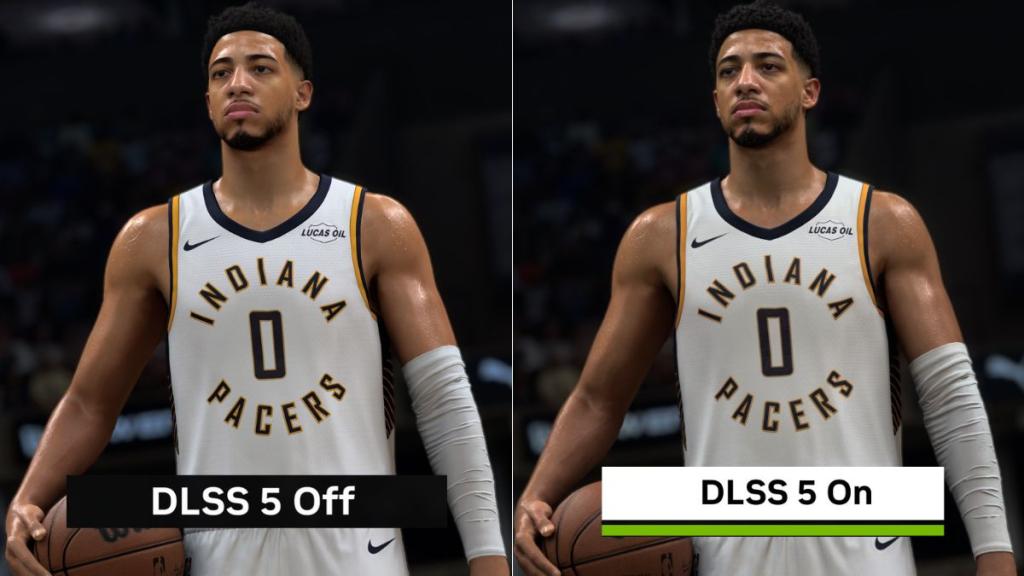
With DLSS 5 off, NBA 2K27 on Ultra with RT produced shimmer, jagged edges, and ghosting on fast camera moves — especially on the ball during quick breaks. That was Visual Concepts’ engine behaving like itself. Anti-aliasing and motion blur off, the native render read like a rough cut.
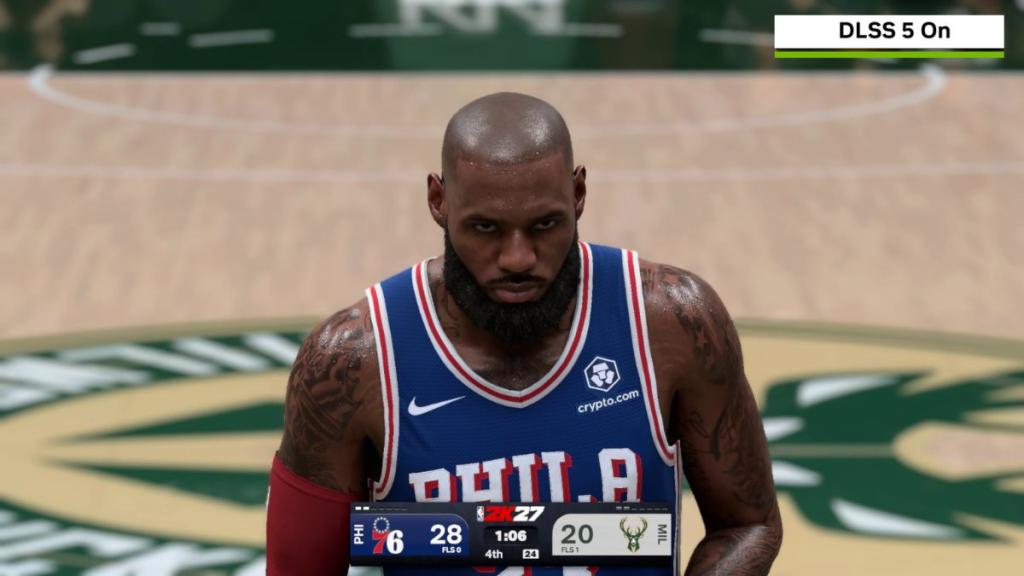
Flip DLSS 5 to Quality and the game settled. Reflections read better, highlights snapped into place, and small details — sweat on jerseys, fingertip edges, facial stubble — sharpened. Nvidia’s approach is object-level enhancement: it reads a frame’s lighting and color data and layers detail on top rather than hallucinating whole new geometry. It’s a polish, not a replacement — like a varnish on an old instrument.
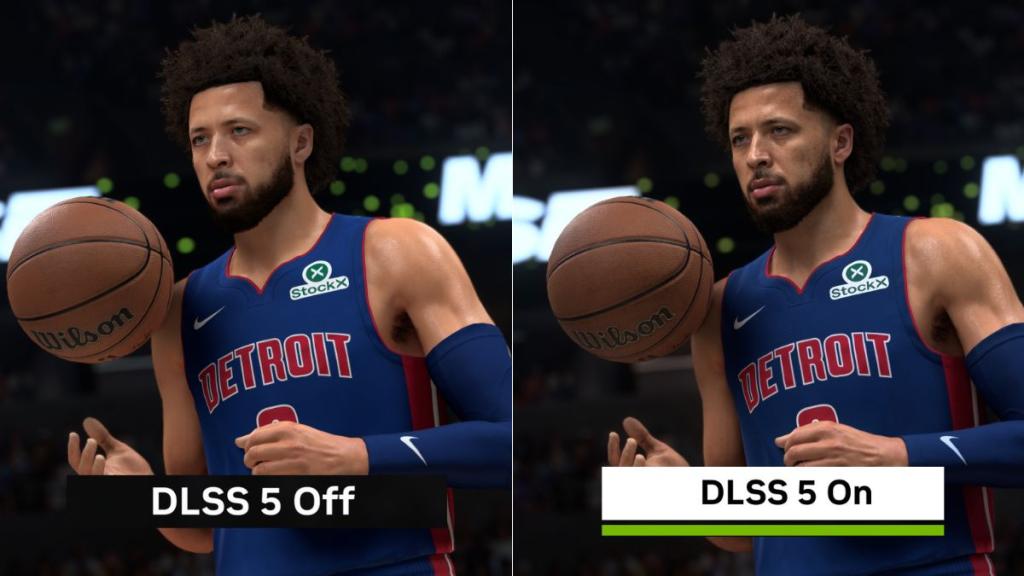
I’ll admit a few details leaned too far. Under arena lights, sweat highlights could look a tad overcooked — players sometimes glistened in a way that flirted with artificiality. Peter Kavic, Visual Concepts’ senior producer, told me the team saw a genuine jump in materials and lighting with DLSS 5. I agree, and the tradeoff felt reasonable: better player models up close at the cost of making low-poly crowd models more obvious.
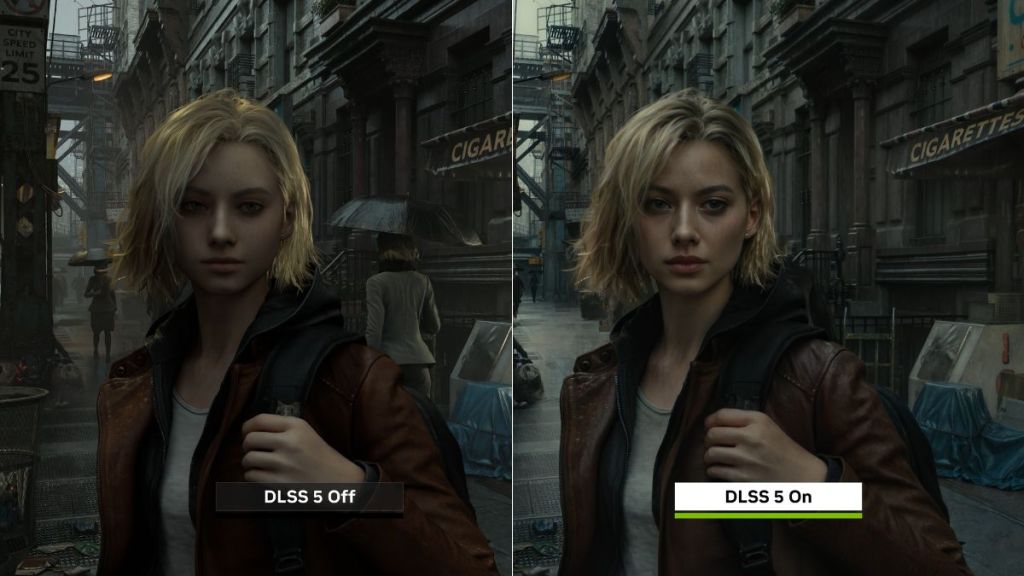
What is DLSS 5 and how does it work?
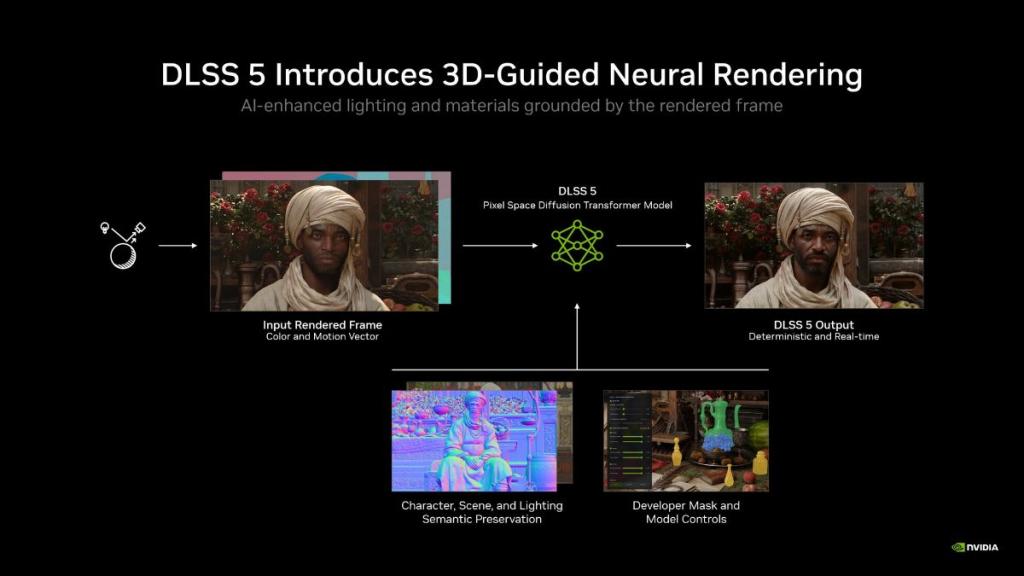
DLSS 5 is Nvidia’s neural rendering layer that reads object and scene data to enhance frames. In practice, when a game like NBA 2K27 integrates it natively, DLSS 5 analyzes each frame’s lighting and materials and adds detail onto existing geometry rather than inventing new faces out of thin air.
The FPS counter spiked mid-play — DLSS 5 performance: the frame-rate boost that convinced me
With DLSS 5 off on my test rig, NBA 2K27 averaged about 81 FPS at 1080p with RT on and settings at Ultra. My RTX 5080 pulled roughly 320W from a 1000W PSU, and the GPU nudged 94–95°C under load. That’s a brutal meter reading for a sports title.
Turn DLSS 5 on and things changed dramatically. The game averaged roughly 600 FPS on my test bench (my monitor capped at 180 Hz), with peaks near 641 FPS. CPU usage dropped from around 42% to about 25% or even 20% at times, and GPU draw fell to about 235W. Temperatures settled closer to 75–80°C. That’s less heat, less power, and a much snappier feel.
Does DLSS 5 actually improve frame rates in real games?
Yes, when a title supports DLSS 5 natively. The difference I saw is not the chaotic behavior reported in some unofficial mods — those mods sometimes show huge power spikes and instability. NBA 2K27’s integration lets DLSS 5 work with Visual Concepts’ pipeline rather than against it, which yields cleaner motion and responsiveness during quick plays.
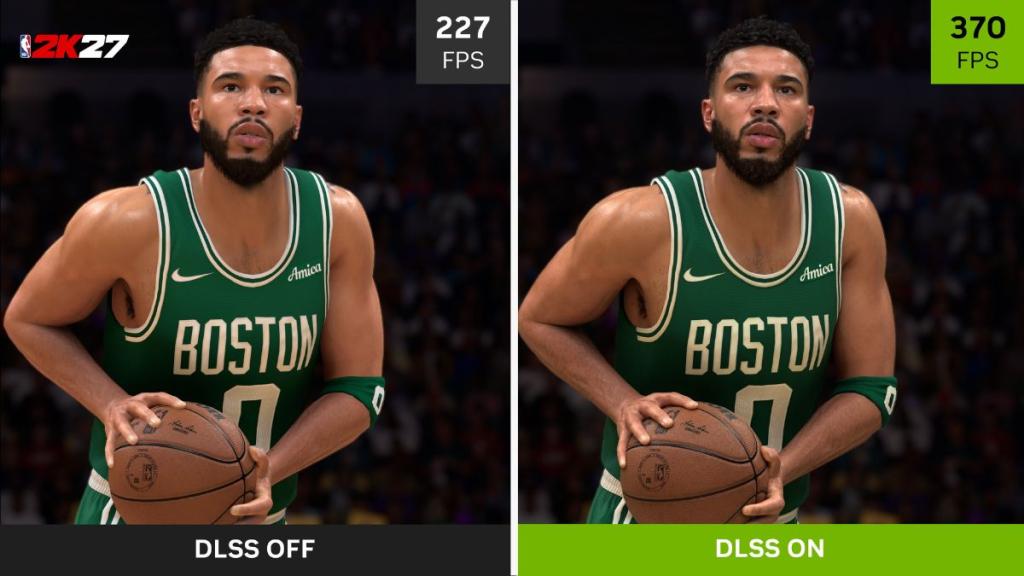
I ran stress tests with the Nvidia overlay and HWMonitor so these are not guesses. Performance gains translated into gameplay: switching players, reacting to cuts, and pulling off quick layups felt more precise. For a fast sports title, that responsiveness matters more than an extra spec in a benchmark table.
Should I enable DLSS 5 in NBA 2K27?
If you value frame stability and lower thermals, yes. If you care most about background crowd geometry being flawless from twenty feet away, keep testing. For me, the gain in player detail, lighting fidelity, and vastly reduced GPU strain made DLSS 5 a permanent setting.
 Posted in codes