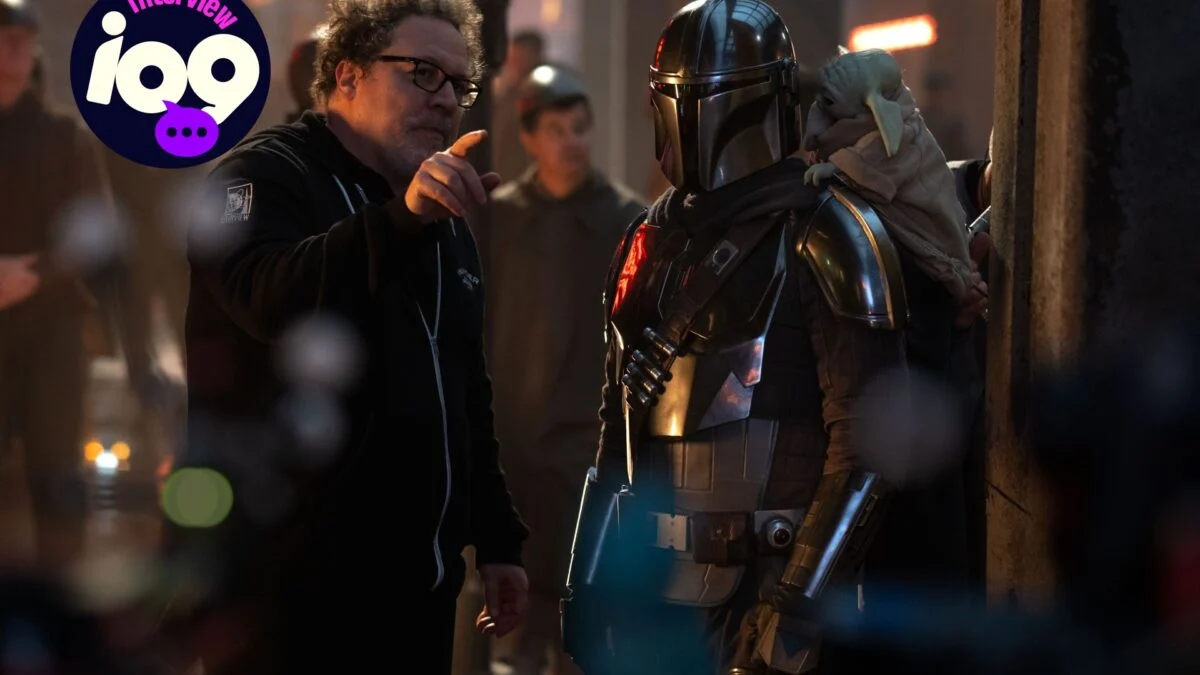
I watched Jon Favreau pause in a cramped L.A. press room, and the silence felt deliberate. That beat carried the weight of a choice: make a movie because the story demands a theater, or shape a story around the theater. The answer he gave — that the form informed the tale — is the kind of production decision that will please some and unsettle others.
I spoke with Favreau and listened to how he framed the problem. You can feel his instincts as a storyteller and a showrunner: protective of longtime viewers, curious about newcomers, and cautious about spilling every secret. That tension is the spine of The Mandalorian and Grogu.
In a crowded press room, Favreau set the frame and let the frame set the story
Favreau explained to io9 and other outlets that moving from a streaming cadence to a theatrical one changed the game. This isn’t just the first Star Wars movie in theaters in seven years; it’s the first time a Disney+ series has tried to leap from episodic storytelling to a two-hour film. That shift forced a choice: honor the serialized beats that fans know, or craft a film that greets the uninitiated.
He admitted the production leaned into what was available — “here’s the paint set you have” — and then asked how far those brushes could go. That’s a production note you can respect: a maker respecting constraints, then testing them. Still, there’s a risk when the desire for a theatrical footprint precedes the impulse for a story that truly needs it.
Do I need to have seen the show to enjoy the movie?
If you haven’t binged Seasons 1–3 on Disney+, Favreau says he and his team kept that person in mind. “This is like season one, episode one,” he told us — an attempt to hand an entrance to newcomers while nodding to the audience that’s followed Din Djarin and Grogu for years. You’ll catch references if you’re a fan; you won’t be lost if you’re not.
At a script table, the two-hour format reoriented how scenes breathe
The concrete change was simple: runtime. A two-hour form reframes pacing, stakes, and character arcs. Favreau compared gearing up for season four to the opposite problem: when everyone has seen the story so far, you build forward. Here, the team treated the film like a beginning — a place to welcome people in.
That decision feels deliberate and practical. A film has different cadences than a nine-episode arc; momentum must live in single scenes that also serve a larger whole. It’s a compositional problem — like swapping a guitar into a symphony — and the solution colors every choice, from shot selection to where Grogu gets his quiet moments.
How does the film connect to the Disney+ series?
Favreau framed the movie as a bridge not a direct sequel to Season 3. Expect emotional through-lines for the fans — the creators are protecting those threads — but don’t expect a requirement to have seen every episode. Lucasfilm and Disney are aiming for a movie that rewards familiarity while inviting a fresh audience into the story’s current.
Backstage, marketing and craft met in a game of partial reveal
Favreau was blunt about restraint. He told reporters that the team had shown a lot already but intentionally kept the “Christmas present” closed on certain details. You can read that as careful stewardship or as a sign they’re still shaping the film’s identity.
The worry some of us share is practical: if a movie exists because of its format, rather than because a story demanded that space, does it risk feeling engineered? Favreau insists the story was one they were passionate about, but he also framed the process as form-first — which raises inevitable questions about creative intent. The marketing choices only deepen those questions — why hold back, and what are they protecting?
This is where the film’s fate will be decided: in theaters, on opening weekend, under the public’s eye. The gamble is both creative and commercial, and the outcome will tell us whether the theatrical coat fit the narrative or just slipped over it like fitting a novella into a pocket.
Will this film satisfy longtime Star Wars fans and bring new ones in?
Favreau’s language was inclusive: make it meaningful for the people who’ve been here, and have an outstretched hand for someone new. That tone is reassuring coming from the director who shaped the show’s voice, but the proof will be in the storytelling choices — how much the film rewards prior knowledge and how well it tells a stand-alone story.
Favreau has earned the benefit of the doubt as a storyteller and steward of the franchise, but you should watch for whether the form truly served the story or the other way around. When May 22 arrives and the lights dim, which side of that trade-off will feel like the right call?
Want more io9 news? Check out when to expect the latest Marvel, Star Wars, and Star Trek releases, what’s next for the DC Universe on film and TV, and everything you need to know about the future of Doctor Who.