
I watched the stadium scene again and felt the air tighten. You remember the gun being passed to Aunt Lydia and the woman who begged with her eyes. That moment reframes everything she has been since.
I’ve been covering television characters for years, and I’ll tell you: this episode asks you to hold two truths at once. You can hate her methods and still see what survival taught her.
In a stadium of held breath, Lydia was chosen to prove her loyalty
The stadium is simple: women corralled, men in control, a tennis court turned execution stage. I want you to picture the cold procedure—files examined, ages recorded, an abortion listed as a capital crime—and then imagine being handed a weapon to demonstrate that you are useful.
What happens to Aunt Lydia in The Testaments?
She is tested in a ritual that serves as initiation and interrogation. Commander Judd reads her file, gives her a role, then forces her into the arena where she must aim at Vivian. The gun fires; the shot is a performance. Her finger pulls the trigger, but the weapon is unloaded. You feel the relief and the cost at the same instant.
The immediate effect is clear: Lydia learns that visibility plus utility equals safety. She also learns that pleading and moral argument mean nothing where power is defined by spectacle.
At the tea table where girls are judged, the Aunts get to assign futures
Tea parties are banal in our world, ritualized in Gilead into a selection process. You’ve seen the tests: manners, genealogy, who blushes at a Commander’s praise. The Aunts are the gatekeepers.
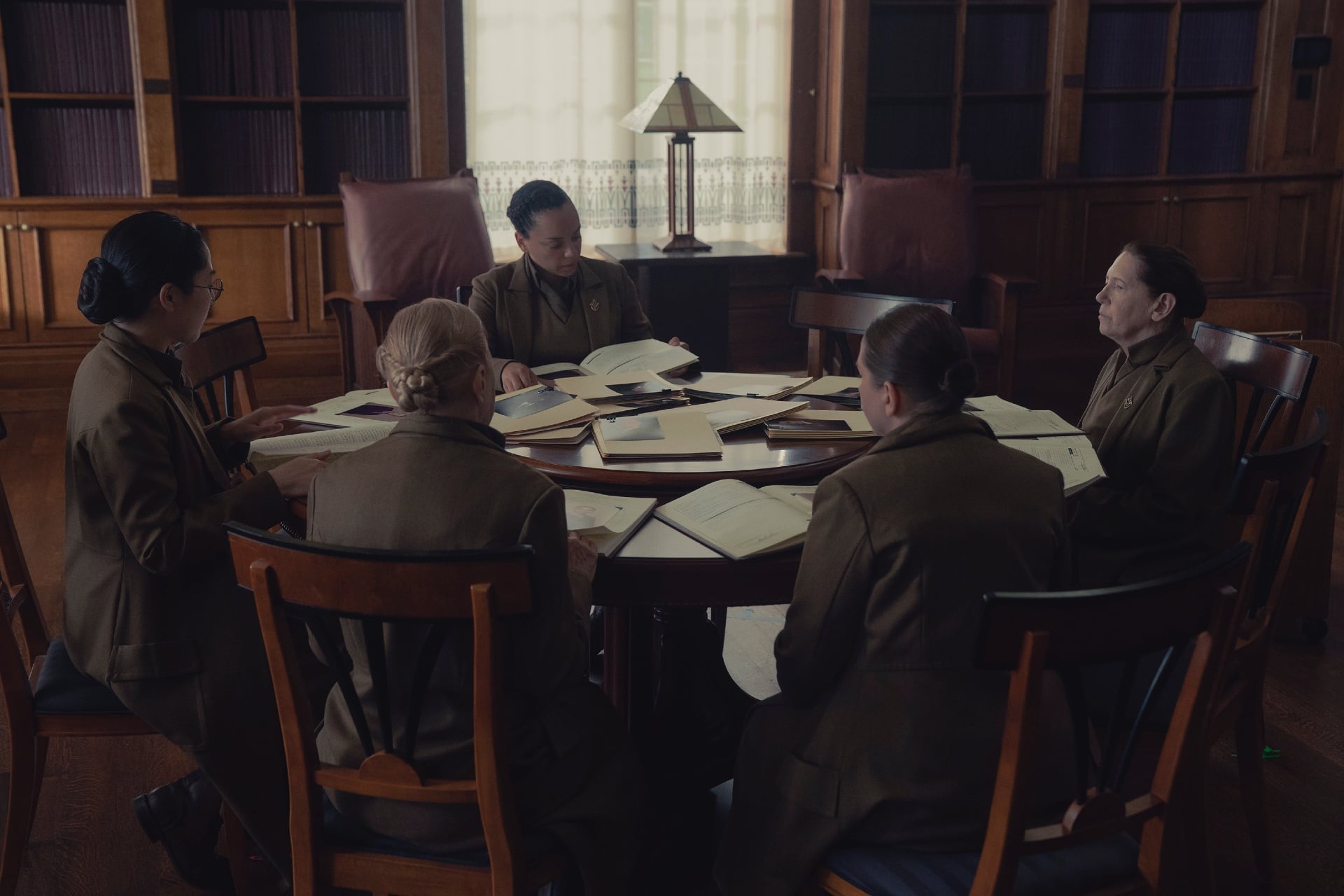
Aunt Lydia proposes institutional control: women taught to be women, women who will police girls for the system. Judd accepts the form and keeps the reins. Lydia then designs uniforms and rituals that remove softness; she chooses scratchy fabric because comfort breeds complacency.

How does Lydia’s backstory change her character?
Her past recasts her cruelty as strategy. She was a teacher, humiliated, then hunted; survival hardened into doctrine. I read her choices as calculations made by someone who will not be expendable again. You may find sympathy; you may not. Either way, the episode forces you to weigh intention against outcome.
She starts to keep records—secret diaries that catalog atrocities. That act is a confession and insurance, a ledger etched on bone.
In private offices where favor is currency, alliances are fragile
Commanders still decide policy. You see the power dynamic in small gestures: a nod, a reassignment, a whispered preference for a different Aunt. Judd’s suggestion that Vidala replace Lydia is a test and a threat.
Lydia has a history with Vidala that includes betrayal, mercy, and survival. The stadium scene explains their present-day tension. Lydia chose survival; Vidala survived; both carry scars.

Is Aunt Lydia redeemable?
I don’t hand out absolution. You shouldn’t accept it without evidence. Yet she keeps a secret record, she tests loyalties, and she expresses fear for the girls under her care. Those acts create a space where future accountability could be possible.
Her position is precarious, a coin spun on its edge; one small shove from Judd or Vidala and everything flips.
What matters more: the cruelty she administered or the archive she is building? If you were compiling evidence, would you trust the hand that held the gun to also hold the ledger?