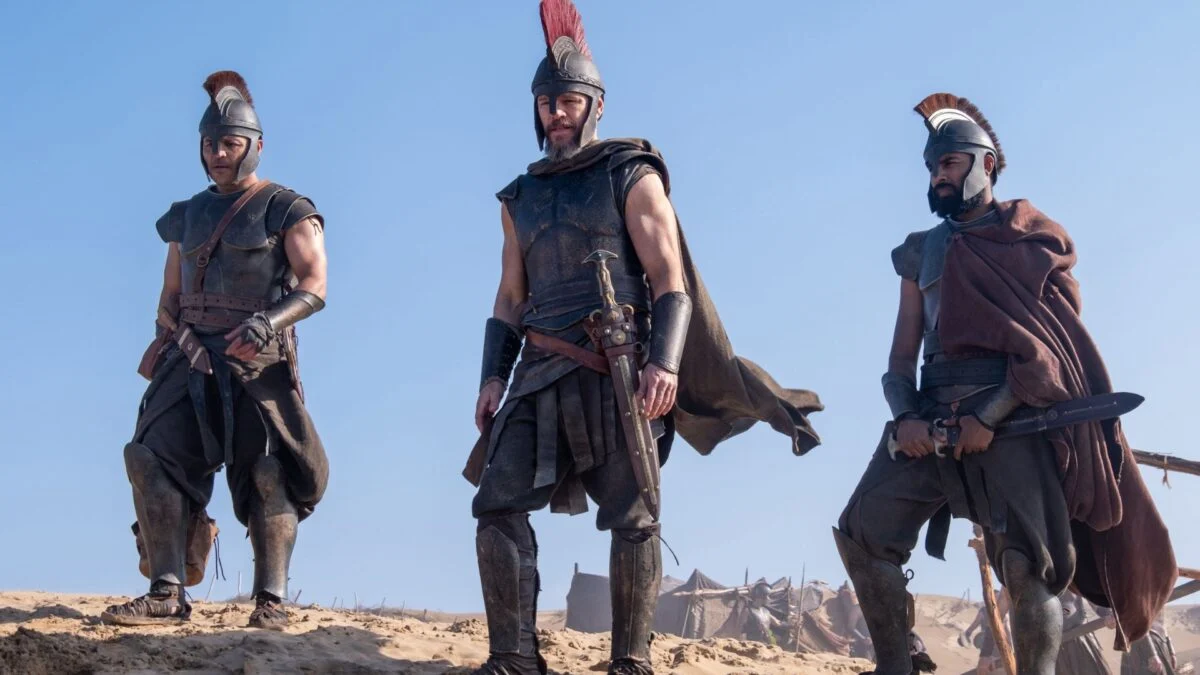
I watched the trailer on a loop and felt the room tilt—half because of the music, half because fandom had already reached for pitchforks. A still of Agamemnon’s black armor lit up timelines, and Travis Scott’s casting lit up the comments like a flare. You and I both know how quickly a rumor becomes the story.
I’ve been reporting on Nolan’s films long enough to read the pattern: meticulous research, bold choices, and a public that fills in the gaps with outrage or awe. Here’s what Nolan told Time, how it answers the loudest complaints, and why those complaints tell you more about audience expectation than the film itself.
At a crowded trailer screening someone shouted “That’s Batman!” — and the internet agreed
The armor in the trailers triggered an immediate connection to Nolan’s Bat-verse. I don’t blame viewers for making the leap; visual shorthand travels fast. Nolan’s answer was simple: it’s archaeological logic, not cosplay.
Why does Agamemnon’s armor look like Batman’s?
Nolan pointed to Mycenaean artifacts and a material process—blackened bronze made via added gold, silver, and sulfur—that produces a dark, burnished patina. Ellen Mirojnick, the costume designer, chose those materials to signal status: Agamemnon is elevated, expensive, and visually distinct. When you see a wealthy ruler in historical art, they weren’t shown in rough leathers; they were gilded and refined.
There’s also a storytelling choice at play: the earliest audiences of Homer would have recognized characters as contemporary figures of the poet’s day. Nolan is not pretending to be a museum curator; he’s trying to recreate how the story landed the first time it was told. Think of the costume as a blackout poem: familiar lines rearranged to reveal new meaning.
In a social thread the Travis Scott casting became its own headline before the film premiered
Someone posted a casting still and the replies filled with questions about taste and responsibility. You’ve seen this pattern: an artist with controversy in their past steps into a spotlight and the pushback becomes part of the conversation around the work.
Why did Christopher Nolan cast Travis Scott in The Odyssey?
Nolan framed the choice as dramaturgy. He cast Scott as a bard to lean into oral poetry’s bridge to modern rap—an intentional nod to how stories are passed by voice and rhythm. It’s an artistic metaphor rendered literally: a contemporary performer stands in for centuries of oral tradition.
Yes, Scott’s history at events like Astroworld colors perception. Nolan acknowledged controversy but emphasized purpose over provocation: this is about texture and function in the narrative, not a publicity stunt. If you’re judging the movie by its casting headlines, you might miss the way a performer’s cadence can shift a scene’s gravity.
Scott as a figure in the film becomes a lightning rod—he draws the conversation so the audience has to grapple with why the director chose him.
On Twitter a classicist pointed at a production photo and asked, “Is this accurate?” — and the thread grew
Academics and fans will always argue over costume trim and prop detail. That’s normal when a cultural icon gets retold on a massive screen.
Is The Odyssey historically accurate?
Nolan compared his method to what he did on Interstellar: he looks for the best speculation—whether about the future or the distant past—and builds a world from there. That doesn’t mean absolute fidelity to every artifact or myth version; it means an argument on film about how this story might have felt to early listeners and later viewers alike.
He also said he wanted experts to enjoy the film, even if they don’t agree with every choice. You can hear the same defensive humility Nolan aired when scientists pushed back on Interstellar. Nolan wants his work taken seriously as research-informed fiction, not thrown off as flippant spectacle.
Behind the scenes, the production leaned on big technical platforms—IMAX cameras, large-format lenses, and the kind of location shoots that test crews and actors. Anne Hathaway and Matt Damon have spoken about Nolan’s relentless detail orientation; Benny Safdie’s Agamemnon armor grows organically out of that process rather than existing as a standalone stunt.
I’ll give you the bottom line as someone who watches marketing storms form: controversy is often the first draft of a film’s public story. Nolan is betting that when the lights go down on July 17, the narrative will change from rumor to experience. Will you let the trailers tell your verdict, or will you let the film do its work?