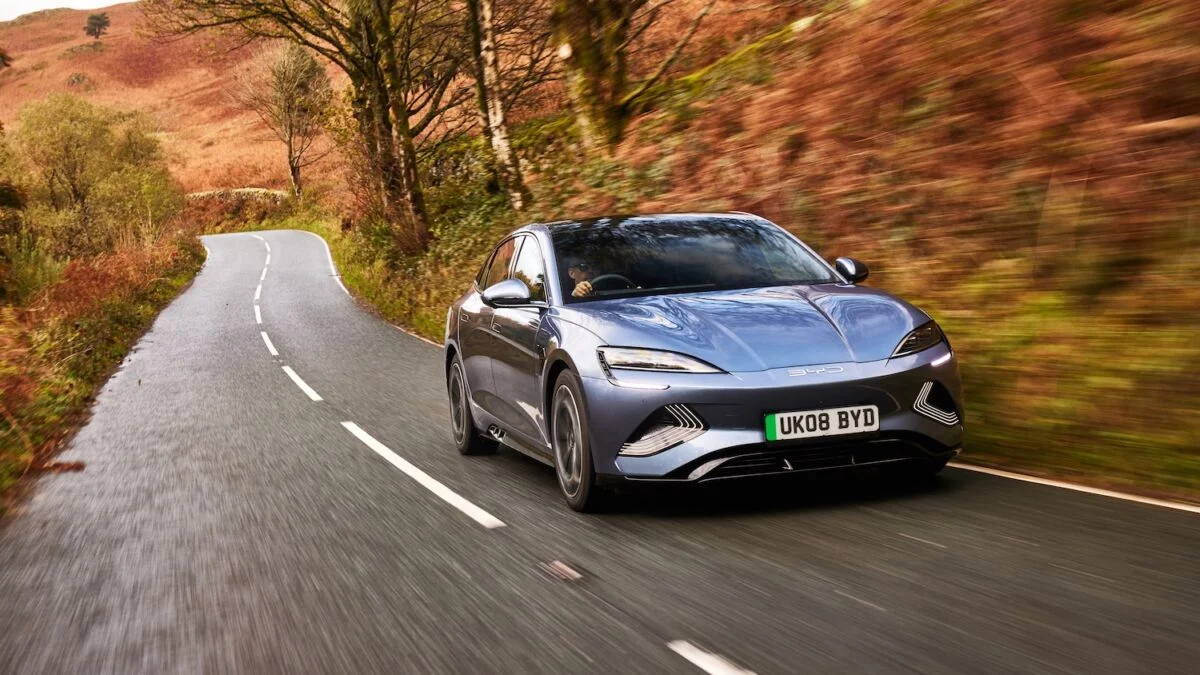
I walked past a Shanghai showroom last week and noticed entire rows of gasoline models gathering dust. A salesperson shrugged and pointed at a single EV charging on the curb. That moment made the numbers feel inevitable.
I’ve tracked auto markets for years, and you should take these shifts seriously: China’s April sales plot a fast-moving story about money, politics, and technology.
On a Beijing lot I saw empty gas models — China’s passenger car sales plunged 21.6% in April
The China Passenger Car Association reported roughly 1.4 million passenger vehicles sold in April, down 21.6% year-over-year. New energy vehicles — battery EVs and plug-in hybrids — made up about 60% of that total; internal combustion engine (ICE) cars accounted for the remaining 40%. NEVs dipped 6.8% overall, dragged mainly by a 25% fall in plug-in hybrid sales, while pure battery EVs actually grew 2.4%. ICE sales, by contrast, nosedived 37% year-over-year.
Household choices are visible in the leaderboard: among the top 10 best-sellers in April, nine were NEVs. The Geely Galaxy EX2 led the pack with 34,727 units, and the Geely Coolray was the sole gas-powered entry at seventh with 14,923 units. CarNewsChina notes that just months earlier gas models occupied half or more of those top spots.
Why did gas-powered car sales collapse in China?
Price pressure at the pump is a big part of the answer. Rising fuel costs have reshaped buyer math: higher ongoing running costs make EV ownership look more rational. Add rapid improvements in charging speed and range from firms like BYD and Geely, and you have a different value equation for millions of buyers.
At the service station I watched prices climb — rising fuel costs and geopolitics are tightening demand
Global energy moves matter. Disruption in shipping through the Strait of Hormuz — linked to heightened conflict in the Middle East — has pushed fuel prices up and nudged consumers away from ICE cars. In short order, buyers who once shrugged at MPG started doing the math.
China’s NEV exports exploded as well: exports jumped 111.8% in April, a growth spurt that’s reshaping global supply chains and dealer strategies.
On a call with a supply-chain manager the words were blunt — Chinese EVs are improving faster than many expected
Chinese OEMs have been closing technology gaps on charging speed and range this year, and you can see the impact in the showroom and on the balance sheets. That improvement, combined with policy support at home and aggressive pricing abroad, has given companies like BYD and Geely an operational advantage.
Meanwhile, U.S. policy has moved the other way. Federal EV subsidies were canceled last year, and Ford CEO Jim Farley publicly warned against allowing Chinese automakers unfettered access to U.S. markets. The U.S. still protects its market with steep tariffs — currently about 100% — but those barriers don’t stop Chinese brands from finding routes into North America.
Will Chinese EVs enter the U.S. market?
They’re edging in through nearby markets. Canada announced a strategic partnership that could allow up to 49,000 Chinese-made EVs into its market, and several Chinese models are already being sold in Mexico. That means U.S. border towns may see more of these cars sooner than you think.
On a street near the border I watched a Chinese EV drive past — the export momentum is tangible
Exports and regional deals are reshaping where cars land. You can argue whether tariff walls will hold forever, but supply chains and dealer networks adapt quickly. That’s part of why domestic manufacturers in the U.S. are nervous; competition will be fierce on price and specs.
Two things to watch closely: how consumers respond as pump prices fluctuate, and whether regulatory barriers in the U.S. shift under political pressure. The market is moving fast, and in many places the shift feels irreversible — sales of gas cars fell like a row of dominos. At the same time, China’s export push is arriving with the force of a tidal wave.
I’ll keep tracking the data and talking to insiders so you don’t miss the next inflection point. Are American automakers prepared to face a new era of low-cost, long-range Chinese EVs?