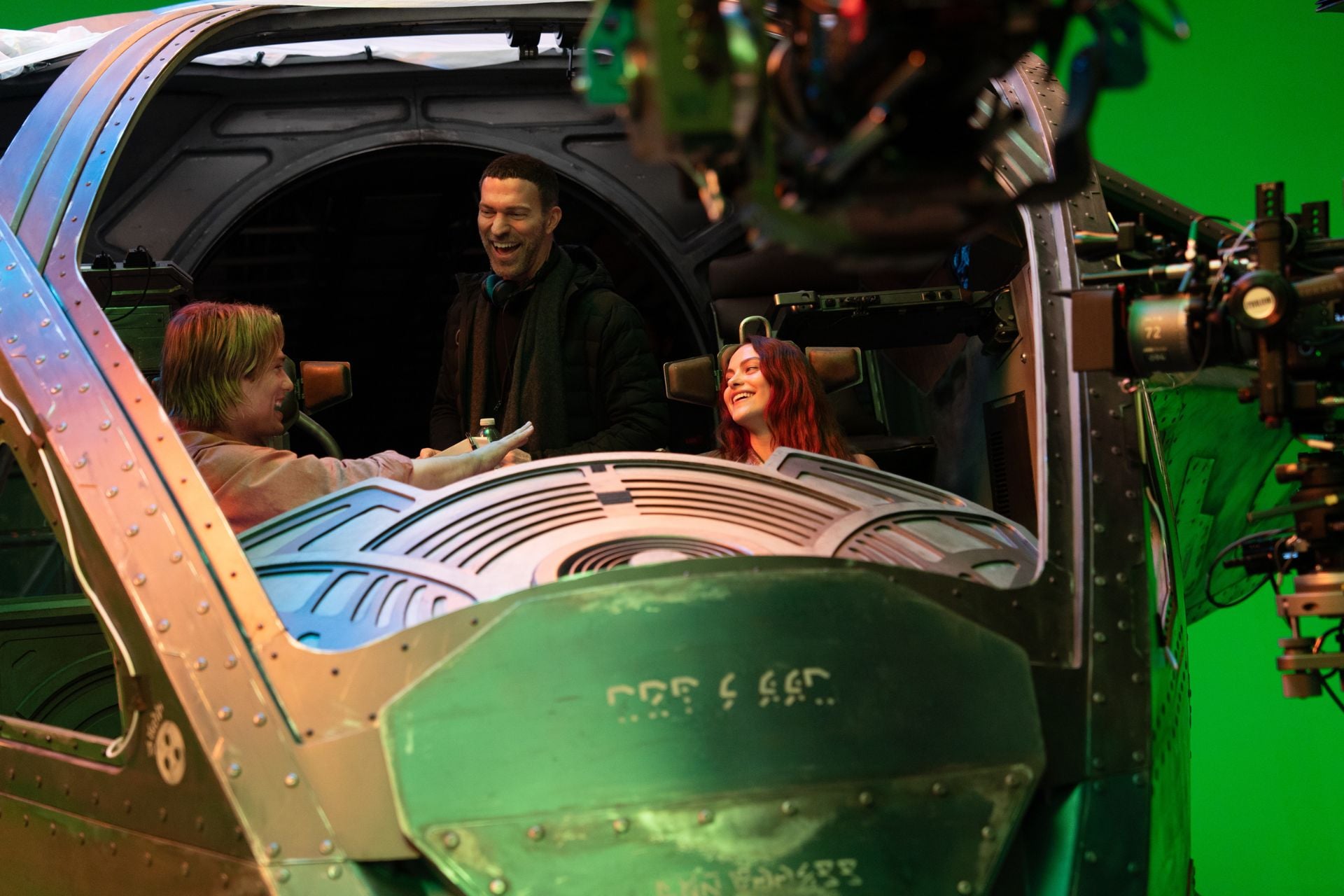
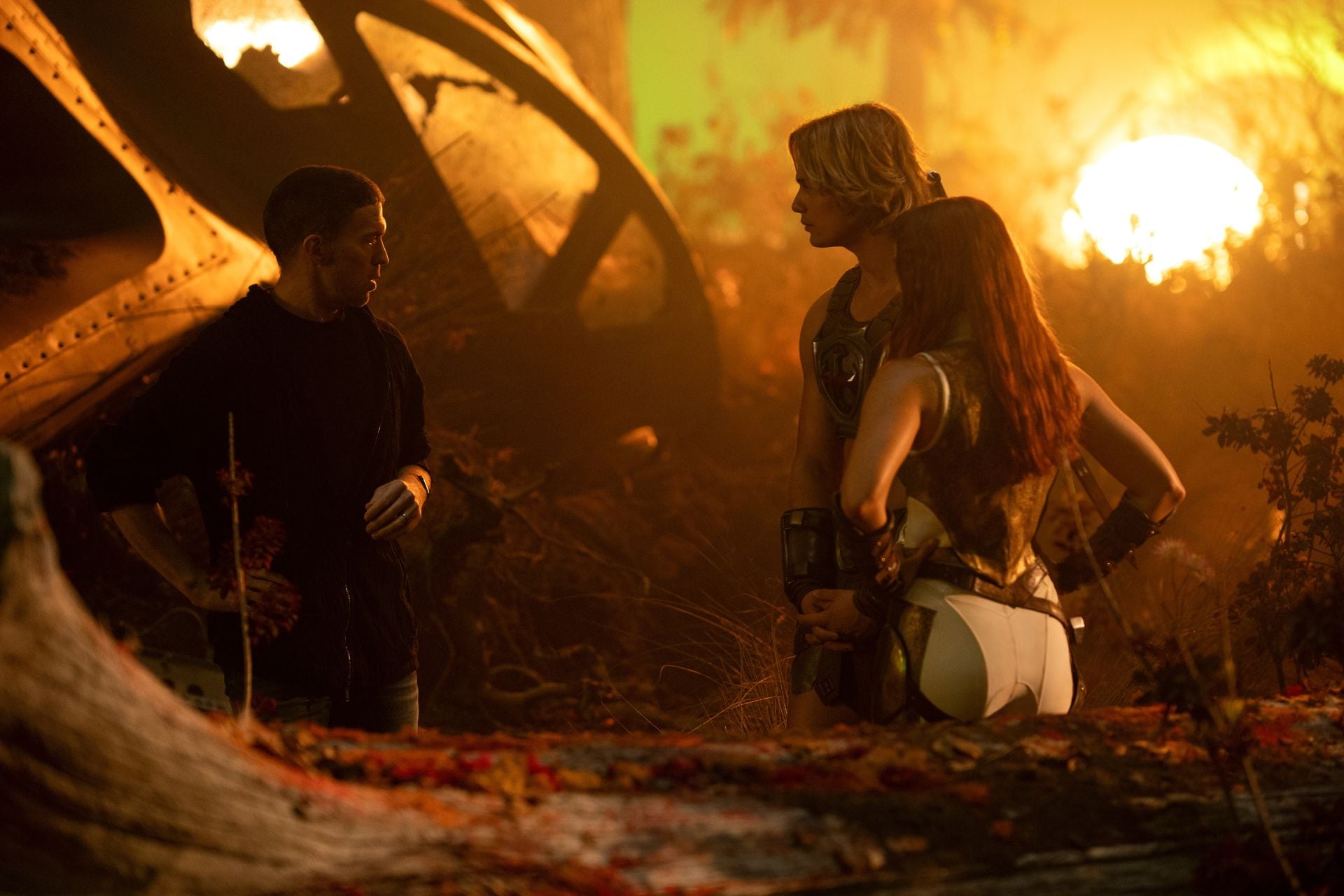
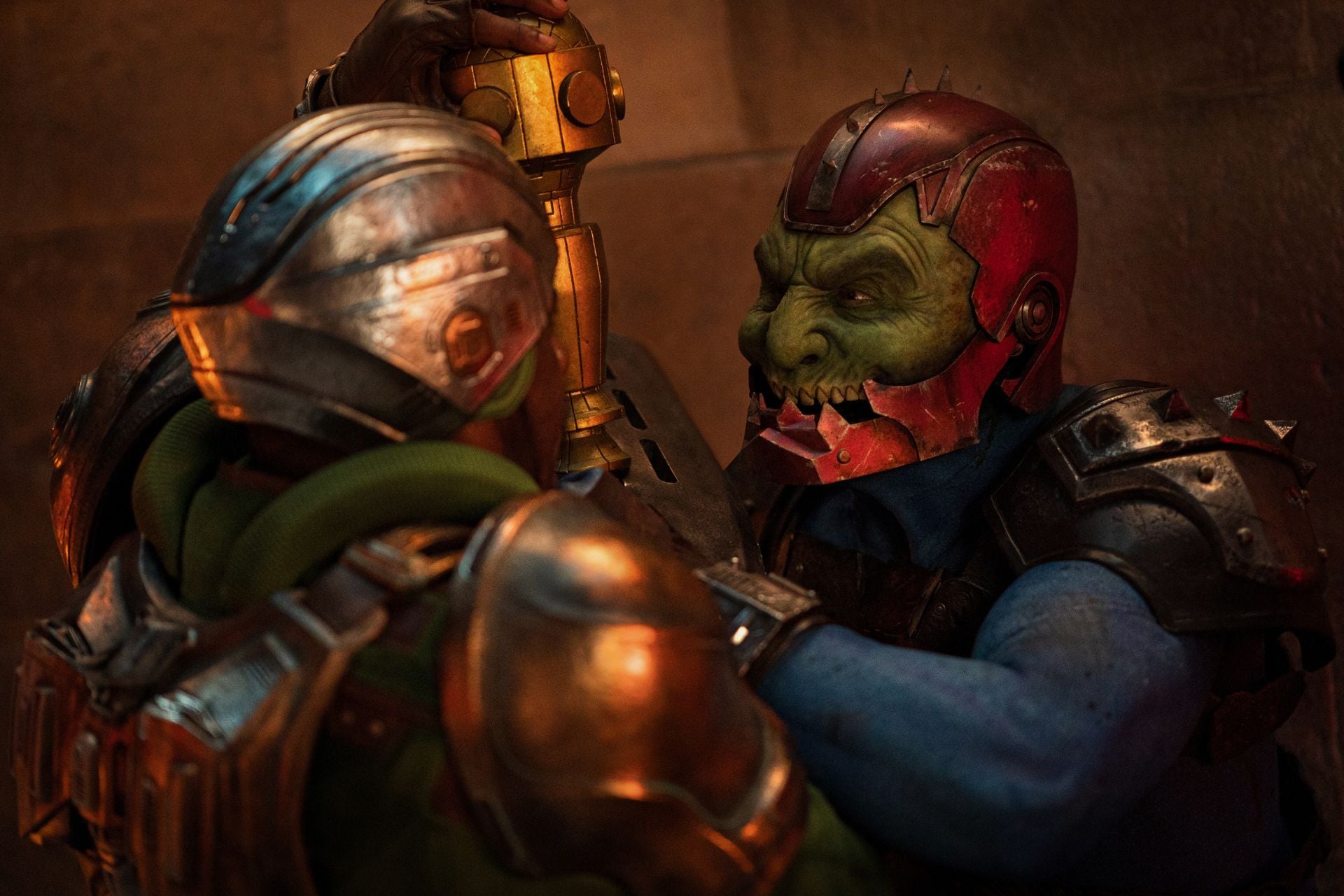
I held a Roton prototype and my scalp tightened in the way it does when a memory suddenly clicks into place. The blade spun; for a heartbeat Eternia felt closer than my phone. I’m going to tell you how that moment survived the studio gauntlet and how it changed the film you’ll see on June 5.
The producers kept an overflowing conference table of false starts on display — how the film finally got made
I watched Travis Knight name names and credit the long game: Todd Black, Jason Blumenthal, Robbie Brenner and Courtenay Valenti at Amazon MGM. You’ll appreciate the blunt truth he offered: films at this scale are puzzles with too many pieces, and these were the people who kept picking up the missing ones for nearly 18 years. I say this as someone who reads a lot of production memos: the rare studio executive who trusts a director is the difference between a film that dies in development and one that reaches camera.
How did the producers get Masters of the Universe into production?
Knight didn’t relitigate the prehistory. He focused on the last two-and-a-half years when he stepped in and a sequence of practical advantages aligned — experienced producers, a director with a clear take, and Courtenay Valenti’s enthusiastic backing at Amazon MGM. That combination moves a project from “we might” to “we will,” and you can hear it in the confidence of the final cut.
A display case of toys covered the table — how design and merchandising dictated creative decisions
You can tell a film’s DNA from its props, and this one wore its toy heritage on its sleeve. I asked Knight when toys started shaping costumes and sets. His answer was refreshingly straightforward: the movie was designed for the story first, then translated into objects Mattel could manufacture. You’ll want to know how faithful those toys are to the screen versions — the Roton proofed that faith was mutual.
Mattel’s engineers took a conceptual Roton — essentially like a flying Harley Davidson with saws attached — and invented a gyroscope-driven blade system. That sentence alone is an industrial thriller. Knight enjoyed the feedback loop: the team riffed off 40 years of toy design, remade pieces for cinema, then watched Mattel turn those movie elements back into toys you can buy.
How faithful is the film to the classic Masters of the Universe toys?
The short answer from Knight: refer to the source material whenever you’re stuck. He and production designer Guy Dyas returned to original art to preserve what made the toys iconic while giving characters new visual breathing room for live action. Expect variations that honor the classics and are engineered for playability.
An empty diner table during the day — what got left behind on Earth
I asked whether Prince Adam’s human life ever extended beyond what plays on screen. Knight admitted the film contains more material than its runtime shows, and he quoted a philosophy I’ll repeat: “The trimmer the vessel, the more it can carry.” He made choices to keep the story focused on Adam’s growth and on Eternia’s stakes.
That means there are scenes — funny, moving, absurd — sitting on the cutting-room floor. If you’re craving more Earth-based moments, know that the movie was never intended to be a two-world sitcom; Earth serves the emotional arc, while Eternia carries the spectacle and conflict.
A rehearsal room with a single amp — what the score brings to the frame
I sat with Knight as he described hiring Daniel Pemberton and his touchstones: big, theatrical, sincere. He wanted an energy that echoed the first time you heard Queen on a sci-fi score — the Laurentiis Flash Gordon effect — and he got Brian May in the room. For fans of film music, that’s a signal.
Pemberton layered influences in a way that makes the soundtrack feel at once medieval and disco-inflected — “Abba meets Queen,” Knight said — and he brought Brian May to deliver guitar solos that tear through the mix. The score hits like a lightning strike of nostalgia and amplifies the film’s emotional beats without ever apologizing for being loud.
Who composed the Masters of the Universe score and what was the direction?
Daniel Pemberton composed the score with Brian May contributing guitar work. Knight’s direction was clear: a maximalist, heartfelt sound with operatic moments and literal guitar solos — a combination that suits big-screen spectacle and toy-driven theatricality.
A tiny color swatch taped to a production board — why Castle Grayskull’s color changed
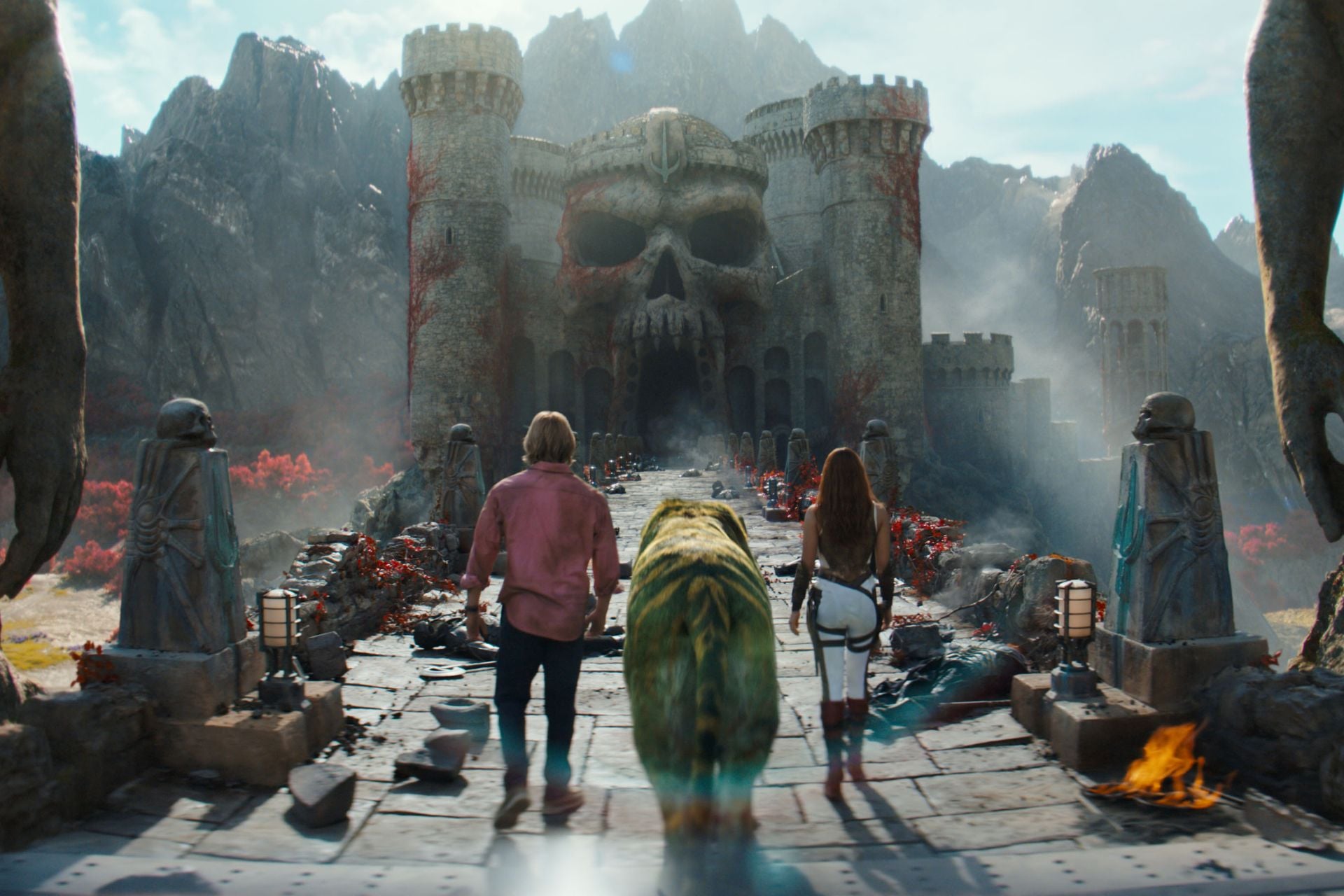
I remember green plastic toys on my childhood shelf; Knight remembered the same palette. Production experimented with hues and architectural references — a mix of Spanish and Moorish details — until Grayskull read as believable on camera. He wanted a castle that felt lived-in and resonant rather than a painted set-piece.
Grayskull in the film exists across a few color memories — gray, green, purple, blue — and the choice was practical as well as aesthetic. Guy Dyas and the art department built a version that supports camera movement and light; it had to read as monumental on a 40-foot IMAX screen, not just nostalgic on a 3.75-inch card.
A production office littered with credits — what the cast and crew mean for the franchise
I spoke with Knight about his leads: Nicholas Galitzine, Camila Mendes, Jared Leto. He framed the cast as actors who could carry a mythic universe and sell both vulnerability and spectacle. That casting signal is important: studios buy names to sell screens, but a director builds the performances that make audiences stay.
If you follow industry trends — Mattel’s licensing strategy, Amazon MGM’s release schedule, and studio execs like Valenti making creative bets — this feels like a moment when corporate muscle and creative trust matched. When teams align that way, sequels become a matter of audience will rather than corporate hope.
I’m leaving the theater with a simple prescription for you: watch for the details Mattel and the film team traded in private, listen for Pemberton’s guitar work, and see how Adam’s short life on Earth propels a story set almost entirely on Eternia. Do you think a film born from toys can become serious myth-making or is it destined to stay on the shelf as merchandise?