I was sitting with Deadline open and my coffee gone cold when the headlines tightened into a single question: what happens when a filmmaker who made citizens into hunters rewrites the rules? You can feel the room tilt. I’ll walk you through what matters and why you should care.
I’ve been tracking James DeMonaco since The Purge first made moral panic a summer franchise. You’ll notice the throughline: incentives turn people into actors, and actors turn into consequences.
Vigilant
On the street, neighborhood watch groups are already a hashtag and a heated council meeting away from chaos.
James DeMonaco is attached to direct Vigilant for Miramax, a project Deadline reports as a near-cousin to The Purge but with a new engine: cold economics. Based on a script by Tyler Stevens and Wade Stanton, with rewrites by DeMonaco and Krystal and Alon Ziv, the premise is simple: a pilot program pays citizens to capture wanted criminals, and the prize money turns civic duty into a sport.
Vigilant is a powder keg. You’ll feel the moral math tighten as the nation votes to expand the program and the difference between hero and hunter disappears.
Who is directing Vigilant?
DeMonaco returns as the director, bringing his expertise in orchestrating crowds and moral pressure — the same sensibility that made The Purge a cultural reference point for how policy can warp behavior.
What is Vigilant about?
Short answer: cash incentives for citizen arrests. Long answer: it’s a story about how systems of reward reshape identity, trust, and violence. If you use tools like Box Office Mojo or production trackers on Deadline and Variety, you’ll spot this film’s lineage immediately.
G.I. Joe
At the water cooler, casting rumors travel faster than official press releases.
Nexus Point News alleges that Chris Hemsworth has left Danny McBride’s G.I. Joe project and that Bradley Cooper is being eyed as his replacement. That’s a casting swing that would change the tone of McBride’s take: Hemsworth carries blockbuster muscle; Cooper brings a different kind of intensity and star profile.
Is Bradley Cooper replacing Chris Hemsworth in G.I. Joe?
It’s a rumor at this stage. You should watch Deadline, Variety, and studio filings for confirmation. Casting shifts can remake a script overnight; they also drive investor sentiment and marketing strategy.
Casting rumors are a wildfire: one spark in the trades and every outlet is fanning the flames.
Skeletons
On set, actors listen for the creak that announces something other than human is arriving.
Deadline reports that Keith Carradine has joined J.T. Mollner’s creature horror Skeletons. The film already stacks Brie Larson, Kyle Gallner, Willa Fitzgerald, Ione Skye, John Goodman, and Daithí Ó Haragáin — a cast that signals the project wants both talent and tonal range.
The Dog Stars
When Ridley Scott’s name appears on a trailer, expectations recalibrate in real time.
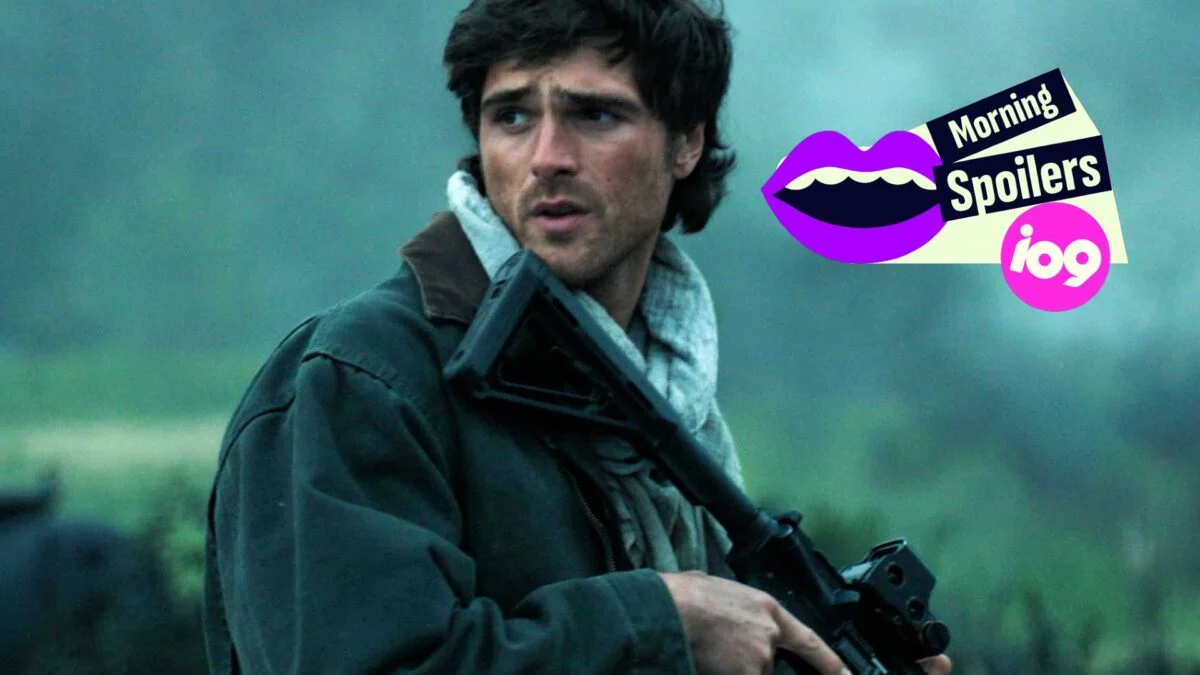
The trailer for Scott’s adaptation of Mark L. Smith’s novel, The Dog Stars, pairs Jacob Elordi and Margaret Qualley with Josh Brolin, Guy Pearce, Benedict Wong, and Allison Janney. It’s a post-apocalyptic story about a pilot who, with a military survivalist, tends a fragile homestead until a radio signal suggests hope still exists. The casting and Scott’s stamp signal a high-production, character-forward spectacle.
Ferine
Art shows and auction houses can be breeding grounds for obsession and danger.
Andrea Corsini’s Ferine trailer centers on Carolyn Bracken as an art collector undergoing an animalistic transformation who collides with a trafficker of exotic predators. The score by Pino Donaggio and a cast including Caroline Goodall, Paola Lavini, and Elisabetta Caccamo give the film a classic-horror-meets-luxury feel.
Far Cry
Video games have become a primary pipeline for serialized storytelling on TV.
Deadline says Steve Buscemi will appear in Noah Hawley and Rob Mac’s Far Cry anthology at FX. The series will follow the games’ signature standalone format, but which game or storyline the first season will adapt is still under wraps. With Hawley involved, expect tonal ambition married to serialized risk.
Shifter
Technology and identity are colliding in comics, and streaming services are buying the rights.
Deadline reports that Adam Scott, Ezra Claytan Daniels, and Eli Jorné are developing Shifter for Hulu. The near-future tale, adapted from Koren Shadmi’s graphic novel, imagines a banned cosmetic procedure that lets people alter their faces on the fly, spawning an underground industry of professional Shifters. It’s a premise that invites questions about privacy, labor, and performance.
Doctor Who
Public broadcasters are learning that legacy IP has leverage in a crowded streaming market.
BBC Studios CEO Tom Fussell told Deadline the company will bid to become the next producer of Doctor Who when the tender process opens. The pitch is straightforward: they’ve run the show for 60 years and intend to try to continue. This matters because production houses control tone, international sales, and merchandising cadence.
Below
Small towns and big water have long been an efficient recipe for dread.
Entertainment Weekly offers a first look at Below, Netflix’s series about a fisherman fighting a sea creature threatening a Newfoundland town. Josh Hartnett leads a cast that includes Charlie Heaton, Mackenzie Davis, and Ruby Stokes, and the show looks set to blend maritime myth with procedural stakes.
If you follow trades such as Deadline, Entertainment Weekly, and Variety, you’ll see patterns: studios testing social appetite for moral panic, streaming platforms circling high-concept IP, and big names moving between film and TV at speed. I’ll keep reading so you don’t have to scan every press release. Which of these stories shocks you most and why?