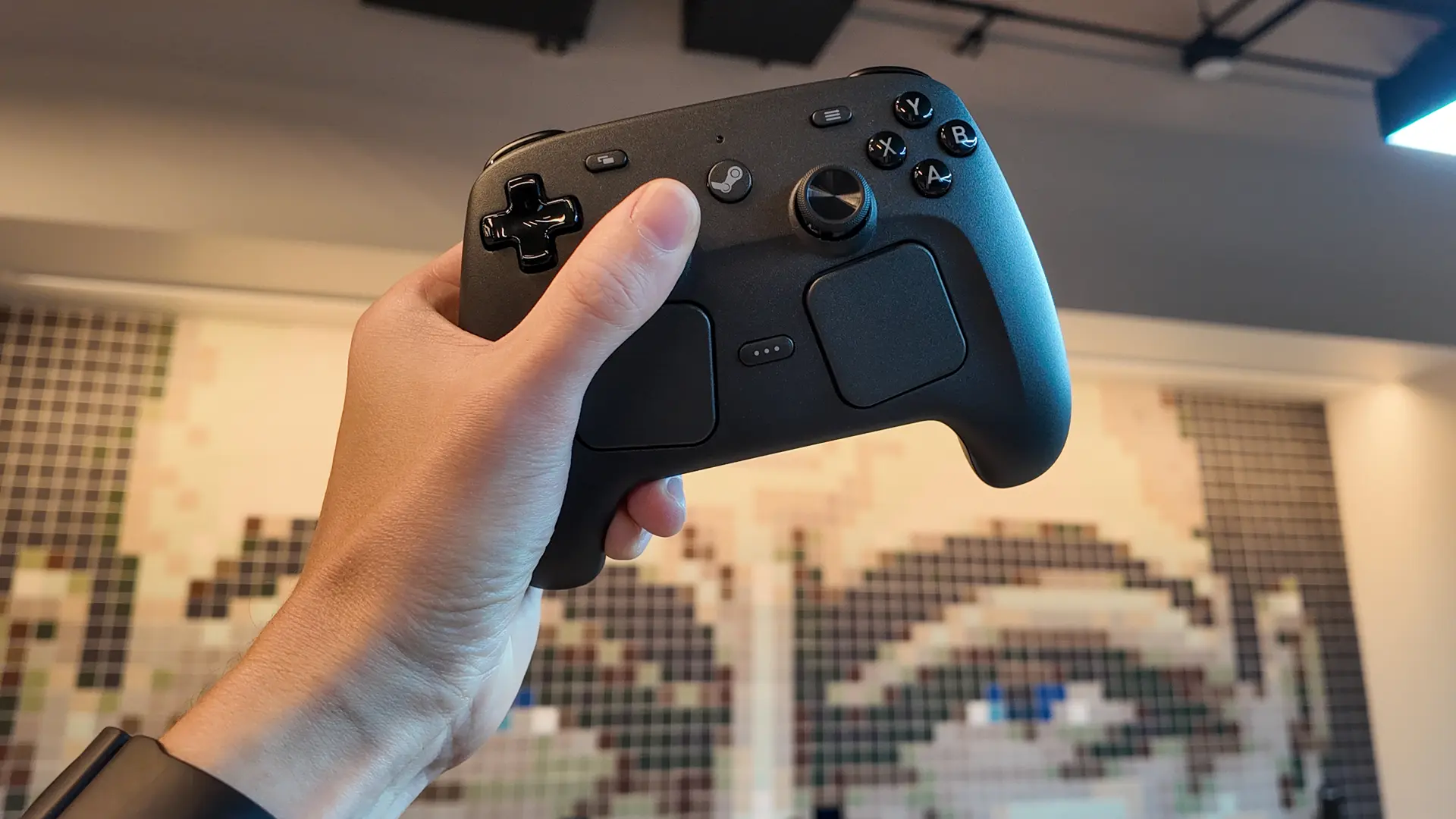
I unplugged my old controller, thumb still sticky from a late-night session, and realized I was about to judge a product I hadn’t held yet. You’re supposed to care about specs, but you care more about whether it will solve that tiny irritation that ruins a run. I’ve tested enough peripherals to know when something is merely clever and when it actually changes how you play.
Valve has set a date: the Steam Controller lands worldwide on May 4 at 1 pm ET and will be sold directly through Steam. The price sits at $99 (€91), and yes, that number matters — especially when you can already pair a cheaper pad over Bluetooth. But after watching early reviews and poking at the hardware, I think Valve packed reasons that justify the sticker price for a specific kind of user.
You hit the trackpad during a menu-heavy session and wince.
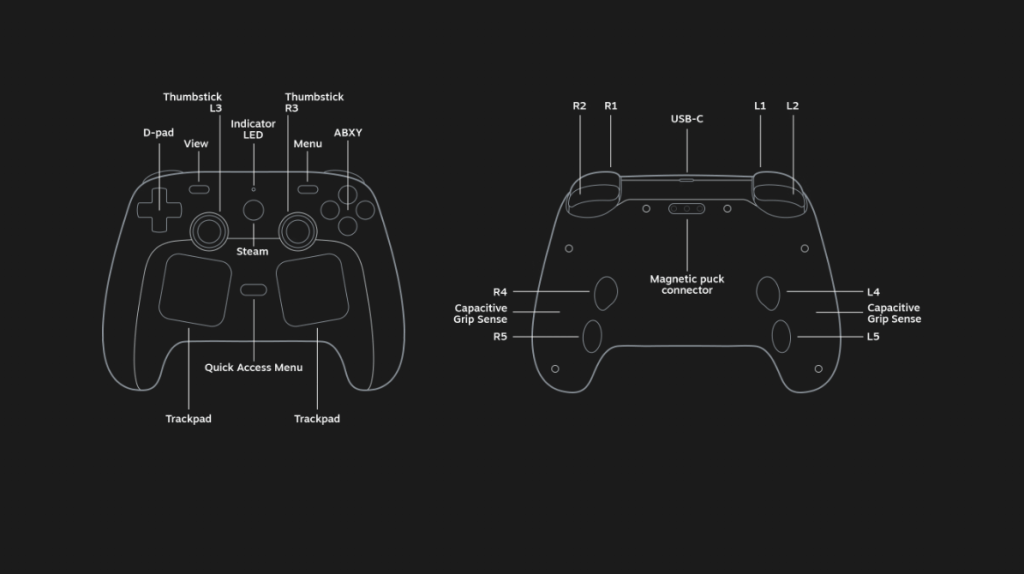
The new Steam Controller keeps traditional thumbsticks and face buttons, but Valve added two trackpads that act like a built-in mouse. That change isn’t about replacing your mouse for precision shooters; it’s about keeping your hands on the controller when Steam’s interface or a PC app demands pointer control. I spent an afternoon switching profiles in Steam Input and it felt deliberate — a controller and a cursor coexisting without you having to shuffle hardware.
Your wired headset tangle reminds you some things still prefer a cable.
Valve offers USB and Bluetooth options, but the headline feature is the Steam Controller Puck. Plug the puck into the controller, and it connects wirelessly to your PC while also charging the pad. It’s a hybrid that cuts latency compared with plain Bluetooth while preserving wireless convenience. For competitive players who hate input lag but despise dongles cluttering their desktop, that puck is a clever compromise.
The left trigger squeaks after a year of FIFA marathons.
Inside, Valve went after durability and precision. You get two magnetic TMR thumbsticks designed to minimize drift, full rumble, gyro motion, and four rear buttons so you don’t remove thumbs from sticks for crucial inputs. There’s enough hardware here to make the controller feel like a small lab inside your palms — every sensor, motor, and pad seems chosen to answer common complaints about modern controllers.
Your Steam library stretches across a laptop, a Steam Deck, and a living-room PC.
The Steam Controller works across Windows, macOS, Steam Deck, Steam Frame, and future Steam devices. Steam Input lets you remap virtually everything — triggers, sticks, trackpads, gyro — in software, so you can tailor the controller for a gamepad-first title or for a mouse-centric experience. I tested a few community-made profiles and the flexibility is as expansive as Valve promised.
When does the Steam Controller release?
It ships worldwide on May 4 at 1 pm ET and will be available on Steam’s store page. Early reviewer access has ended, so public impressions are now part of the conversation.
How much does the Steam Controller cost?
Valve set the retail price at $99 (€91). You can justify that price if you value the puck’s low-latency wireless charging, the second-gen magnetic sticks, and the extra inputs. If you only need a basic pad for casual play, cheaper options will still do the job.
What platforms is the Steam Controller compatible with?
Supported systems include Windows and macOS, plus Valve’s own hardware: the Steam Deck and Steam Frame, with the Steam Machine name appearing as a future target. It pairs over USB, Bluetooth, or via the Puck, and uses Steam Input for deep profile customization.
I don’t recommend this controller to every player. If you want a simple plug-and-play gamepad, buy accordingly. If you tinker with profiles, use gyro for aiming, or hate stick drift, the Steam Controller is worth a close look — it’s like a Swiss army knife of inputs aimed at power users and modders.
So will Valve’s gamble on hybrid hardware and heavy customization change how we treat PC controllers, or will it collect dust beside your wired mouse?