
I remember the moment I realized my steering wheel had become a plot device. One second I was honking at rush-hour idiots, the next a pixelated woman exploded into another world and I felt oddly responsible. You will laugh, judge, and then keep playing—because Strange Scaffold somehow made moral panic transportable.
I’ve followed Strange Scaffold because they make games that are flagrantly weird and unapologetically playful. You know the kind: they smell faintly of late-night ideas and caffeine, and they keep you thinking about them long after you close the window. If you like oddball experiences—El Paso, Elsewhere, I Am Your Beast, Clickolding—this one will look familiar and wrong in the best way.
At a coffee shop, someone said “isekai” and everyone nodded. That’s how mainstream the trope has become.
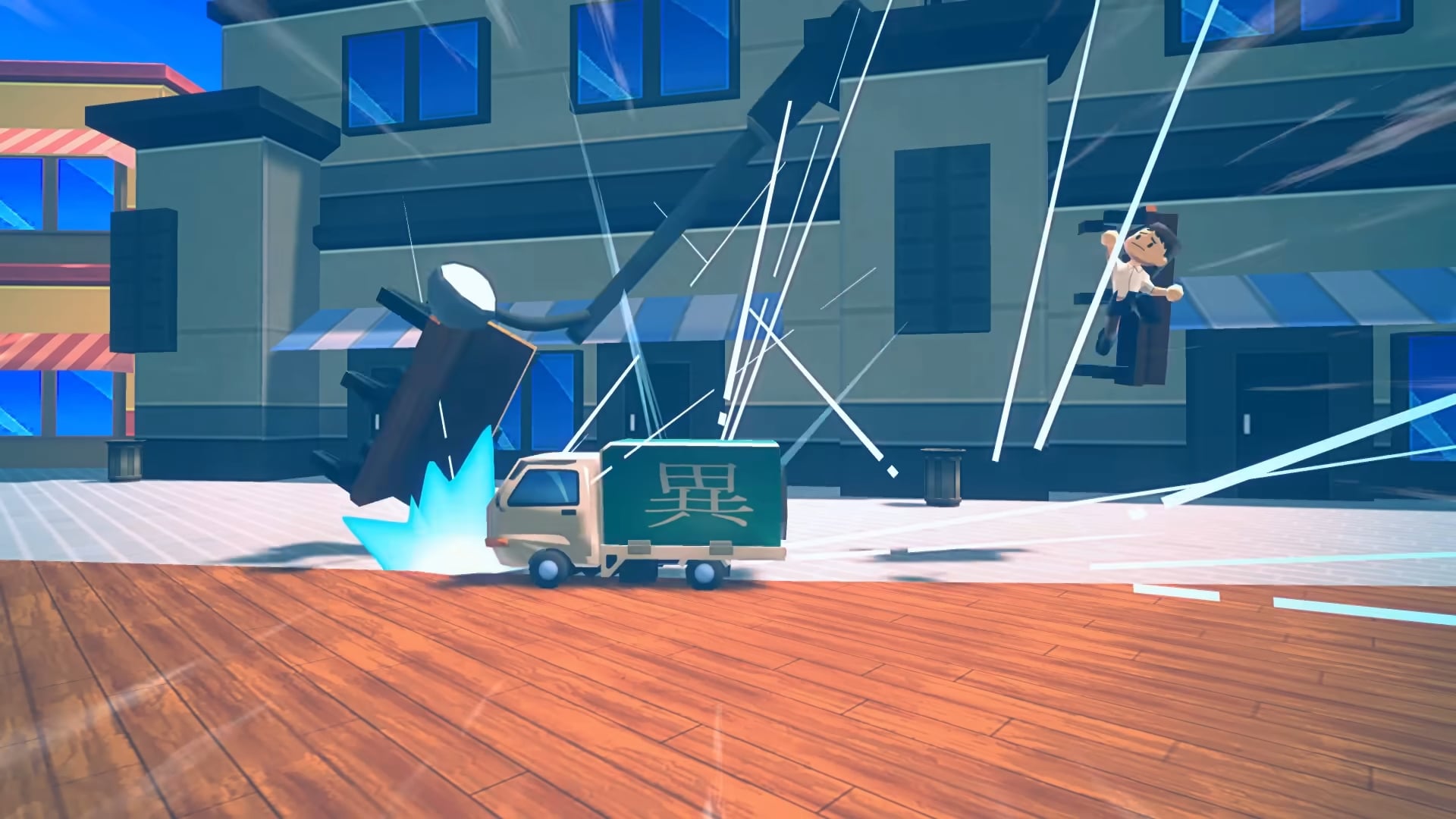
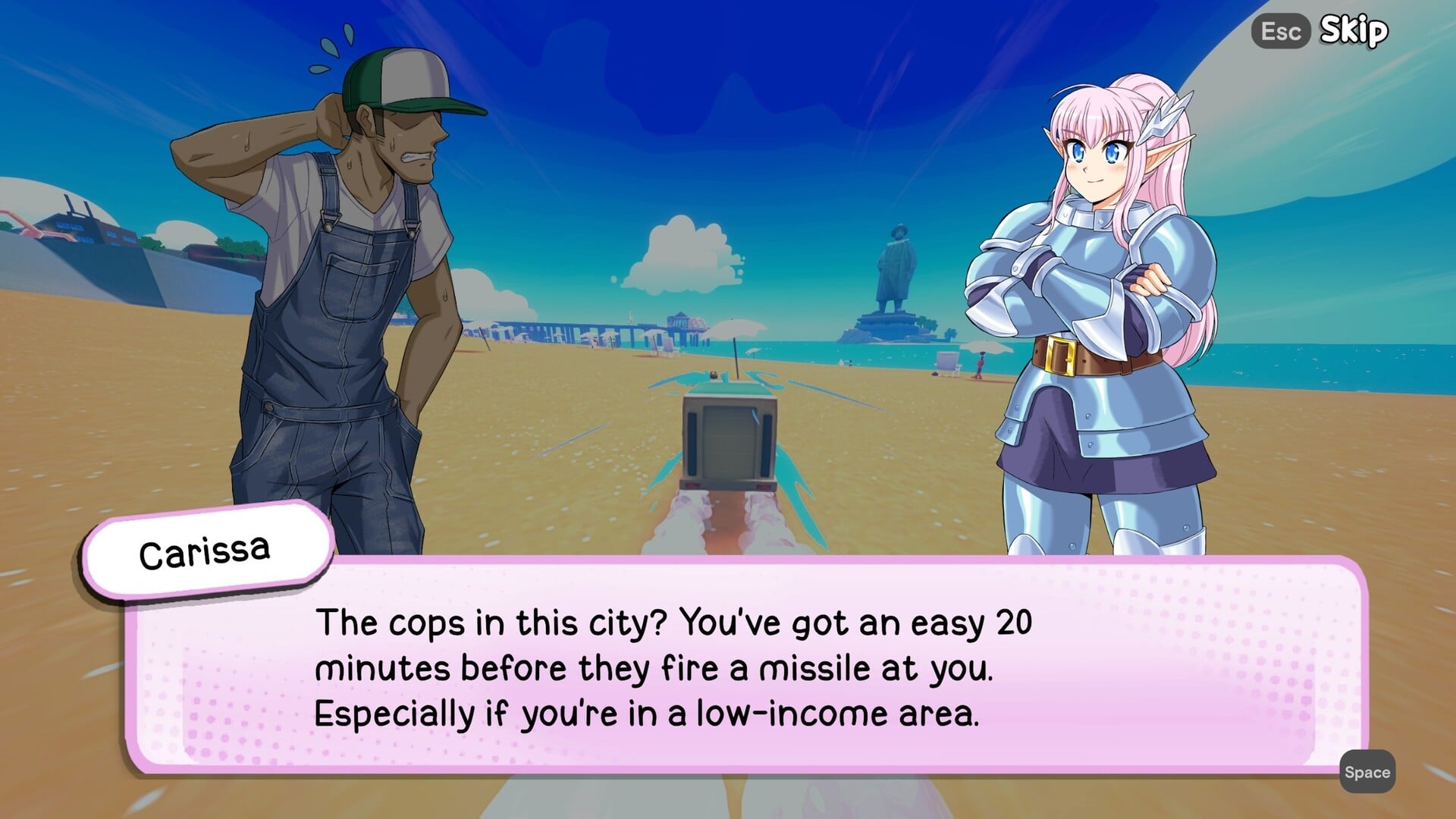
Strange Scaffold’s Truck-kun Is Supporting Me From Another World?! takes that meme and hands you the keys. You are a kei-truck driver who accidentally sends an overworked otaku named Carissa to a fantasy world by running her over, and the whole loop turns into a gameplay economy: whatever you wrap around your bumper gets isekai’d to Carissa so she can grind XP. The conceit is ridiculous, but the game treats it like a toolbox of gags and mechanical incentives rather than a moral essay.
I played the demo during Steam Next Fest and it felt like a carnival speedrun.
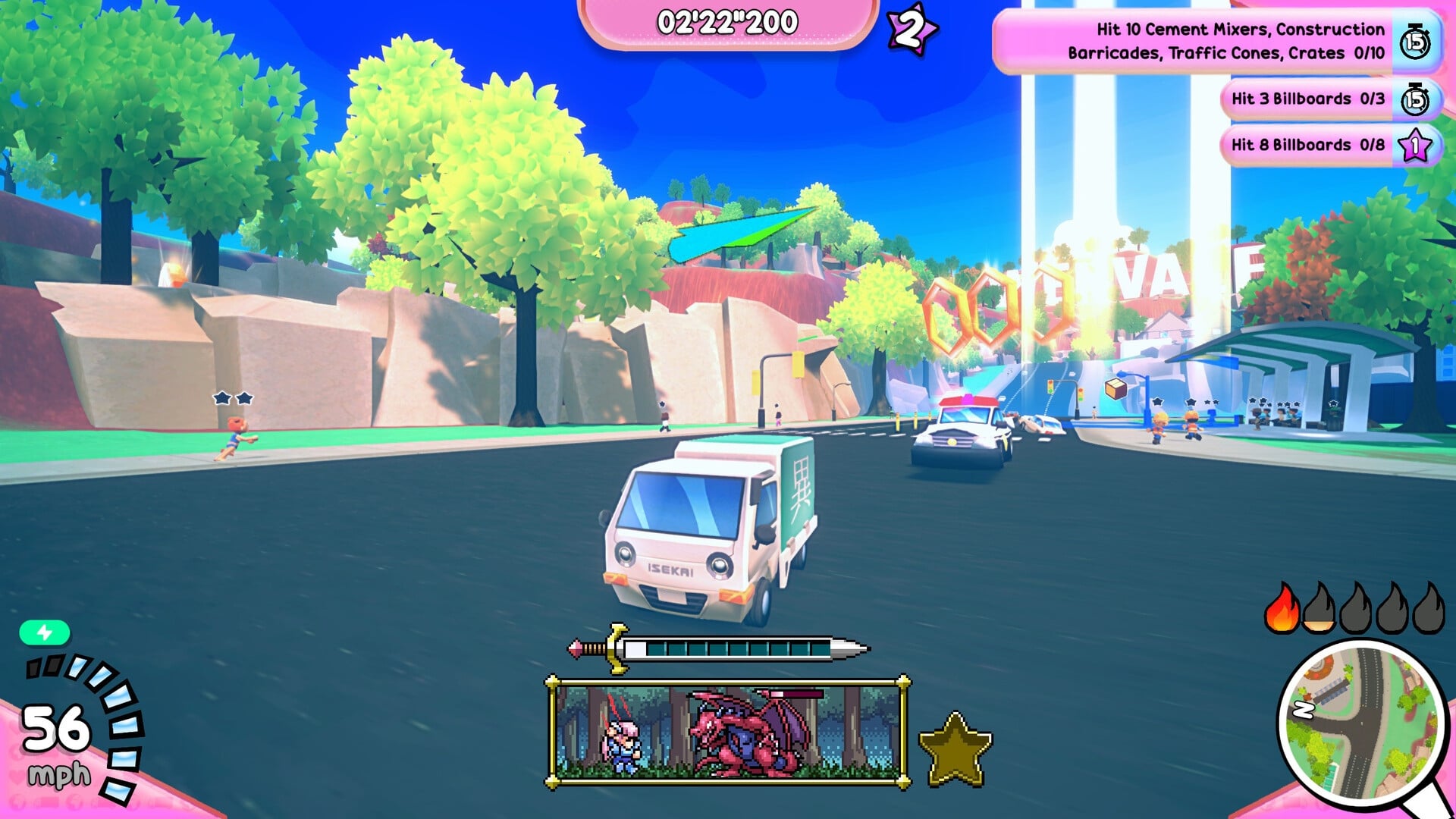
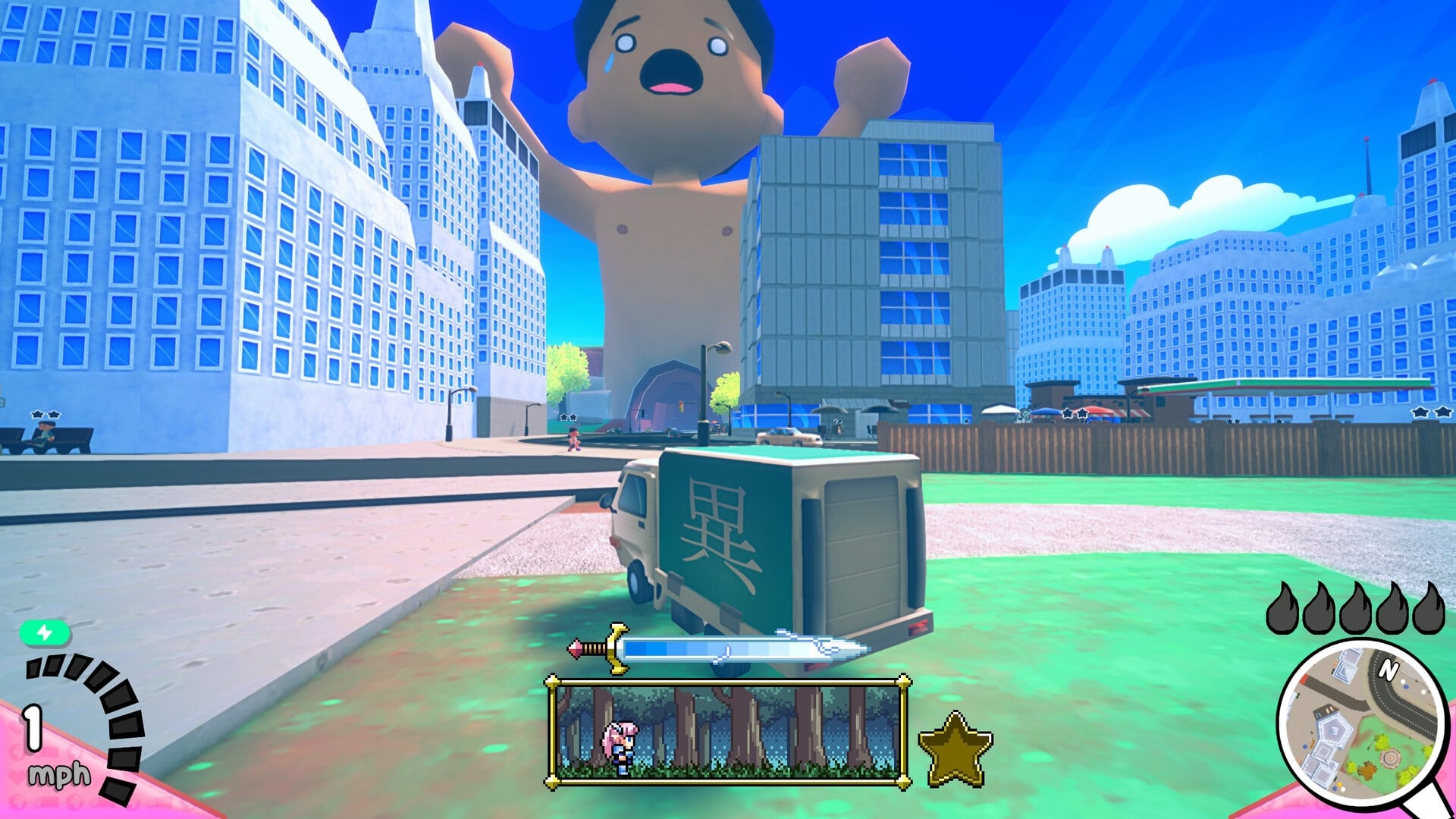
The Steam Next Fest demo is where the idea sharpens into play: fast 3D platforming, razor drifting, and a score-chasing loop that happily rewards improvised mayhem. Gameplay borrows from Katamari Damacy, Crazy Taxi, and Denshattack!—but with anime chaos as the fuel. The game’s humor lands with a physical thump, like a jester’s rubber mallet, and the meter you build by sideswiping buses or mowing through beach chairs feeds Carissa’s pixel-art adventure in the corner of the HUD.
What is Truck-kun Is Supporting Me From Another World?
The name says most of it. You drive. You hit things. Each hit sends objects or people into Carissa’s fantasy side to be used as XP fodder. Carissa’s progress is visible in charming pixel art on the HUD, and your side of the game is a loop of deliveries, meter-building, and mayhem. The experience is intentionally silly; it satirizes the isekai cliché where a truck conveniently solves the problem of getting people into another world.
On my Steam Deck, I learned that chaos can be surgical.
If you’ve tried this on a Steam Deck, you know the demo rewards precision as much as flamboyance. Hitting a cluster of beachgoers or threading a drift through a plaza builds the meter you need for Carissa’s big attacks, and the short rounds make for addictive quick loops. The game balances silliness with a clear mechanical heartbeat—deliveries keep your business afloat while isekai victims beef up Carissa—so you’re constantly deciding between pragmatic routes and the fun test of how many pedestrians you can chain together.
When is Truck-kun released?
It launches on July 29 on Steam and Xbox Series X/S. If you follow Strange Scaffold or Frosty Pop on social channels, you’ll see more trailers and demos drop between now and launch; Steam Next Fest was the appetizer, release is the main course.
In practical terms, the game rewards experimentation: use highways, plazas, or beachfronts differently, and the same trick produces varied outcomes. That mechanic made me treat the map like an instrument. The satire works because it doesn’t moralize; it invites you to be mischievous and then shows you the consequence as a tiny, lovable RPG mini-adventure.
At a crosswalk, a kid asked why games glorify running people over. That question matters.
Strange Scaffold doesn’t hide the absurdity: the joke is the point. The game lampoons isekai’s tired setup by turning the trope into a toy you can pilot while also designing a tidy reward loop. If you’ve read Kotaku’s seasonal anime guides or seen the chatter about truck-kun memes bleeding into real-world concerns, this title feels like a wink—an intentionally absurd take rather than a straight retread.
I played this to satisfy curiosity and left thinking about genre fatigue in a new way. The game is a short, sharp satire and a competent arcade loop that thrives on creative collisions between traffic and anime tropes, as if a blender of Saturday morning cartoons and traffic reports had a very opinionated offspring. Will this make you rethink isekai—or just make you laugh while you cause tiny catastrophes?