
You load the PS5 Disc Drive page and a short notice stares back: Sony will stop pressing discs for new games after January 2028. I remember that tiny, official sentence sparking a small, sharp panic in the forum threads. The notice landed like a guillotine.
I’ve followed console cycles long enough to see which moves are tactical and which are strategic. You should treat this as both a business shift and a public-relations flashpoint: Sony is reminding buyers that a discless PlayStation isn’t some rumor anymore — it has a date.
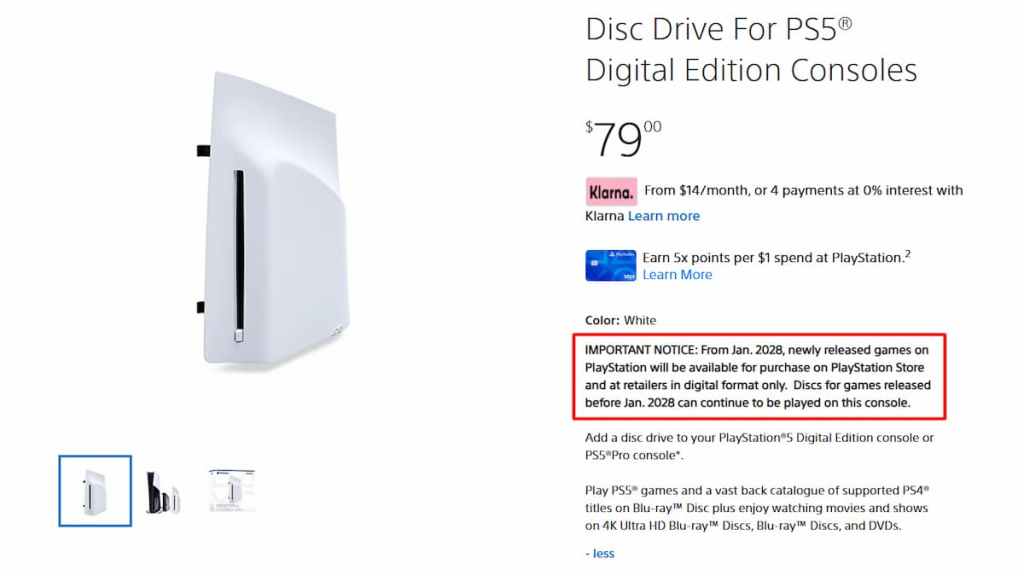
On the PS Store today, a blunt notice appeared on the Disc Drive product page.
The copy is short and legal-feeling: Sony will stop producing physical PlayStation discs for any new game released after January 2028. If you were tempted to buy a separate PS5 Disc Drive now, the company quietly attached that fact to the product listing.
That move does more than inform. It nudges your behavior. If the console maker tells you discs will cease, some shoppers will fold their wallets into digital-only purchases; others will rush to buy discs now. I read this as deliberate pressure to accelerate a migration Sony has already started.
Will PlayStation stop making discs in 2028?
Yes — for new releases after January 2028, Sony says it will stop pressing discs. Titles released before that date can still be reprinted at publishers’ discretion. That means publishers control which legacy discs remain available, not Sony alone.
At earnings calls and interviews, executives point to a clear number: digital makes up the bulk of revenue.
Sony told investors that 85 percent of PlayStation revenue now comes from digital channels. I bring this up because those figures are not apples-to-apples: digital revenue bundles indie storefront sales, live-service income, free-to-play spend, microtransactions, and full-price digital boxes.
When you hear “85 percent,” remember that microtransaction-driven live games and persistent services skew that total. Hideo Kojima called the shift “frightening,” and that reaction matters because creators and collectors see more than balance sheets — they see ownership and preservation at stake.
In retail aisles, disc-equipped PS5s still outnumber digitals for many buyers.
Two years ago, Insider Gaming reported that disc versions of the PS5 made up over 80 percent of PlayStation sales, even though those consoles were often $50 (€47) to $100 (€94) more expensive than the digital-only model. When single-player titles are isolated, some reports put disc sales at about 60 percent.
So there’s a clear market contradiction: gamers keep buying discs for certain experiences, while Sony’s income increasingly flows from games sold and monetized digitally. I call this a strategic squeeze — publishers and platform holders tilt incentives toward what pays more over time.
Can I still buy a PS5 Disc Drive after 2028?
Short answer: you can buy hardware while supplies last, but the long-term value of that drive will shrink if new physical releases stop. Sony has already limited disc drives per order during “high demand” windows; this notice suggests the company plans to stop replenishing disc inventory for future titles.
On forums and social feeds, the backlash hasn’t faded — it’s sharpened.
The outcry included collectors, secondary-market sellers, and notable creators. That reaction matters because it frames public perception and future PR cycles. You and I both know that once a passionate subset of fans feels cut off, conversations move fast and loudly.
Sony will argue that margins improve and distribution costs drop. Publishers will point to lower manufacturing headaches. But there’s a cultural value to discs that doesn’t appear on a balance sheet: tangible ownership, resale markets, and offline play. Physical shelves will become a lighthouse gone dark.
At the crossroads of business and culture, choices force trade-offs you can see in sales charts and forum threads.
PlayStation’s roadmap narrows the physical option and amplifies the digital one. I’m not trying to persuade you to pick a side; I want you to notice the forces shaping your future purchases: platform policy, publisher decisions, and where developers choose to sell their work.
If you value collectibility, cold-storage backups, or trading used games, the landscape is shifting. If you prefer instant installs, cloud saves, and the convenience of digital storefronts like the PlayStation Store — plus subscription bundles — that future is already here.
Want a practical signal to watch? Track publisher reprints and secondhand market prices, follow statements from figures like Hideo Kojima and outlets such as Insider Gaming and Moyens I/O, and watch Sony’s PlayStation Store updates. They’ll tell you more than any promotional blog post.
I’ll keep an eye on inventory changes and publisher announcements; you should too. Will you accept a PlayStation library that lives only on servers and ledgers?