
My heart skipped when an opponent dropped a doubled Cassandra Nova and the board flipped into chaos. I sat there, half-annoyed, half-delighted — and suddenly I understood what Second Dinner had been trying to do. After a few runs, Draft felt like the playful jolt Marvel Snap has quietly needed.
I played an early build thanks to Second Dinner and I’m writing from the kind of experience that mixes curiosity with purchase-inertia: you’ll want to try this, fast. I’m as protective of ranked integrity as the next veteran, but Draft strips away collection anxiety and replaces it with crisp, repeatable decision-making. You and I both know how valuable that feels in a card game that can otherwise reward whoever owns the flashiest pull.
RNG protection
At my kitchen table I watched a friend draft the same starter archetype I picked and we still ended up with very different decks. That’s the point: Draft funnels randomness into a shared corridor so variance feels fairer.
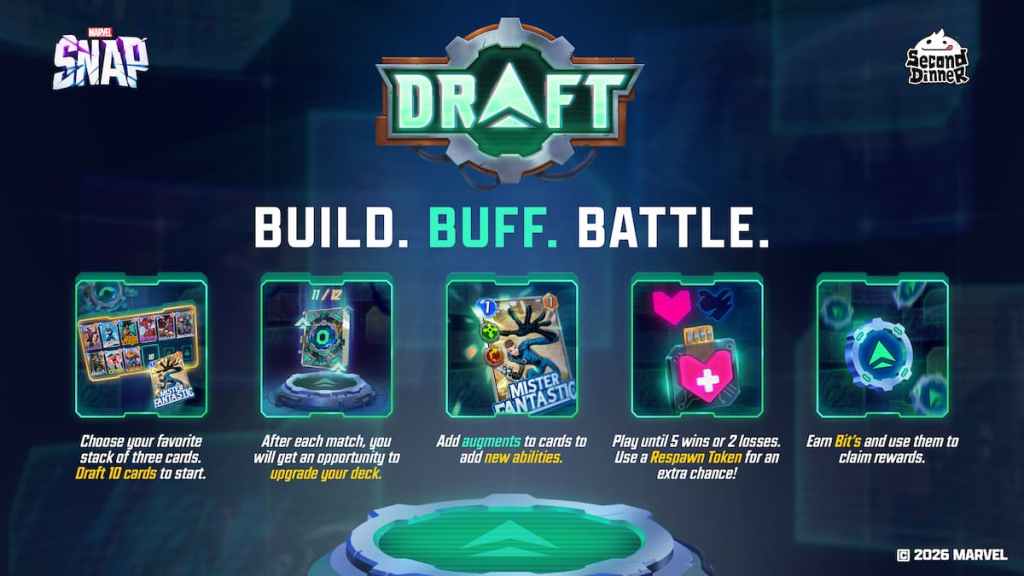
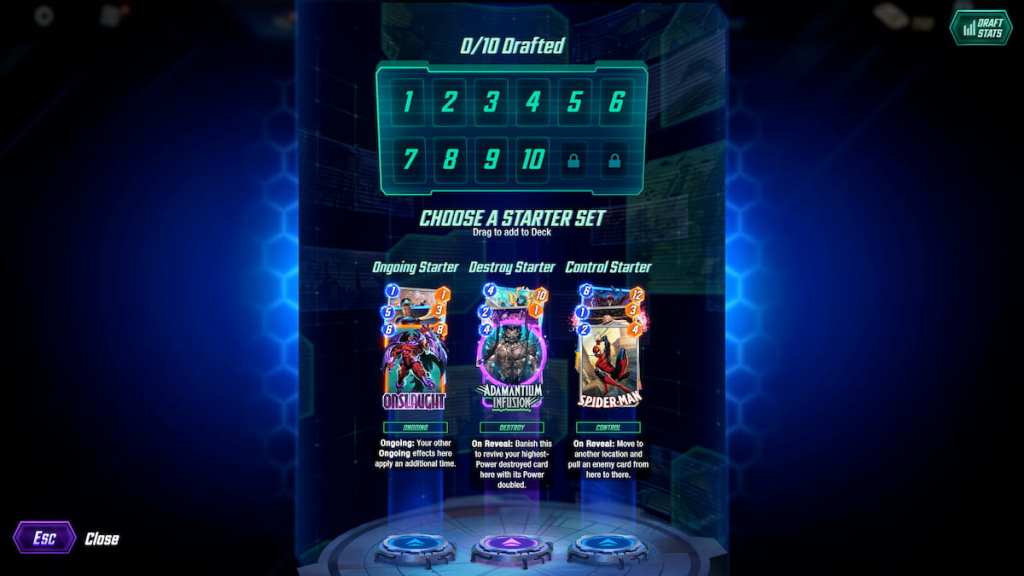
You begin with a starter set pack of three cards tied to an archetype — Destroy, Ramp, On Reveal, and so on — then pick one of three card choices repeatedly until you hit a 10-card starting deck. From there you play until five wins or two losses, collecting rewards and upgrading cards as you go. Because each choice pulls from archetype-aligned pools, the mode avoids the “I missed Series Five so I’m sunk” problem; everyone’s drafting from the same pool.
How does Draft mode work in Marvel Snap?
Draft condenses what usually takes dozens of hours of collection into one run: select a starter, pick from curated three-card options, add upgrades and Augments between matches, and play a short run that ends at five wins or two losses. You’ll also get Stat Boosts and color-coded rarities that change how often certain cards appear.
Augments are everything
I noticed during my second match that an Augment turned a meh card into a recurring threat and the match swung like someone flipped a switch. Augments are the mode’s personality engine — they bend cards in strange, delightful directions.
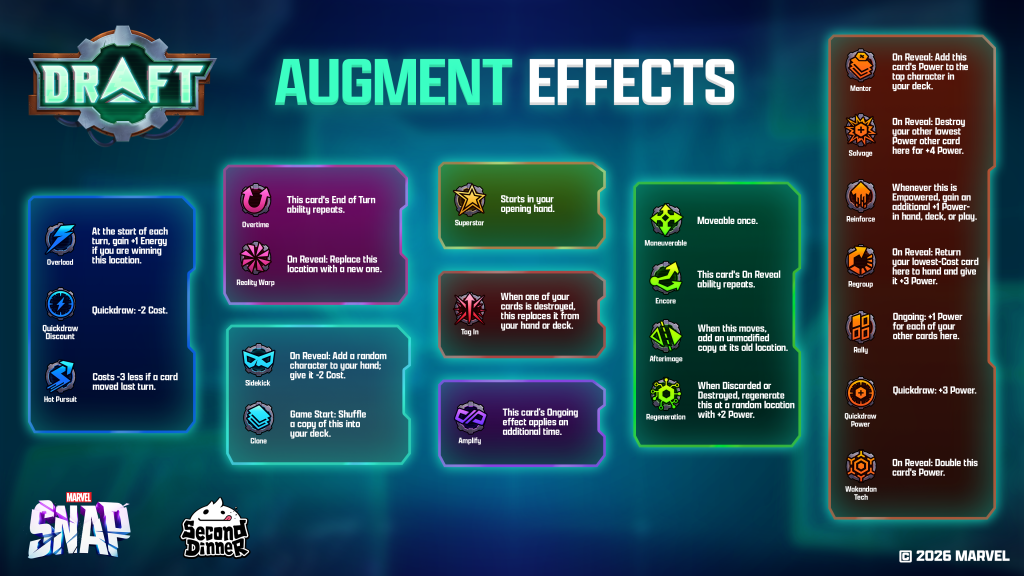
Augments attach to existing cards and give them extra traits: Superstar (starts in opening hand), Encore (repeat On Reveal), Amplify (double an Ongoing), Overload (gain +1 energy each turn at a winning location), and more. Some drafted cards come pre-augmented; others gain Augments via choices later in the run. The result feels less like random chaos and more like curated surprise.
Can Augments break balance in Draft mode?
They can create absurd moments — you might face a cost-reduced Living Tribunal or a Cassandra Nova whose On Reveal triggers twice — but because both players pull from similar pools, those shocking plays read as clever variation rather than pay-to-win. Augments are also paired with Stat Boosts that can add Power or reduce cost, so synergy and selection skill still carry weight.
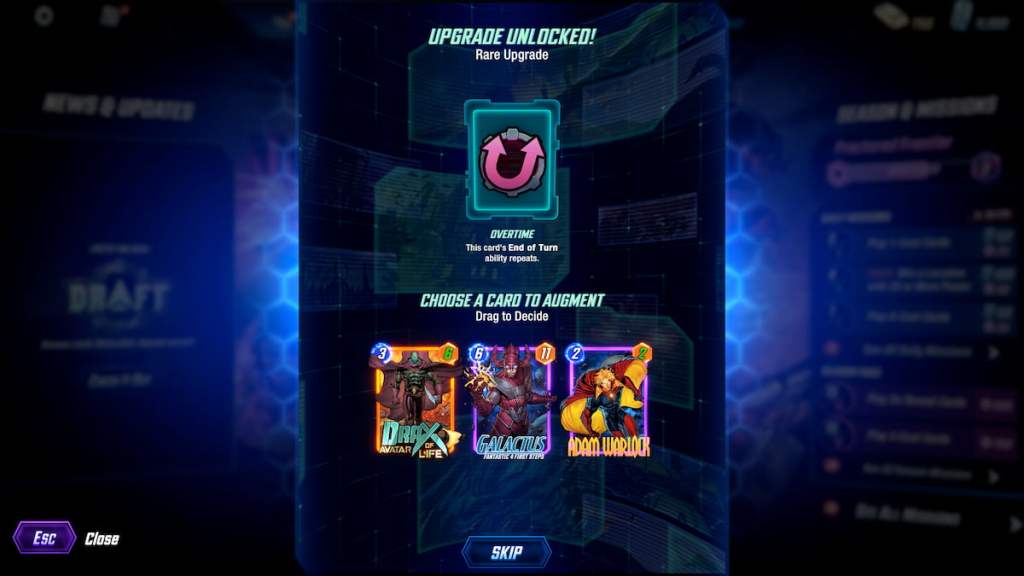
Augments pair with the allowance for duplicate cards in a deck, which can snowball a niche combo into a board-winning engine. Think of Augments as a spice rack: a little can transform a familiar dish into something memorable. This mechanic turns each run into a short roguelite tease — you never see the same menu twice.
Easy access
At launch I watched a complete newcomer open the Draft screen and get a run into their second match within five minutes. The entry barrier is pleasantly low.
To play Draft you need a Draft Ticket; everyone starts with 10 tickets and you can earn more on the Draft reward track or via the login calendar. You can also buy one for 100 Gold (around $1 (€0.93)). Winning your run refunds your ticket, so skilled players can grind without burning their stash. Second Dinner intends this to be a rotating, limited-time mode — the first run runs now through Sept. 7 and will return after the developer collects feedback, similar to limited modes like Grand Arena or Team Clash.
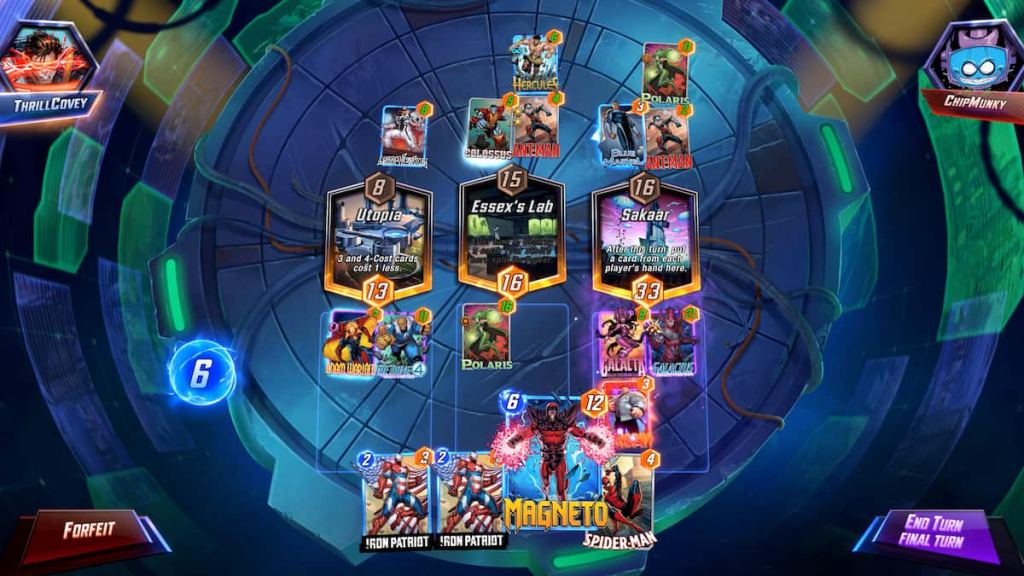
There will be frustrating losses — a ridiculously-rolled card can still sting — but those moments felt more like pleasantly unfair lottery tickets than a systemic problem. Draft rewards experimentation; it’s less about collection weight and more about on-the-spot decisions. For players who liked the randomness of Limited formats in games such as Hearthstone or Magic: The Gathering Arena, Draft scratches a similar itch while keeping matches short and punchy.
For more on Draft, check out my interview with Second Dinner devs here.
Is Draft a safe place for casual players and veterans to meet, clash, and laugh about the absurd cards they pulled?