
I remember the couch creaking under the weight of too many controllers and a soda can teetering on the armrest. My cousin leaned in, voice low, and promised to humiliate me on the next lap. That tiny, ridiculous wager made the whole afternoon matter.
The TV glowed the last time I played split-screen; everyone could see who was winning
I’m glad Fuse Games is bringing local split-screen to Star Wars: Galactic Racer because some things in gaming aren’t measurable by leaderboards. You and I both know online matchmaking is convenient, but it’s missing a tactile, human element: the elbow nudges, the sarcastic smirks, the way someone steals your boost and your dignity in the same move.
Split-screen is an analog hug for multiplayer—warm, imperfect, and immediately believable. When developers add a Free Play mode for up to four players on the same screen, they’re restoring a social mechanic that big publishers have let collect dust.
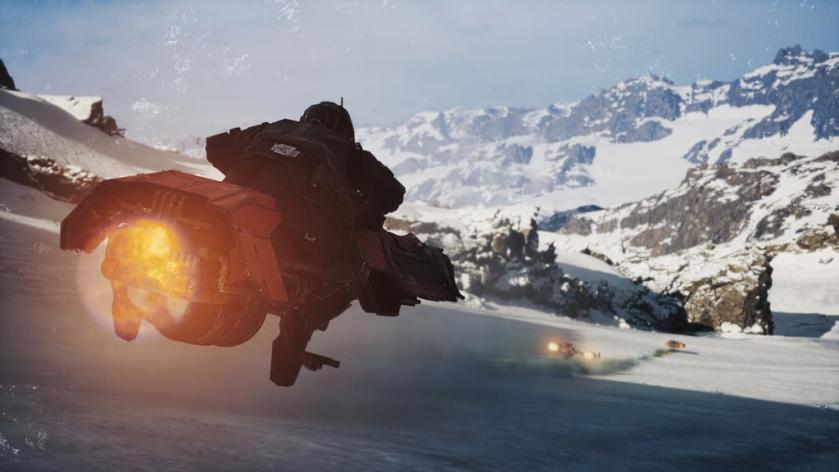
We’ve heard you! Local split-screen multiplayer racing is coming in early 2027.A dedicated team at Fuse Games has been working hard to develop a new mode: Free Play.Choose your vehicle, character, planet, and track to race alone or with up to 3 other players in local splitscreen action.
— STAR WARS: Galactic Racer (@starwarsgracer.bsky.social) 2026-11-16T16:15:08.739650326Z
The announcement landed on social feeds and my notifications pinged like a racer’s lap timer
Fuse Games and publisher Secret Mode dropped the news on BlueSky and other platforms: Free Play with local splitscreen is scheduled for early 2027. Yes, that feels like a long wait, and yes, you’ll probably feel it move slower than a pod-racer on wet sand. But waiting for a thoughtfully implemented local mode beats getting a rushed, buggy feature that breaks party nights.
Does Star Wars: Galactic Racer have split-screen?
Short answer: soon. The studio confirmed a local split-screen Free Play mode for up to four players. The functionality will let you choose vehicle, character, planet, and track before you duke it out on the same display.
When will split-screen be available?
Fuse Games says early 2027. Whatever timeline you mark on your calendar, treat it like pre-ordering nostalgia: the lead time stings, but release day can feel like reclaiming something stolen by the online era.
How many players does split-screen support?
Up to four players in local splitscreen action, according to the announcement. That’s the sweet spot for living-room chaos—big enough for variety, small enough that you can still hear your friends swear in stereo.
The old argument—online is bigger and better—shows up at dinner parties and podcasts
You can quote Nintendo nostalgia, GoldenEye 007, Halo LAN sessions, or the way Call of Duty changed competitive habits, but those references are only part of the story. Online platforms like Steam, PlayStation Network, and Xbox Live widened the field, sure, but they also displaced a kind of immediate social friction that only local play produces.
When Andrej rhapsodizes in his review and Luci cracks jokes about Jar Jar, they’re touching different truths about the same game. I’ve got decades of handhelds, split-screens, and couch tournaments in my mental archive; your mileage will vary, but the emotional currency is real.
The small technical choices make or break the experience; I noticed them when friends left mid-session
If Fuse Games wants this mode to land the way it deserves, it must nail frame rates, UI clarity, and controller mapping. Players tolerate a lot for nostalgia, but not for a mode that feels like an afterthought. Secret Mode’s involvement gives me cautious hope—publishers who support PC and consoles tend to prioritize polish across hardware.
The social calculus is simple: you either create moments people trade stories about, or you make forgettable matches
Split-screen racing produces stories you tell in the bar later: the time someone stole your finish line, the controversial shortcut, the betrayal that felt personal. Those are memories that algorithms can’t manufacture and leaderboards can’t sell. Online is a neon hall of mirrors where skill is visible but presence is optional.
Moyens I/O’s Checkpoint newsletter collects this kind of noise with a little snark—if you’re the subscription type, it’s worth sampling for its takes on platform moves and developer decisions.
So here’s the honest bit: if you want to argue that split-screen is a minor feature, you’re not wrong about scale. But if you want to argue it changes how people play and remember games, I’ll back you to the finish line—will you?