
The countdown bleeds into the room and your friends freeze—three monkeys, one bomb, zero time to be polite. I remember my hands shaking while the mute teammate pointed at a diagram and the deaf one shouted colors over a ticking clock. With the right calls and a little practice, panic folds into rhythm.
Bombanana! walkthrough: Level 1–5 solutions
In living rooms and party voice chats, three strangers become a precision team when the timer hits 30 seconds.
I’ve run these first five stages enough times to spot the tricks the game hides and the patterns that save seconds. Read this like a playbook: short calls, defined roles, and one clean sequence per module. I’ll walk you through each puzzle, explain how to communicate under pressure, and point out the traps that wreck runs on Steam or in Discord lobbies.
How do I solve Level 1 in Bombanana!?
Level 1 is a small ritual: one bulb, three or four wires, and three monkeys doing very different jobs. You (the deaf player) call the bulb color and the cable count. I’ll describe the routine I use every time.
Roles: Deaf calls color and count. Mute reads the module and answers with a nod or shake. Blind cuts the cable the others point to.
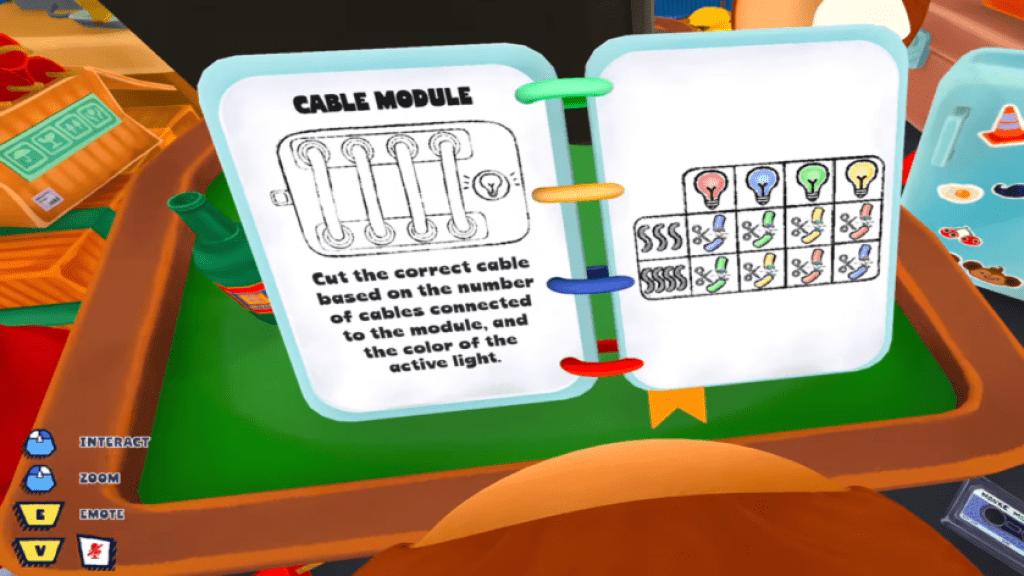
The cable logic is traffic-light logic folded into a lock: if the module shows three wires follow this table, if four wires follow the other. When patterns on your module differ, trust the module’s chart—pattern variations exist but the method doesn’t change.
Three Wires
| Bulb Color | Target Cable |
|---|---|
| Green | Yellow |
| Red | Blue |
| Yellow | Red |
| Blue | Green |
Four Wires
| Bulb Color | Target Cable |
|---|---|
| Green | Red |
| Red | Green |
| Yellow | Blue |
| Blue | Yellow |
Quick operational tips: the deaf player calls one color and the number out loud and waits. The mute player gives a single clear confirmation—nod or shake. Then tell the blind the cable position: “left-of-center,” “second from right,” whatever your group uses. Consistency beats speed until you have muscle memory.
How do the color sliders work in Bombanana!?
Color sliders are a test of memory and sequence. I treat them like a short pattern recital: one correct move after another, no mistakes allowed.
Level 2 gives you four sliders. The mute player has a module with four color entries and arrow indicators—up or down. The deaf player calls a color; the mute player answers with a thumbs-up (up) or a negative emoji (down). That single-symbol system keeps chatter low and mistakes rare.
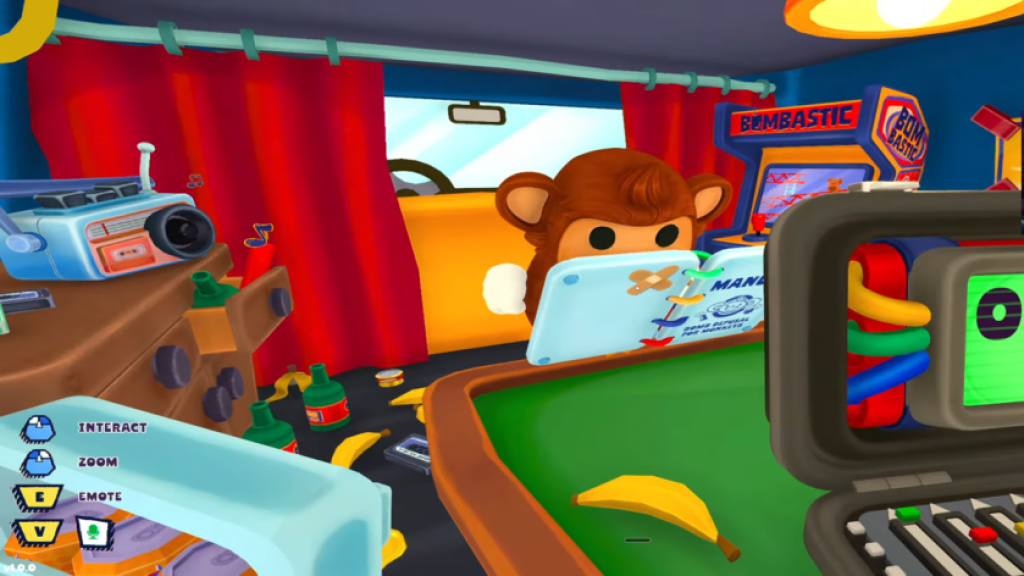
Level 3 throws both puzzles at once. Treat them as independent lanes: send one player to manage sliders, one to watch bulbs, and one to read modules. Keep the call signs tight—color then confirmation—so you don’t reset progress mid-rush.
What are the rules for mixed modules like the calculator puzzle?
Mixed modules force you to combine the basics into a single rhythm. The mute player reads tables, the deaf player calls numbers or colors, and the blind player presses or cuts. That order rarely changes, and the faster you make it a habit, the fewer errors happen.
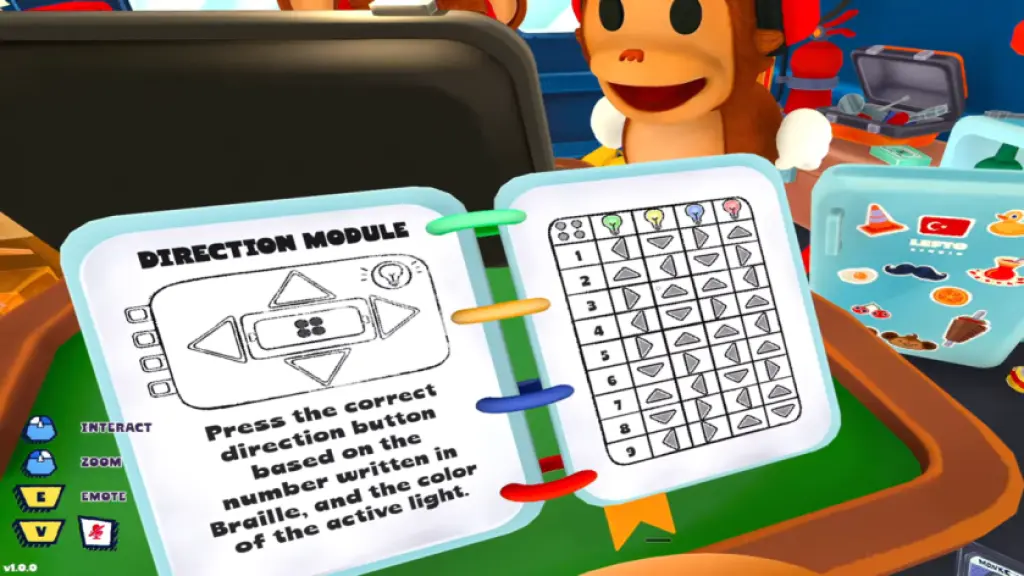
Level 4 mixes Color Slider with a Direction puzzle. The blind player reads the Braille number, the deaf player calls the bulb color, and the mute player matches the two on their module. Use the module’s table; I’ve seen the same digits map differently across runs, so reading the local chart beats memory.
| Braille digit | Green | Yellow | Blue | Red |
|---|---|---|---|---|
| 1 | L | D | R | U |
| 2 | U | L | D | R |
| 3 | R | U | U | L |
| 4 | L | D | R | U |
| 5 | R | U | U | L |
| 6 | D | R | L | U |
| 7 | U | L | D | R |
| 8 | D | R | L | U |
| 9 | L | R | U | D |
Level 5 pairs Color Slider with the Calculator puzzle. The deaf player reads the equation; the blind player inputs the raw math. When the bulb lights for the second stage, the mute player checks parity and color against the module’s digits chart.
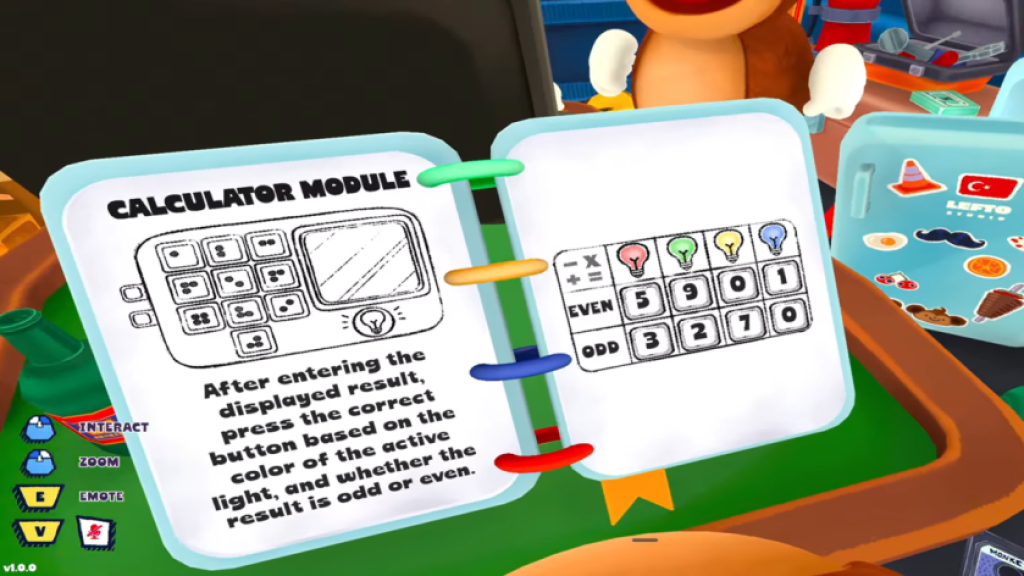
| Equation Result | Red | Green | Yellow | Blue |
|---|---|---|---|---|
| Even | 5 | 9 | 0 | 1 |
| Odd | 3 | 2 | 7 | 0 |
If the equation is 67 + 2 = 69 and the bulb is green, you read the module: odd + green = 9. Hit the number and move on. Do the whole sequence without backtracking; the game resets partial progress when you break the chain.
I’ve tested these routines across Steam lobbies and local Switch sessions; they shrink panic into predictable steps. When speed matters, practice these calls in a Discord call or with friends using Moyens I/O guides as reference screenshots.
Two final coaching notes: always name positions the same way, and give one single confirmation per decision. The timer is a stopwatch whispering—let it guide cadence, not chaos. Your module chart is the map; read it before you act and you’ll stop guessing like a locksmith fumbling keys.
We’ve covered roles, the wire rules, slider shorthand, Braille-direction lookups, and calculator parity—so which call will you change first to shave seconds off your runs?