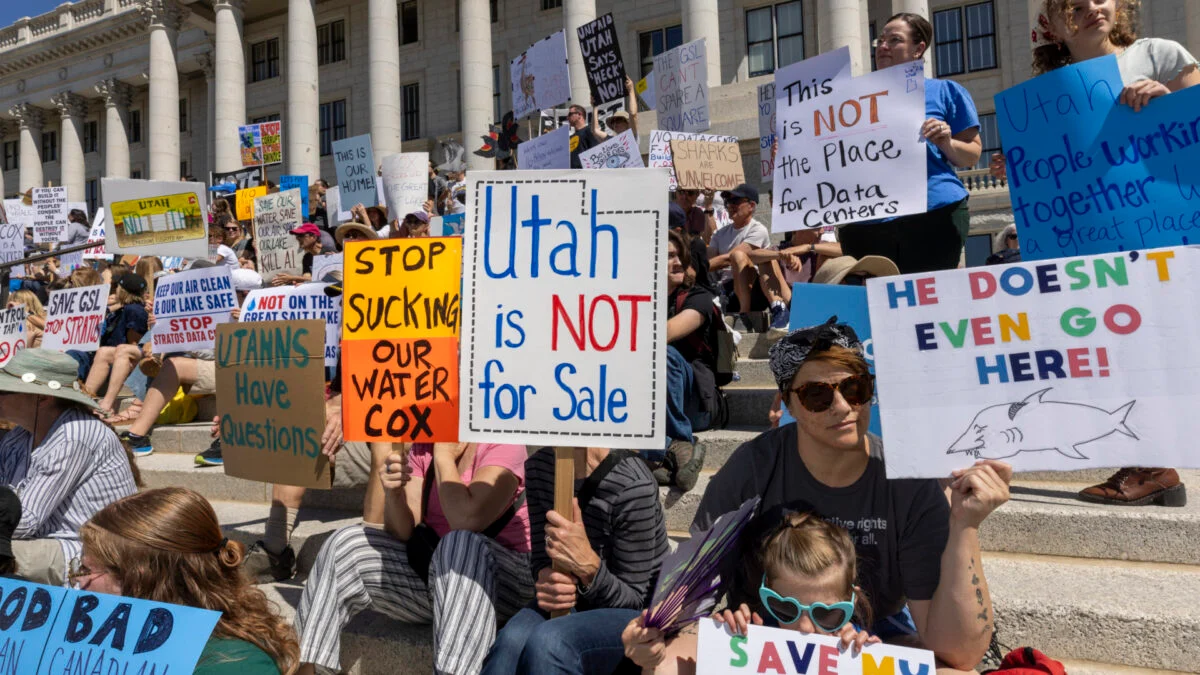
He signed a letter and sealed it with a demand: the FBI must brief Congress on whether the rising anti-AI backlash is being fed from abroad. I read the open letter and the reports it cites, and a dozen scenes snapped into focus — county hearings, a billionaire on X, and a Utah town at a standstill. You can feel the question humming under every protest sign: who’s pulling the strings?
I’ve followed influence operations before, and you need a clear map to separate real interference from partisan theater. Here’s what I found, and what you should watch next.
At a Capitol desk, three representatives sent an urgent letter
Rep. Brett Guthrie, Rep. John Joyce and Rep. Bob Latta put their names under an open letter asking FBI Director Kash Patel and the Trump administration’s PCAST co-chairs, David Sacks and Michael Kratsios, for a briefing by June 18, 2026.
The letter points to investigations by the Bitcoin Policy Institute and Power the Future that allege foreign adversaries — particularly China — have been coordinating campaigns to slow U.S. AI growth and block new data-center builds. The lawmakers frame the pushback as more than local opposition: they call it a strategic attempt to blunt America’s AI edge.
You’ll see authority cues everywhere: the letter name-checks senior officials, cites public reports, and demands an FBI probe. That mix is meant to convert suspicion into official action.
In county halls and town squares, fights over power and water have hardened
Residents in Utah and elsewhere have raised practical complaints about noise, electricity bills and water use at data-center sites.
Those complaints are real. But the debate has escalated: a data center planned on 40,000 acres in Utah — one of the largest proposed anywhere — became a lightning rod. Kevin O’Leary, the Canadian investor and TV personality, went on X and blamed the Chinese Communist Party for stirring opposition. He then agreed to cut the project by 75% after local pressure and a push from Utah Governor Spencer Cox.
That sequence is why the Republicans are sounding alarms: local activism now sits at the intersection of energy policy, land use, and national security rhetoric. The industry’s pitch — epitomized by Nvidia CEO Jensen Huang’s plea that America must lead in AI — collides with grassroots anxiety about utilities and environmental stress. The result is a political tinderbox.
Is China behind anti-data center protests?
The short answer is: maybe, but not always. The Bitcoin Policy Institute’s report alleges coordinated foreign influence, and Power the Future’s analysis pushes a similar line. They point to social media amplification and funding routes that, they say, map back to foreign actors.
But influence operations often ride existing grievances. A foreign actor can light a match, but the brush has to be dry. I found credible examples of organized amplification, and equally credible examples of purely local mobilization. The two can look identical on a protest sign.
At a policy level, the U.S. has declared AI infrastructure a security priority
The White House and the administration have framed faster permitting for data centers as a national-security move, especially after the 2025 executive order aimed at accelerating federal permitting.
That framing shifts the debate: what was once a zoning conversation becomes a front in a tech rivalry with China. The industry argues that the country must race to build capacity so it doesn’t cede advantage to Chinese firms. That argument carries weight inside the Beltway and with investors, but it also invites pushback from communities that feel left out of the calculus.
Think of the debate as two engines trying to share one fuel line; the louder engine will get most of the supply.
Why are people protesting data centers?
Most protests are grounded in local impacts: higher utility bills, increased water demand, ecological strain, and noise. Activists also raise questions about corporate transparency and what rapid buildouts mean for small communities.
Those concerns are easily amplified by messaging campaigns. Platforms matter: threads on X, posts on LinkedIn, and reports from think tanks act like accelerants when a story catches fire.
On paper, the FBI’s role is obvious — in practice, it’s complex
The committee’s letter asks the FBI to investigate foreign influence; that’s the clear, bureaucratic next step.
But investigations into influence campaigns are resource-heavy and often hinge on technical traces: IP networks, funding flows, and social amplification patterns across platforms. The Bitcoin Policy Institute and Power the Future supplied narratives that probe those traces, while critics say the reports selectively link actors and intent. Senator Bernie Sanders is named in one report because he hosted a panel featuring two Chinese-born professors — a fact that raises eyebrows but doesn’t, by itself, prove coordination.
I won’t pretend the answer will be simple. When intelligence, politics and local policy cross, every finding is contested. You’ll see competing narratives from campaign-style outlets, from industry spokespeople like Jensen Huang, and from social platforms where the debate plays out in real time.
Will the FBI investigate foreign influence on AI policy?
They’ve been asked to. The letter demands a briefing by June 18, 2026, and names specific officials to respond. Whether the FBI treats this as a formal counterintelligence inquiry or a narrower review of social media manipulation will tell you how seriously Washington treats the claim.
On the ground, outcomes will be driven by perception as much as proof
After months of hearings and coverage, public opinion about AI has hardened. Tech executives promise benefits, but many communities feel immediate costs — a recipe for national friction.
If you’re tracking this, watch three channels: congressional actions, FBI signals about an investigation, and how platforms such as X and LinkedIn are used to amplify local stories. The mechanics matter: who funds ads, which posts get boosted, and where influencers point their followers.
The debate is a mirror: sometimes foreign actors bend the reflection, but most often they exploit a crack that was already there.
I’ll keep following the filings, the briefings, and the neighborhood meetings. Will the FBI find a coordinated Chinese psy-op, or will the evidence point to a messy domestic collision of energy, land use and politics?