I opened WhiteHouse.gov to check a tip and landed on a tiny act of political theater, like a press release dressed as a party favor. I scrolled through five browser games and felt the weird mix of amateur hour and deliberate provocation. You can laugh, but you should also ask why an official site looks this unserious.
SEND ME YOUR HIGH SCORES!!! https://t.co/wE0WWbwy4H
— Kaelan Dorr (@Kaelan47) September 4, 2026
I clicked the White House arcade and found five quick-loading games on the homepage.
They arrived with an X post from Kaelan Dorr and a whiff of AI speculation — people asked whether an LLM like Grok helped spit them out. Gizmodo reached out to the White House for confirmation; silence is the only reply so far. You should treat authorship as unverified, but the tone reads like targeted trolling rather than polished outreach.
Did the White House use an AI to make these games?
Short answer: nobody confirmed it. The games’ sloppy code and repetitive assets look LLM-friendly, and Kaelan Dorr’s X post amplifies the vibe. Still, without a direct acknowledgement from WhiteHouse.gov or an admission of Grok or another large language model, what we’re left with is circumstantial evidence and a PR team that isn’t answering questions from reporters like Gizmodo.
I played each title for a few minutes and watched the patterns emerge.
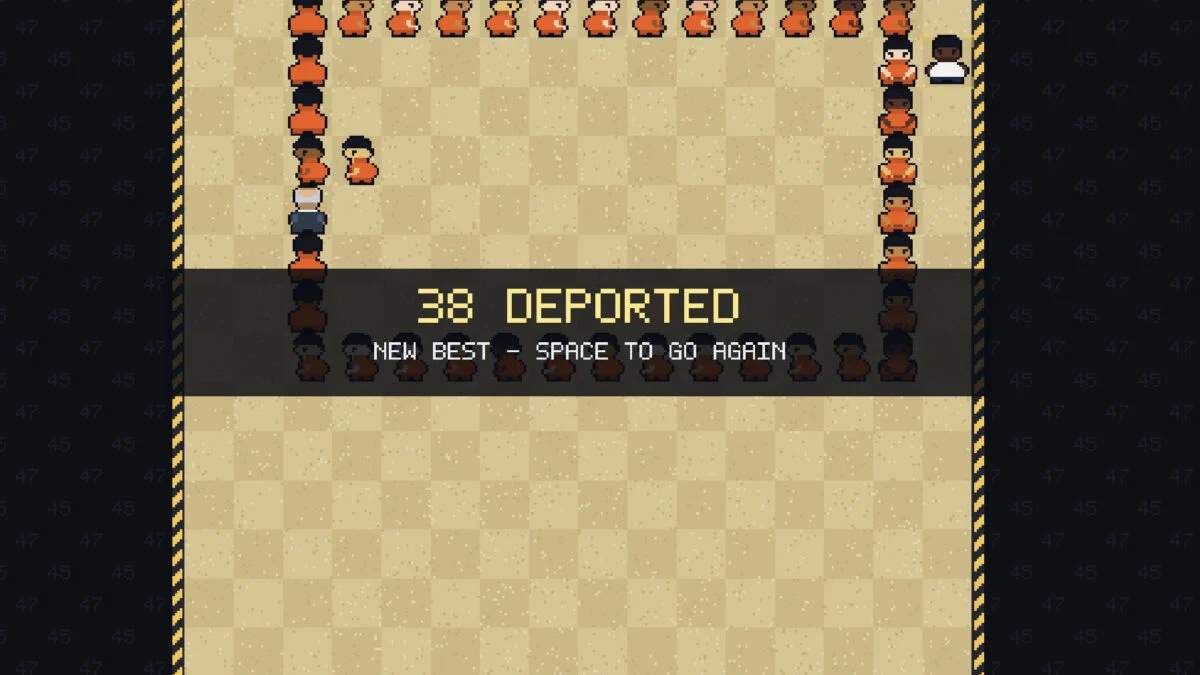
They fall into three buckets: playable, half-made, and broken. “Flappy Bill,” the Flappy Bird cousin where you pilot an eagle through column gaps, is the only one that felt like something you’d return to while binging a podcast. “Rio Run” is a Snake clone with clumsy skin-tone choices and glacial pace. “Build the Wall” tries for Tetris vibes and ends up with rows that never clear. “Supply Line” makes you swipe foods—seed oils versus beef tallow—until you lose patience. “Trump Savings Tycoon” tosses collectible objects at you; it’s lively but maddening because the net mechanic doesn’t map to clicks intuitively. The gameplay quality is inconsistent, which is probably the point.
Are the games offensive or just juvenile political satire?
The images and framing matter. Rio Run casts migrants in uniformly dark tones, which reads as deliberate caricature. The border-as-game mechanic is a rhetorical move that reduces human crises to pixels. You can argue intent, but the outcome is the same: it provokes people who aren’t in the base and flatters those who are.
I checked press reaction and approval data to gauge context.
Coverage ranges from bemused to alarmed—Gizmodo flagged authorship questions, The Economist’s tracker shows Trump approval hanging low, and even Fox News has noted the political pressure around upcoming midterms. Politically, this feels like a low-cost signal: inexpensive to publish, useful for energizing a base, and lightweight enough to shrug off criticism. The real metric will be whether it moves any votes, not whether it moves the needle on aesthetics.
The pieces of creative tech referenced are obvious: classic arcade templates (Snake, Tetris, Flappy Bird), X for amplification, LLMs like Grok for rapid content generation, and outlets like Gizmodo for verification. You can imagine a social team using a cheap engine and a prompt to spin this up in a weekend—no polished studio, no user testing, just an official stamp.
There’s also a money angle that merits a note: in Trump Savings Tycoon the score shows dollars as you net gold bars and briefcases—the scoreboard reads numbers that imply cash, so imagine seeing a result like $5,000 (≈€4,650) flash on-screen; it amplifies the game’s simulation of value even if the mechanics make no sense.
The collection plays like a cracked storefront window — you can see what the creators intended, but the reflection makes the image awkward and unclear. For people who fidget with browser games, Flappy Bill is fine company; for anyone expecting official digital strategy from a presidency, this is a laughable stub.
I’ve written political features, parsed PR campaigns, and tested enough click-through experiments to spot a deliberate stunt when it appears: this is small-scale provocation dressed up as engagement. You can treat it as a harmless novelty, a calculated mood play, or an insult to civic norms. Which would you call it?