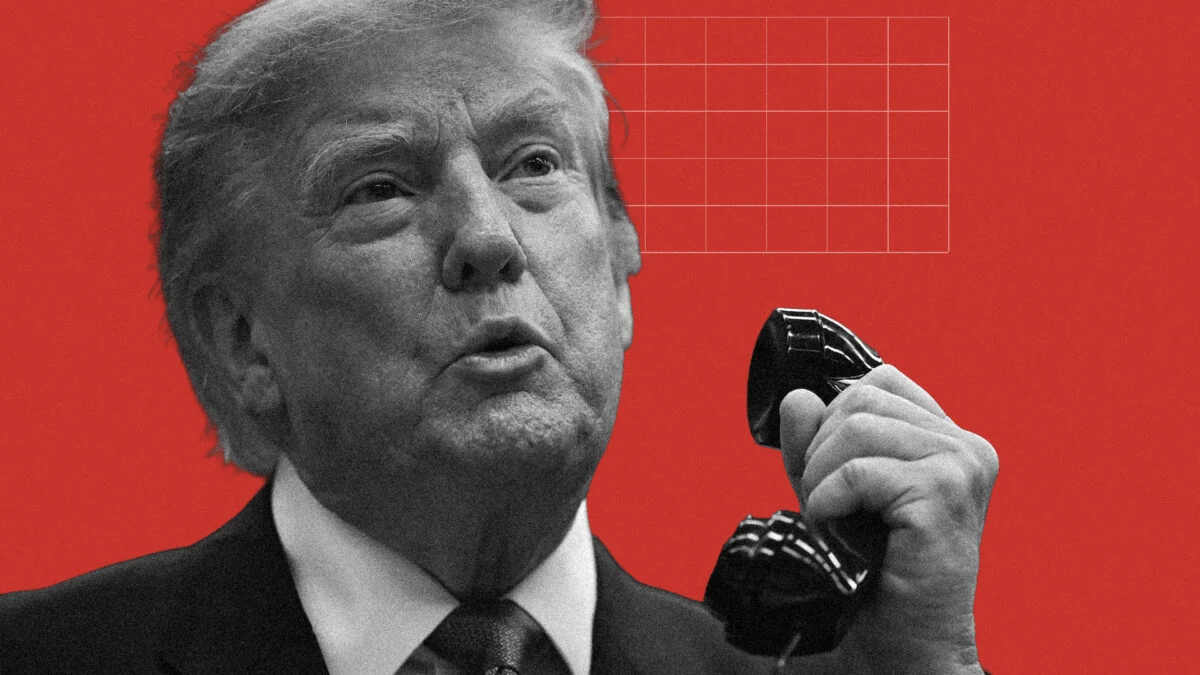
I watched a reporter on Air Force One jot a line the president had just dropped into the cabin air — a short, cheerful endorsement that landed like a pebble in a still pond. You could feel the ripple: local meetings, police chiefs, civil liberties groups suddenly squinting at their calendars. I sat there thinking about what a single sentence can do when it’s backed by the Oval Office.
I write this as someone who follows these fights from the ground up, and I want you to have the plain facts and the sharper questions. This isn’t cheerleading or fearmongering — it’s about scale, power, and who gets tracked when a camera blinks.
A reporter scribbled a quote as the president leaned forward on Air Force One.
On Sunday, President Donald Trump told reporters he likes automated license plate readers — the Flock Safety rigs that scan plates, timestamps, and locations as cars pass. The Washington Post covered the moment; he framed the technology as a law-enforcement ally and waved off privacy objections.
That backing matters because a presidential nod is momentum. When you combine White House support with companies like Flock and Axon selling networks of cameras, you’re not just placing hardware on poles — you’re wiring the country for constant, searchable location data. Think of it as a digital fishing net cast across public streets: it catches everything in its sweep, not only the fish you’re aiming for.
A neighbor found a noticed flag on a car they swore hadn’t done anything wrong.
These systems are marketed to police as investigative accelerators. They index plate numbers, timestamps, and GPS points so investigators can run searches in seconds. That convenience is seductive for law-enforcement shops.
But convenience has costs. Privacy advocates warn that millions of innocent drivers are logged without warrants, probable cause, or suspicion. News investigations, including a CBS story from Colorado, have documented cases where the systems pointed officers at the wrong suspect. The Washington Post has reported on instances of officers using camera networks to track romantic partners and exes.
What are Flock cameras?
Flock cameras are automated license plate readers paired with AI and cloud storage. They capture plates, shape the data into searchable records, and can alert authorities when a plate on a watchlist appears. Police departments use them as a lead generator; privacy groups call them mass surveillance.
Do license plate readers invade privacy?
They can. You and I move through cities every day — to work, to clinics, to houses of worship — and most of that movement would be logged by a dense camera network. That creates a permanent location trail of ordinary life that can be searched by cops, shared with third parties, or subpoenaed.
A city council room filled with neighbors arguing about whether to ban the cameras.
These debates are local and visceral. A YouGov poll from August showed 46% opposed police use of the technology where they live, while 38% supported it. Cities and departments — including the Los Angeles Police Department — have ended or paused contracts with Flock amid pressure.
When you track the ballot-box angle, you see why Trump’s endorsement is political risk and reward at once: he’s appealing to law-and-order instincts while stepping into fights unfolding in community halls. Those small fights add up on election night.
Are license plate readers legal?
Legality depends on state and local law and on policy around data retention and access. Courts have started to weigh in but the law is patchy: some jurisdictions restrict retention or require warrants, others leave broad discretion to police.
Crews were rolling fiber and cooling units at a proposed data center site last month.
The president didn’t stop with plates. He’s pushed executive orders to accelerate AI infrastructure and data centers, saying U.S. leadership in AI is nonnegotiable. When I watch those ribbon-cuttings, I see the same pattern: industry pushes capacity; critics flag electricity use, water strain, and local opposition to noise and pollution.
That argument collided publicly with calls from AI leaders — Anthropic’s Dario Amodei, OpenAI’s Sam Altman, and Elon Musk among them — to slow the pace of frontier-model development. Trump answered by framing speed as a strategic imperative: “whoever wins AI wins,” he said, arguing the U.S. must keep pressing forward.
There are stakes on both sides. Faster models and more data centers mean more powerful tools for crime-fighting and commerce. They also widen the vector for surveillance and mistakes. I’ve watched agencies adopt technology in minutes that took years to consider thoughtfully; that pattern worries me.
You should ask which trade-offs you’re willing to accept: more police tools today at the cost of broader data footprints tomorrow, or tighter limits on how data is collected and used — even if that slows some investigations. There are no tidy choices here.
Flock, Axon, Anthropic, OpenAI, and others are all actors in this story; each proposal — from camera contracts to data-center tax incentives — ripples into municipal budgets and civil liberties. The midterms will test whether voters side with expansion or restraint.
I’ve followed surveillance fights for years. I want you to leave this piece with a sharper sense of what’s being traded and who decides. Will you let federal endorsement swing local policy, or will communities push back and set new limits?
Which side will turn out in November — the people who welcome every new tool or the neighbors who want stricter rules on how their movements are recorded?