
I was in a windowless room in Beijing when a demo model breezed through a simulated breach. You could feel the air change—pride on one side, the rest of the world holding its breath. I left thinking: China has built something cheap and fast, and now it’s deciding who gets to see it.
At a Beijing meeting last month, regulators and executives sat across the table.
I’ve read the Reuters notes and sat through similar closed-door briefings: Alibaba, ByteDance, and Z.ai were summoned to discuss limits on overseas access to China’s leading AI systems. The proposals reportedly cover both open source releases and proprietary models not yet publicly distributed, and may even restrict which foreign entities can invest in Chinese AI startups.
On Beijing’s instructions last month, Meta shut down operations and data sharing with Manus roughly six months after acquiring the Chinese-founded startup in a $2,000,000,000 (€1,800,000,000) deal—an abrupt reminder that service can stop on a regulator’s say-so.
On a Silicon Valley server farm, GLM-5.2 began turning heads.
I watched benchmark scores land in my feed: Z.ai’s GLM-5.2 performed near the level of some U.S. proprietary systems on cybersecurity tests, reportedly trained at a fraction of the cost. That raised immediate suspicion in the Valley and accusations that Chinese teams used distilled American models as training material—an approach the U.S. is moving to police.
At the same time, Chinese firms have been shifting away from Nvidia toward domestic chipmakers after Beijing pledged roughly 2,000,000,000,000 yuan (≈€270,000,000,000) to build data centers over five years. That money makes it easier to stop relying on foreign silicon and to keep development inside national borders.
Why is China restricting foreign access to its AI models?
You should read this as a mix of technical self-defense and political risk management. Chinese officials worry that high-performing models can leak intellectual property, expose surveillance or defense techniques, and hand adversaries tools to probe Chinese systems. If Anthropic’s Mythos-style capabilities can spot holes in the world’s cyber defences, Beijing sees a strategic imbalance—and is acting to close it.

At industry surveys and vendor meetings, partnerships began to fray.
I’ve seen procurement teams quietly mark Nvidia lines as “under review.” A Bloomberg survey found firms migrating to Chinese silicon suppliers—partly because of subsidies, partly because of fear that a U.S. export rule, a new regulation, or a political spat could sever access overnight.
For you, the takeaway is blunt: availability and cost shape adoption. Chinese models are tempting because they are cheaper and easier to host locally, but that very cheapness has now become something Beijing might fence off.
Will cutting off Nvidia chips hurt Chinese AI?
The short answer is: it will slow some projects and speed others. Advanced GPU access matters for training the biggest models, but if the state funds data centers and homegrown accelerators, the pain point becomes a solvable engineering and capital problem. That’s what China’s multi-hundred-billion-euro commitment to infrastructure is meant to do.
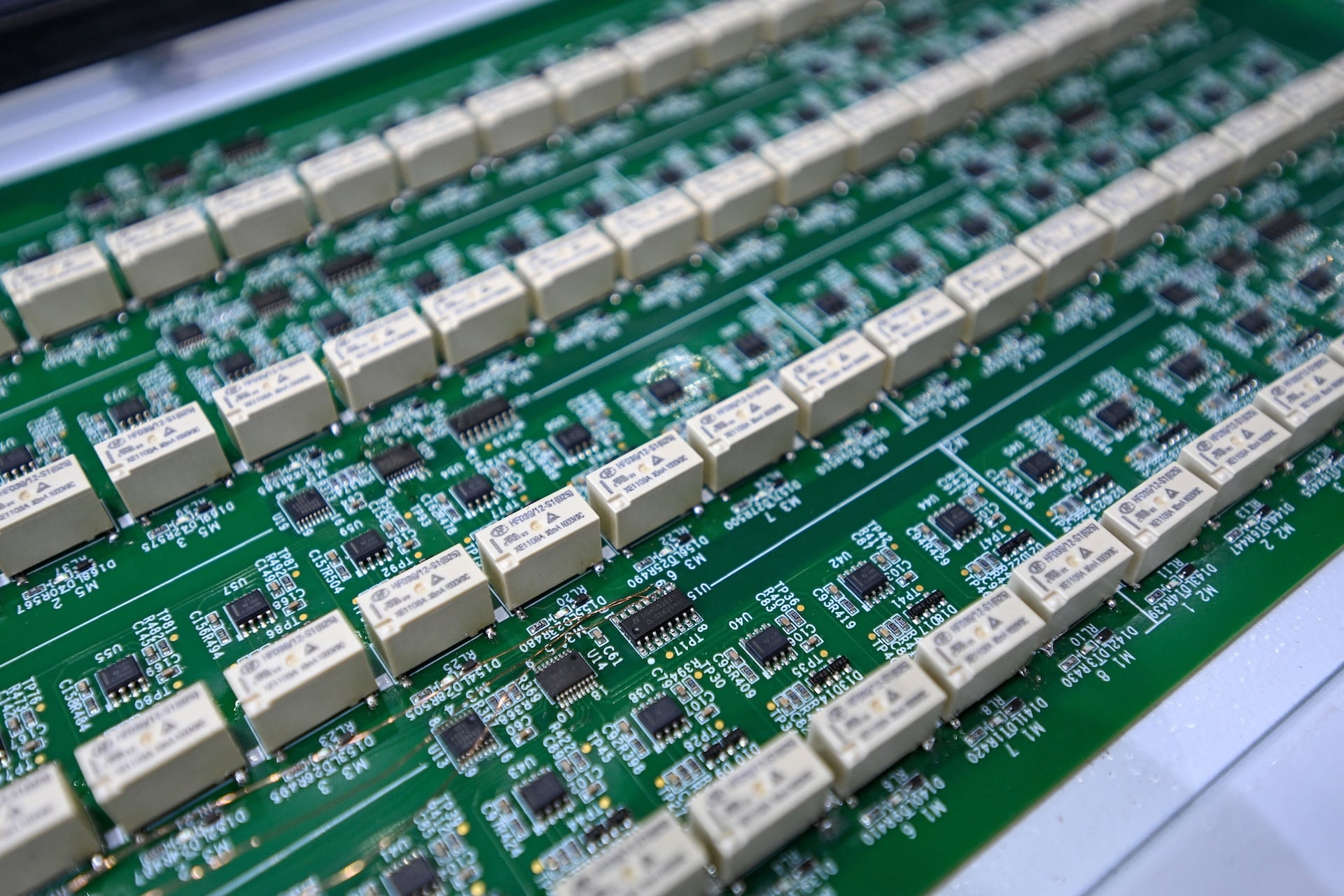
In data centers and regulatory offices, two playbooks are forming.
I talk to engineers who say the U.S. model leans on private firms and fast product cycles, while Chinese policy layers public investment and strict controls on use. Both sides now treat AI as a national resource to be guarded, and that shift affects who builds, who invests, and who benefits.
Yuval Noah Harari warned about a growing Silicon Curtain—an invisible split where rules, data access, and acceptable behavior differ by country. China’s recent moves look like the early stages of a modern Great Wall around capability and data: not stones and battlements, but code, chips, and regulation.
You and I can track scores, benchmarks, and headlines, but the real change will be felt in supply chains, partnership agreements, and the legal fine print investors now read with new suspicion. If you are deploying AI across borders, the question is no longer how fast a model is, but whether it will still be there tomorrow—so where do you place your bets?