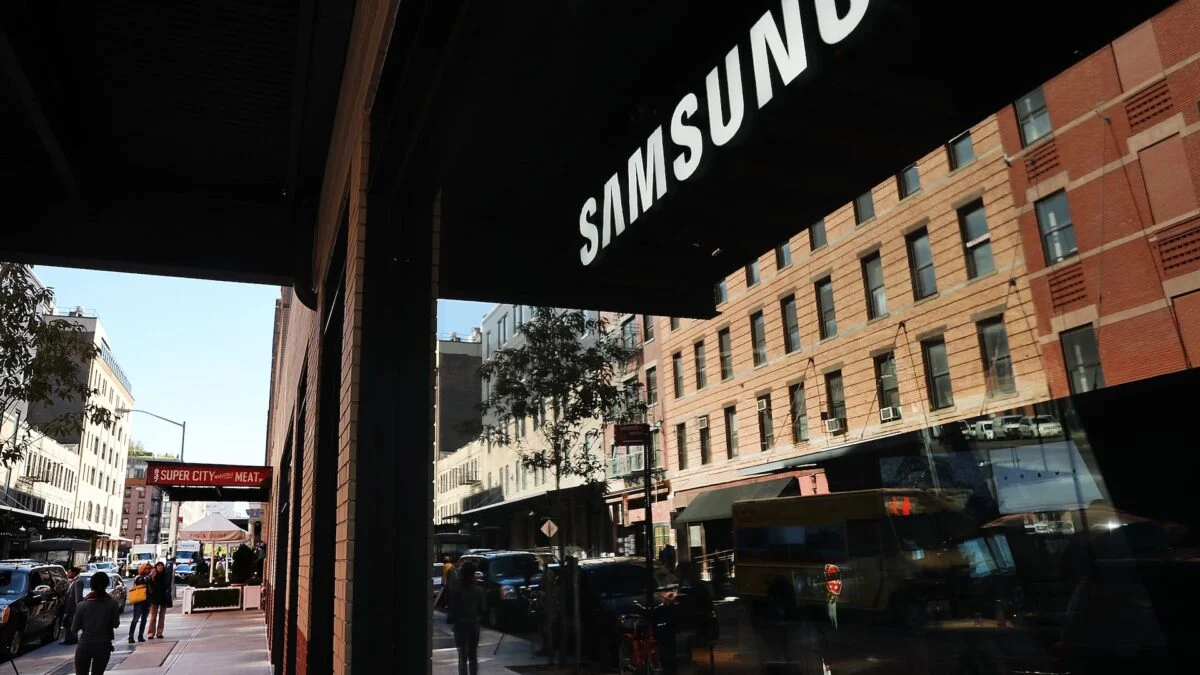
I walked past the glass lobby at Samsung’s Englewood Cliffs office and saw a bank of empty chairs where a team used to sit. You could almost hear the slide of a calendar page—plans paused, LinkedIn profiles edited, recruiters dialing. That quiet lands hard: roughly 839 Samsung employees in the U.S. are now out of work.
I’ll keep this direct: you should care because this is not only about jobs lost in New Jersey and Texas. It’s a window into a company behaving like a two-headed enterprise—one half booming on chips, the other losing ground in consumer tech—and what that split means for you as a worker, investor, or buyer.
A half-empty conference room in Englewood Cliffs.
The Reuters notice lists about 839 roles affected: 739 positions at Englewood Cliffs, New Jersey, and roughly 100 in Plano, Texas, according to sources and Samsung’s confirmation. Samsung says most employees were offered relocation; others were let go from sales, marketing, display and phone teams. These are white-collar cuts, not the factory-floor layoffs you might expect, and they land on people who built relationships and product narratives you’ve relied on.
There’s a human toll here—people packing boxes, updating résumés, and weighing severance against a move. You can read the legal filings and WARN notices, but the scene in the lobby tells you what the spreadsheets hide.
How many employees were affected by Samsung layoffs?
About 839 people in the U.S., split across Englewood Cliffs and Plano, according to Reuters and Samsung’s statements. Samsung framed the move as part of an internal realignment of display, phone and consumer electronics operations; anonymous sources say sales and marketing roles took the brunt.
A glowing earnings chart at Samsung headquarters in Seoul.
This spring Samsung reported a 19-fold jump in quarterly operating profit as demand for memory and server chips climbed to meet datacenter and AI needs.
That profit surge is largely driven by DRAM and NAND sales to hyperscalers—think Amazon Web Services, Google Cloud, Microsoft Azure—who are buying chips for AI training and inference. For Samsung the math is simple: more chips, more revenue. For the rest of the company—smartphones and displays—the market is cooling. Executives are staring at shrinking smartphone margins while memory lines are humming.
Why is Samsung laying off employees in the U.S.?
Because the company is reallocating resources away from consumer-facing units that are underperforming relative to its booming memory and chip business. The layoffs, the company says, are part of reorganizing display, phone and consumer-electronics teams—roles that include sales, marketing and other corporate functions.
A union poster on a South Korean shop floor.
Back in South Korea, the tone is different: organized workers at Samsung have leverage.
Workers there authorized strikes and recently secured large concessions, including bonuses reported at about $400,000 (€368,000) for some memory-line employees. That contrast—workers at home bargaining hard while U.S. teams lose jobs—is telling. Samsung’s global posture toward unions has been combative at times; a 2019 Hankyoreh report documented aggressive anti-union activity by executives. Now, labor strength in Korea is translating into big payouts, while U.S. roles thin out.
I’ll be blunt: Samsung is executing a corporate triage. It’s keeping the money-making factory—memory and chips—running full tilt and asking the rest of the business to shrink around it. That approach can salvage margins, but it also creates brand risk, morale issues, and gaps in sales and product storytelling. You can treat this as a strategic corrective, or as a company applying a band-aid on a broken bone.
From the outside, the smartphone unit’s woes were already visible. Industry coverage in April flagged Samsung facing the prospect of its first annual smartphone loss; executives were sweating profit projections for Galaxy lines as component costs rose. Meanwhile, AI demand keeps driving up the price of memory components, reinforcing the company’s tilt toward B2B chip sales.
For you—whether you’re advising talent, shopping for phones, or tracking semiconductor investments—the split matters. Samsung is betting that chips and memory will pay for the rest, but that strategy is a high-wire act between short-term gains and long-term brand erosion.
So what happens next? Samsung’s memory machine will likely keep feeding hyperscalers and AI players. The consumer side will either shrink further, get retooled, or be absorbed into a leaner go-to-market play. The real question is whether consumers and employees will accept that new balance or push back.
Where do you think the line should be drawn between profit and people at a company that now profits massively from AI—does the business have a moral duty to preserve local jobs, or is this just modern corporate Darwinism?