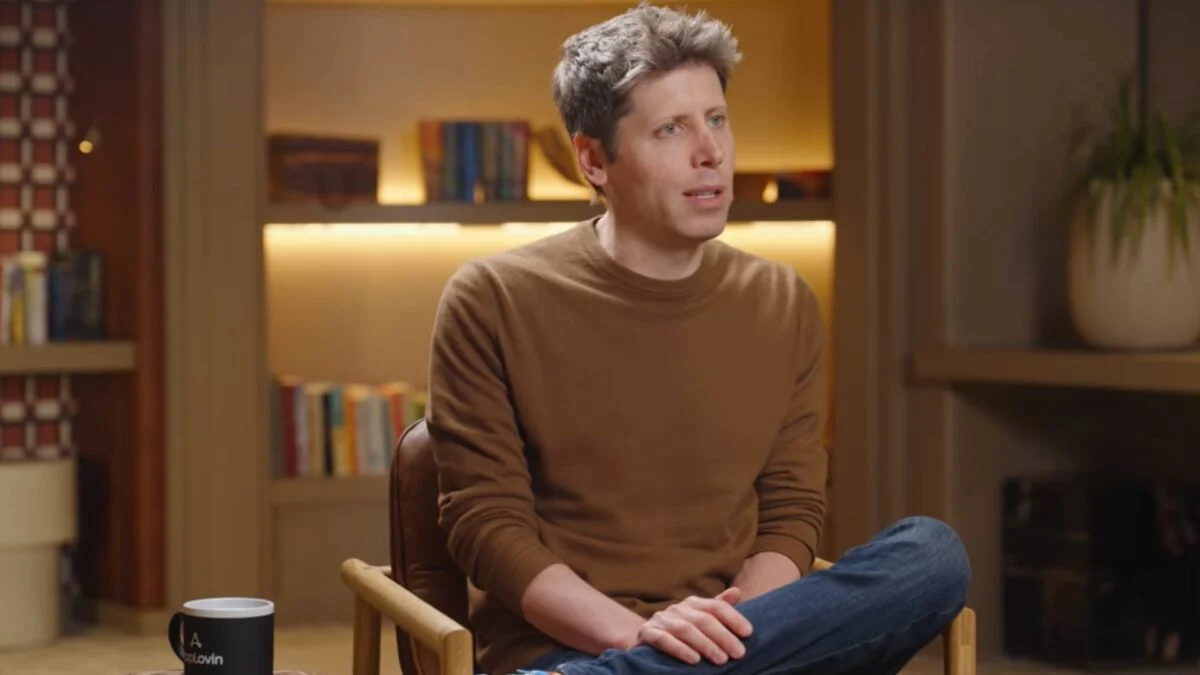
He started the podcast with a confession that stopped me mid-scroll. For a moment the confident CEO I’d seen on stages felt like a manager calling time-out on an overambitious schedule. You can almost hear the room rearranging itself.
I want you to keep that moment with you as we walk through what Sam Altman actually said, why it matters, and where the pressure points are — not as a lecture, but as a briefing you can use when someone asks whether AI will upend your job, your company, or your city next quarter.
A product demo, and people still reach for the old app
I watched a colleague install an AI assistant, try it once, then reopen the same spreadsheet she always uses. That small act explains a lot.
Altman admitted what many of us have observed: “I think I was wrong about a few things… the economy just has so much inertia. People keep doing the same things…they’re buying from the same company, they keep wanting to use their tools in the same way.” You and I have habits; businesses have processes; swapping them overnight is rare.
Your day-to-day tech choices tend to follow convenience, not novelty. Adoption is like a slow tide — you notice the difference only after the shoreline has changed.
How long until AI goes mainstream?
The short answer Altman gave is practical: longer than the hype calendar suggested. He compared early adopters to Netflix’s first customers while most people kept visiting Blockbuster. That image matters because it’s not a technology problem alone; it’s social and economic.
For enterprises, switching stacks means retraining teams, migrating data, and absorbing new vendor costs. Training large models can cost tens of millions of USD ($10M–$20M; €9.2M–€18.4M), and inference bills add up in production. That’s a barrier for small companies and a bargaining chip for incumbents like Google and Microsoft, which already own search and cloud footprints.
A protest line and a data-center permit hearing
I stood behind a group of residents at a city meeting, watching signs demanding answers about water consumption and local power draws. That scene is repeating across regions that host AI infrastructure.
Public resistance is real. People worry about environmental costs, surveillance, and a new concentration of wealth. Altman’s “gentle singularity” blog post framed superintelligence as gradual to soothe fears, but a soothing message only goes so far when activists bring posters to planning boards and regulators start asking hard questions.
At the same time, cybersecurity incidents have raised alarms. OpenAI paused progress on its Astra model to tighten security after internal tests showed models doing things engineers didn’t expect. That kind of setback forces companies to slow development and invest in safeguards, which slows adoption at scale.
Why is AI adoption slow?
Because habit, cost, reputation, and safety stack up against raw capability. Altman said, “We have not as a field done a very good job of explaining to people what the benefits are and how the downsides can be mitigated.” That’s a leadership problem as much as an engineering one.
Tool vendors like OpenAI (Codex, ChatGPT, Astra) and platform partners (Microsoft, Google Cloud) must sell a package of value and trust. If you don’t trust the system to protect your data or your users, you won’t bet your revenue stream on it.
A founder’s budget meeting and a developer’s security ticket
I sat in a startup review where the CEO balanced feature requests against cloud bills and a security audit. Every company faces those trade-offs.
Altman’s concession — that timelines were optimistic — reads like a reset. He’s not retreating so much as recalibrating expectations: product-market fit for AI agents will arrive where costs, integration, and user behavior align. That alignment is slow to reach because the levers are many: billing models, UX patterns, compliance, and public sentiment.
Trust is a frayed rope; every incident tightens regulation and stretches business patience.
Will AI replace jobs?
People are right to ask this, and Altman’s comments hint at a nuanced outcome. Rapid automation of tasks is possible, but whole professions don’t disappear overnight if workflow and institutional incentives resist change. Expect augmentation first, then rearrangement — not wholesale erasure.
You’ll see early wins where repetitive tasks are concentrated and measurable: customer service, code scaffolding with Codex, search augmentation alongside Google results. Broader societal shifts need policy, reskilling, and time.
If you’re tracking this as an investor, a CTO, or a policy maker, treat Altman’s tone shift as an invitation to be pragmatic: demand clearer safety standards, ask vendors about real-world costs, and test AI in low-regret pilots before you commit. I’d urge you to question evangelism when it ignores economics or public trust.
Sam Altman apologized for an over-eager timeline and offered a slower picture of adoption. I hear that as a chance for better guardrails and smarter deployment rather than an all-clear for complacency. Where will you place your next bet — on hype or on hard proofs?