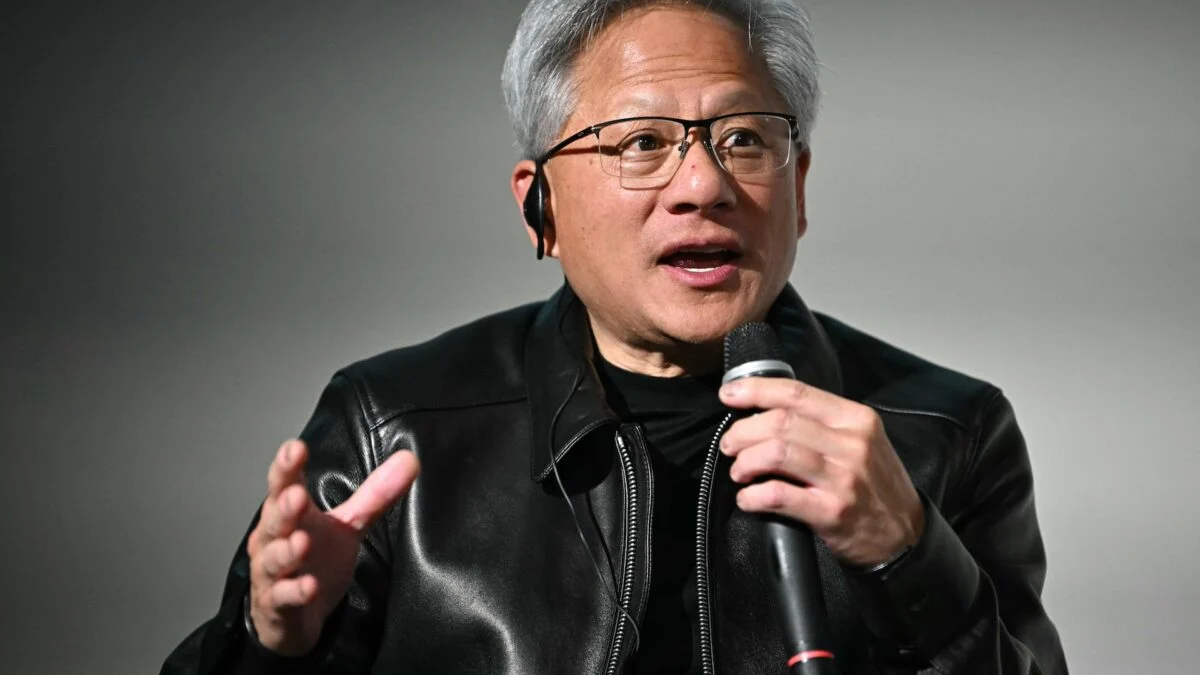
For a moment, the newsroom fell silent: someone scrolled the Time list, frowned, and said, “Where’s Jensen?” I watched the reaction ripple through my feed like a low-grade electric jolt. You feel it immediately—an instinct that something important has been left out.
I’m going to walk you through what that omission means, why it matters, and why the familiar faces on the list tell a different story than the one the market lives by. This isn’t a lecture; it’s the view from the floor where deals are made and chips ship out.
At a glance, the list favors culture over supply chains.
Time’s Time100 AI leans toward names you can put in a headline: Sam Altman, Elon Musk, Dario Amodei, and a few celebrities. You’ll find Ben Affleck—whose company InterPositive sold to Netflix for $587 million (≈ €540 million)—and Paris Hilton, credited for campaigning against nonconsensual sexual deepfakes. That choice tells you what Time thinks drives public conversation: visibility, narratives, and consumer-facing friction.
But I want you to notice the gap. The engineers and manufacturers who built the scaffolding for modern generative models—Nvidia, AMD, TSMC—rarely get celebrity placement. That’s where influence quietly accumulates.
On the street, people point to Nvidia as the behind-the-scenes power.
Nvidia’s GPUs were designed for gaming; they accidentally became the locomotive of AI. The company reported $96.2 billion in revenue for Q2 fiscal 2027 ($96.2 billion / ≈ €88.5 billion), more than double year over year. Those numbers aren’t glamour—they’re leverage: supply constraints, export controls, and custom silicon design shape whose models get built and where.
Nvidia is a quiet engine under the hood of modern AI. When Washington limits exports to China under both Biden and Trump, you start to see geopolitical strategy fold around a single company’s chips.
Why wasn’t Jensen Huang on TIME’s AI list?
Because influence wears two faces: public charisma and systemic control. You and I obsess over founders who tweet and testify; editors chase cultural moments. Jensen Huang operates in the other register—technical leadership, manufacturing partnerships, and pricing power. Those make him indispensable to model builders but invisible to a shortlist that prizes narrative heroes.
Outside the headlines, money and supply form binding contracts.
Venture deals, corporate alliances, and the circular arrangements Bloomberg documented all revolve around hardware. I’ve seen contracts where Nvidia’s availability determined whether a project launched this quarter or got shelved. Those are the kinds of decisions that change market maps.
Call it what you will: an ecosystem where “picks and shovels” companies—Nvidia, AMD, TSMC—are the instruments of scale. Time’s cover choices read like a glossy awards show, a hall of mirrors.
Did Ben Affleck and Paris Hilton really make TIME’s AI top 100?
Yes. Affleck’s InterPositive sale to Netflix and Hilton’s advocacy made them visible examples of how AI intersects with entertainment and harm policy. Time’s senior editor Ayesha Javed and editor-in-chief Sam Jacobs wrote that they selected figures representing the year’s storylines. That editorial lens privileges impact that’s immediate and story-friendly.
In boardrooms, the calculus is less cinematic and more granular.
Companies that build models—OpenAI (ChatGPT), Anthropic (Claude), Google DeepMind—need predictable access to GPUs, fabs, and supply chains. I’ll tell you plainly: the power to throttle or price chips is a form of policy. It affects which labs win training runs and which ones fold under cost pressures.
That’s why international policy, export rules, and the health of TSMC’s foundries matter as much as who headlines a magazine profile.
How central is Nvidia to the AI boom?
Extremely. Nvidia’s architecture became the default for neural training and inference. From researchers at universities to production clusters at cloud providers—AWS, Microsoft Azure, Google Cloud—GPUs rule performance trade-offs. When supply tightens, innovation slows; when prices spike, business models reconfigure. That’s how a chipmaker shapes strategy across continents.
At tech events, you’ll hear different stories than on magazine pages.
I’ve sat in panels where the conversation shifted from models to metal in seconds. People named names—Jensen Huang, Mark Zuckerberg, Demis Hassabis—then circled back to who controls fabrication: TSMC, Samsung, and the fabs that make advanced nodes scarce.
If you want to understand AI’s balance of power, you watch supply, policy, and capital flow. The people who steer those forces aren’t always on red carpets; they’re in fabs, in earnings calls, and on trade-policy briefings.
So what does Time’s list actually reveal? It reveals the stories that move public perception—and by omission, it reveals the infrastructural power brokers you should be watching. Will the next list make room for the engineers and fabs that quietly redraw the map of influence?