I watched the House Intelligence Committee drop its new review the same way you notice a siren on a quiet street: sudden, alarming, impossible to ignore. The document lands days before the 25th anniversary of 9/11 and immediately pivots from old ghosts to a new menace. You feel the committee wrestling with something both familiar and strangely modern.
A committee report lands just before the anniversary, and it reads like both a howl and a homework assignment
I’ve read reports that try to scare you and reports that try to marshal resources; this one does a little of both. On roughly 56 pages (minus endnotes), about a tenth is devoted to artificial intelligence. The rest covers familiar DC anxieties—assassination threats, China, intellectual property theft—but the AI sections are written as if the committee has seen a shadow move down the hallway and can’t decide whether to call the fire department or build a wall.
The report’s language is measured, but its tone is unsettled: AI could make it “significantly easier for any rogue actor, including terrorists, to develop and conduct more destructive attacks.” It flags biothreats specifically, warning that medical and vaccine knowledge could be repurposed by hostile states or non-state actors. The committee also urges the intelligence community to speed up its own AI adoption, arguing the IC must stay ahead of adversaries integrating AI into their operations.
A real observation: testimony from Johns Hopkins landed in the report, and it resurrects a familiar failure
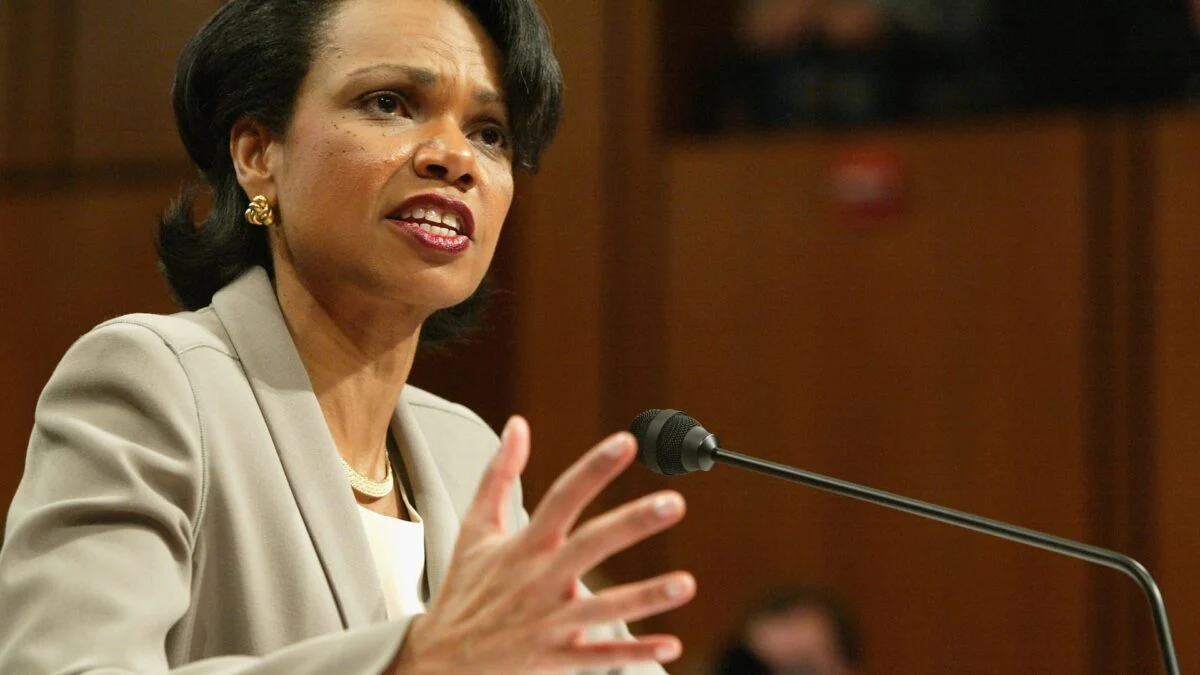
Dr. Benjamin Buchanan of Johns Hopkins told the committee he worries about a modern version of the 9/11 “failure of imagination.” I remember the way the original Commission criticized agencies for not connecting the dots; that critique echoes here. The report leans on the infamous Condoleezza Rice clip and the 9/11 Commission’s Chapter 8, THE SYSTEM WAS BLINKING RED, to suggest history is offering a warning.
There’s an almost cinematic moment in the old hearings: Richard Ben-Veniste asking Rice about the Aug. 6 PDB titled Bin Laden Determined To Attack Inside the United States. The committee points out something sharper than the clip itself: intelligence had names, tracks, and memos—agents in Arizona warned about flight schools used by al Qaeda—and yet the machine failed to follow through.
Is AI a national security threat?
Short answer: the committee treats it like one. But the threat isn’t a single, dramatic doomsday scene; it’s procedural and cumulative. AI may lower technical barriers for bad actors—automating research, speeding synthesis, refining targeting—and that compounds existing vulnerabilities across biosecurity, cyber, and information operations. The report argues the IC must both guard against misuse and adopt AI tools itself—an argument that reads like a tug-of-war between caution and urgency.
An on-the-ground observation: the report quotes the IC saying there is no single fix, and that language reveals both anxiety and indecision
Pick a sentence at random and you’ll feel the tension:
“While there is no single approach to address this threat, the Committee believes the [intelligence community] and policymakers more broadly must carefully consider how to prevent AI tools from being leveraged for use by rogue actors, including terrorists. At the same time, the Committee believes the IC must accelerate its own responsible adoption of advanced AI capabilities so that the United States stays ahead of its adversaries.”
That two-sentence grab shows the committee stuck between two instincts: fear of misuse and fear of falling behind. It’s like a warning light on a dashboard—bright, persistent, and impossible to ignore until someone decides what to do about it. The report asks for more investment, faster adoption, and better inter-agency connection, but offers few concrete, unambiguous policy blueprints.
What did the House Intelligence Committee say about AI specifically?
They said three big things: AI can enable more destructive attacks (including on biological fronts), our intelligence apparatus might repeat the old mistakes of missed connections, and the IC must adopt advanced AI to maintain advantage. The committee cites testimony from experts like Dr. Buchanan and historic lessons from the 9/11 Commission to frame the risk. It also names the usual players—CIA, FBI, NSA—while nudging Congress to fund or prioritize AI capabilities that mirror what firms like OpenAI or Google DeepMind are building, though without endorsing any commercial shortcut.
An observation from memory: the report borrows the moral weight of 9/11 to prod action today
The committee leans heavily on the comparison to 9/11 because it buys behavioral leverage; references to missed warnings and agent memos are meant to shame systems into change. I don’t think the report is trying to mimic prophecy so much as apply a historical corrective: if intelligence failed once because it couldn’t connect dots, we shouldn’t fail again because we couldn’t connect datasets.
The comparison is effective but incomplete. Past failures were organizational and human; future failures might be technical and algorithmic. One metaphor is unavoidable: the committee treats AI like a cracked magnifying glass—capable of revealing detail and of shattering when misused. That duality makes policy very hard: build faster to defend, but building faster can amplify the very risks you claim to prevent.
I’ve seen hearings and read testimony; I respect the alarm, and I also notice its limits. The report surfaces real trade-offs—invest in offensive-capabilities to deter, or slow AI adoption to reduce proliferation—but it leaves the balancing act to policymakers and budget writers. It leans on institutional authority while offering limited operational guidance.
So where does that leave you and me? We can read the report as a sober flag or as bureaucratic theater; both readings are defensible. I prefer to treat it as an invitation to ask sharper questions about procurement, inter-agency data sharing, and the private sector’s role—OpenAI, Google DeepMind, academia, and national labs will all be part of any practical answer.
The committee is spooked, yes, but its remedies are tentative: more study, more investment, more coordination. That’s a start. But given how history punished indecision once, shouldn’t we demand something clearer this time?