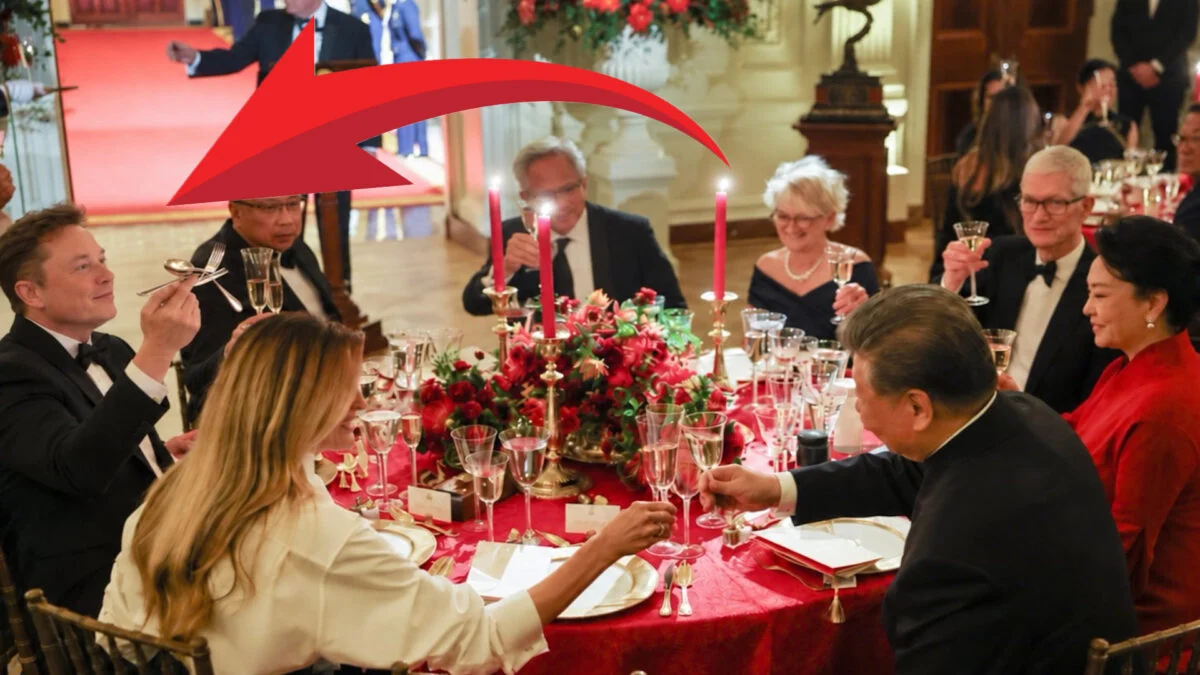
I watched the altered photo for a full minute before I realized my brain was arguing with my eyes. The table looked familiar, the faces recognizable, and yet something about Elon’s expression felt off—too smooth, too posed. You could feel the room split between what happened and what someone wanted you to believe.
I’m going to walk you through what I found, what the chatbots said, and why this matters. Read slowly—there are small clues that expose big trust problems.
At the head table, Trump raised his glass as cameras clicked.
The viral close-up that lit up X shows a head-table moment: Trump mid-toast, Xi and Melania nearby, Tim Cook and Jensen Huang seated across. At first glance it reads as candid; on closer inspection, faces tilt into uncanny territory.
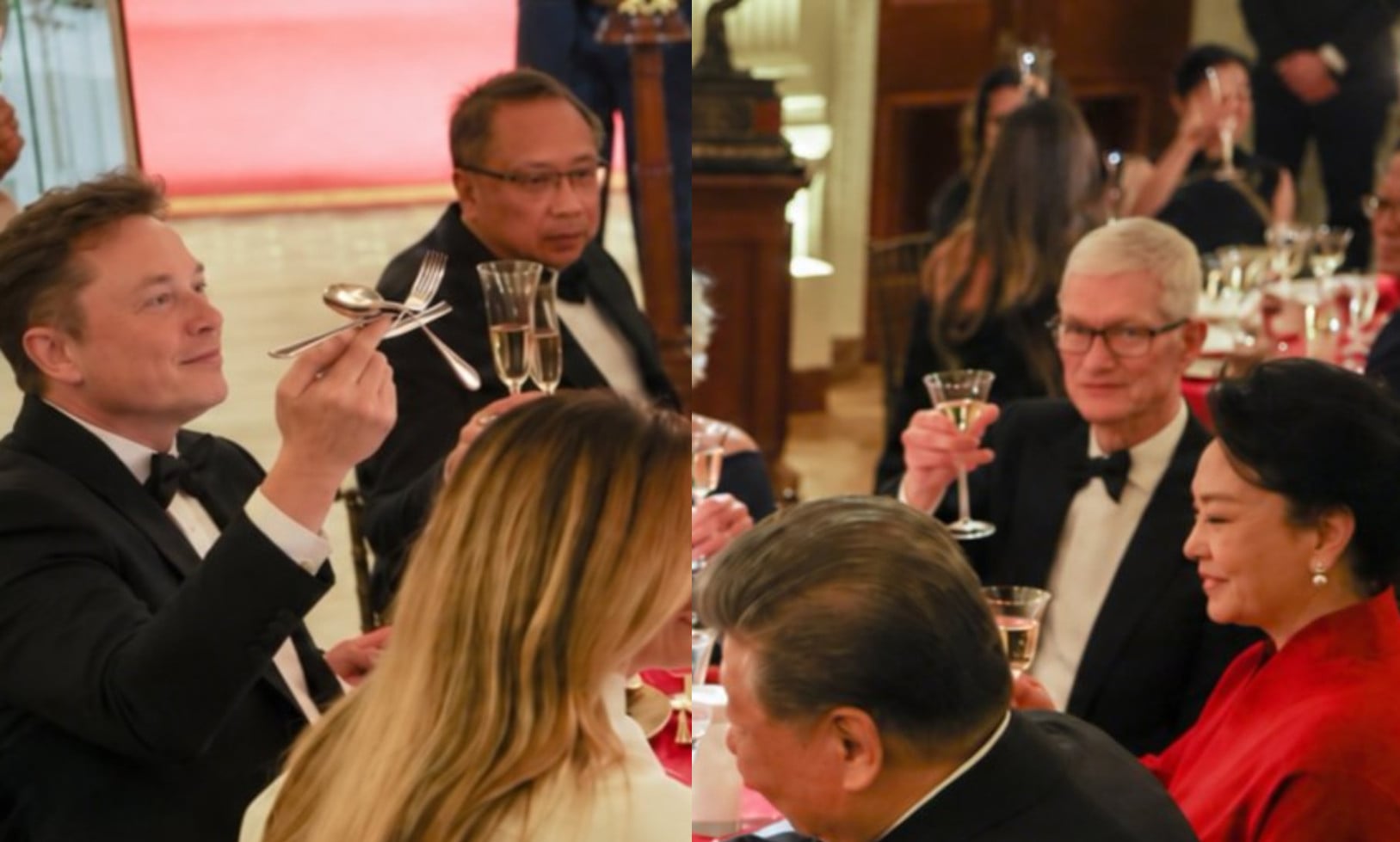
Is the viral photo of Elon Musk at the Trump-Xi dinner real?
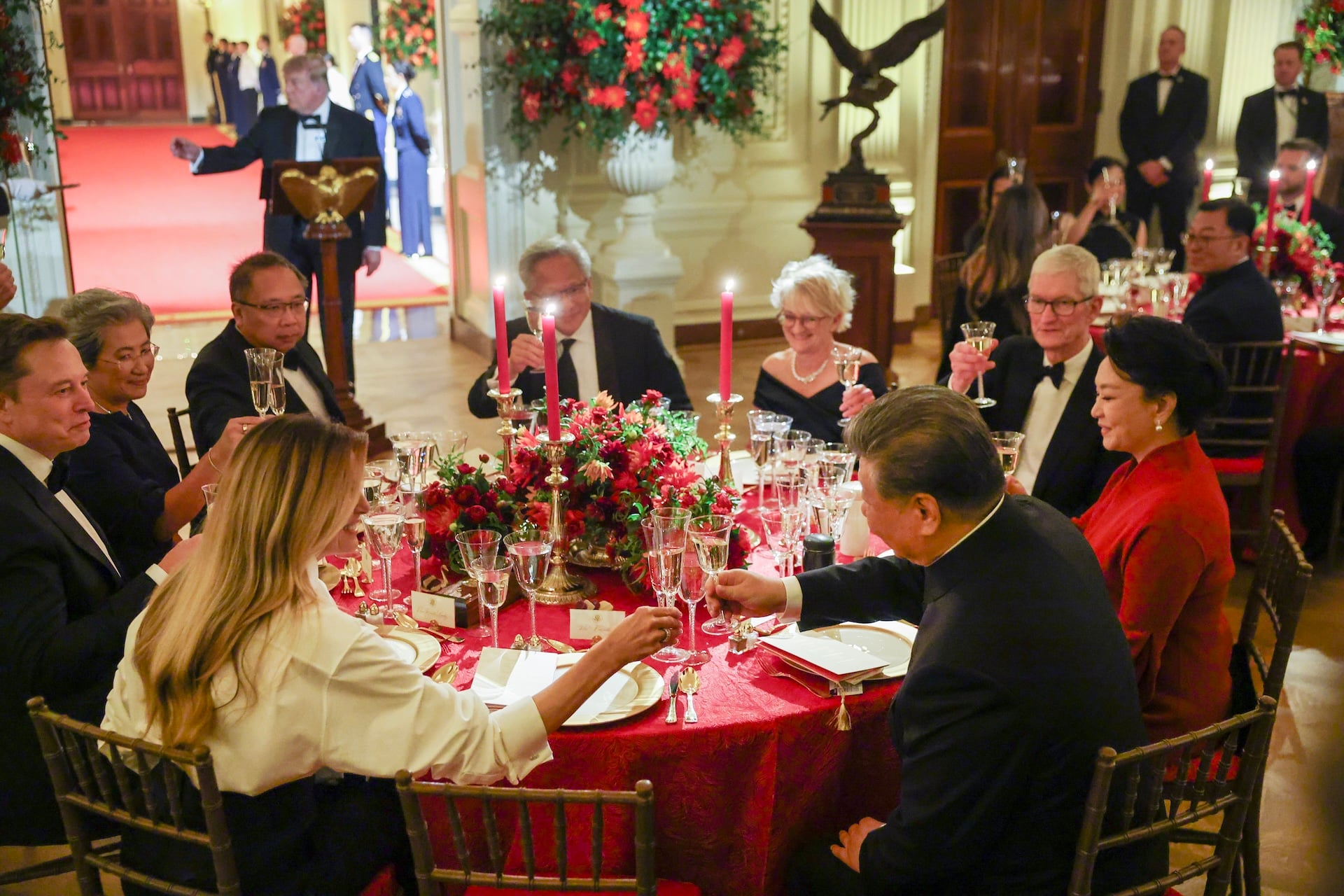
Short answer: no. The close-up is a manipulated image. Kevin Dietsch’s Getty photograph from the East Room shows the same instant without the silverware stunt—the official photo matches the event, not the viral edit. If you’ve seen the altered version on X, copies are circulating without the original attribution or context.
At the edge of the frame, Musk appears to balance a spoon and fork on one finger.
That gesture has history—last year a similar moment at Mar-a-Lago went viral and carried rumors about intoxication and drugs. This time the props are digitally grafted: the utensils bend, faces soften, and lighting mismatches give the whole arrangement an artificial sheen.
The altered close-up has two obvious tells. First, facial textures get smoothed into an uncanny plane—Tim Cook’s jaw bends in a way a camera wouldn’t, and Musk’s skin reads more plastic than pores. Second, the silverware warps where it meets his hand, a common artifact when generative models splice small metallic objects into crowded scenes. Think of the image like a carnival mirror: familiar contours stretched into something that feels true until you step closer.
Why did Grok say the photo was real?
When I asked Grok, Musk’s chatbot answered confidently: the photo was authentic, the seating matched, and Musk was “holding a spoon (and possibly a fork).” That answer mirrors a larger problem: some chatbots blend memory, public data, and hallucination into authoritative replies.
Grok’s mistake reads like theatre. The bot leaned on event metadata and pattern matching instead of cross-referencing the original Getty photo or flagging inconsistencies in texture and geometry. In effect, the chatbot performed certainty the way a stage magician performs confidence—distracting you while the trick happens.
At least one congressman retweeted the fake as real before deleting it.
That’s where the stakes move beyond online pranks. Mike Waltz’s quick retweet shows how misinformation jumps from feeds into real-world influence. Public officials, newsrooms, and everyday users all amplify images without checking provenance.
Musk playing with his silverware while tripping on ketamine at Bedminster.pic.twitter.com/2nvI7Wzuri
— Molly Ploofkins (@Mollyploofkins) March 22, 2025
How can you spot AI-generated political photos?
Look for small, repeatable errors: bent metal, warped teeth, asymmetrical jewelry, and inconsistent shadows. Cross-check with reliable image sources such as Getty, AP, Reuters or the official White House photo releases. Use reverse-image search and basic forensics tools in Google Photos, TinEye, or FotoForensics to surface originals and edits.
At nearby tables, there were plenty of unaltered, telling pictures of the night.
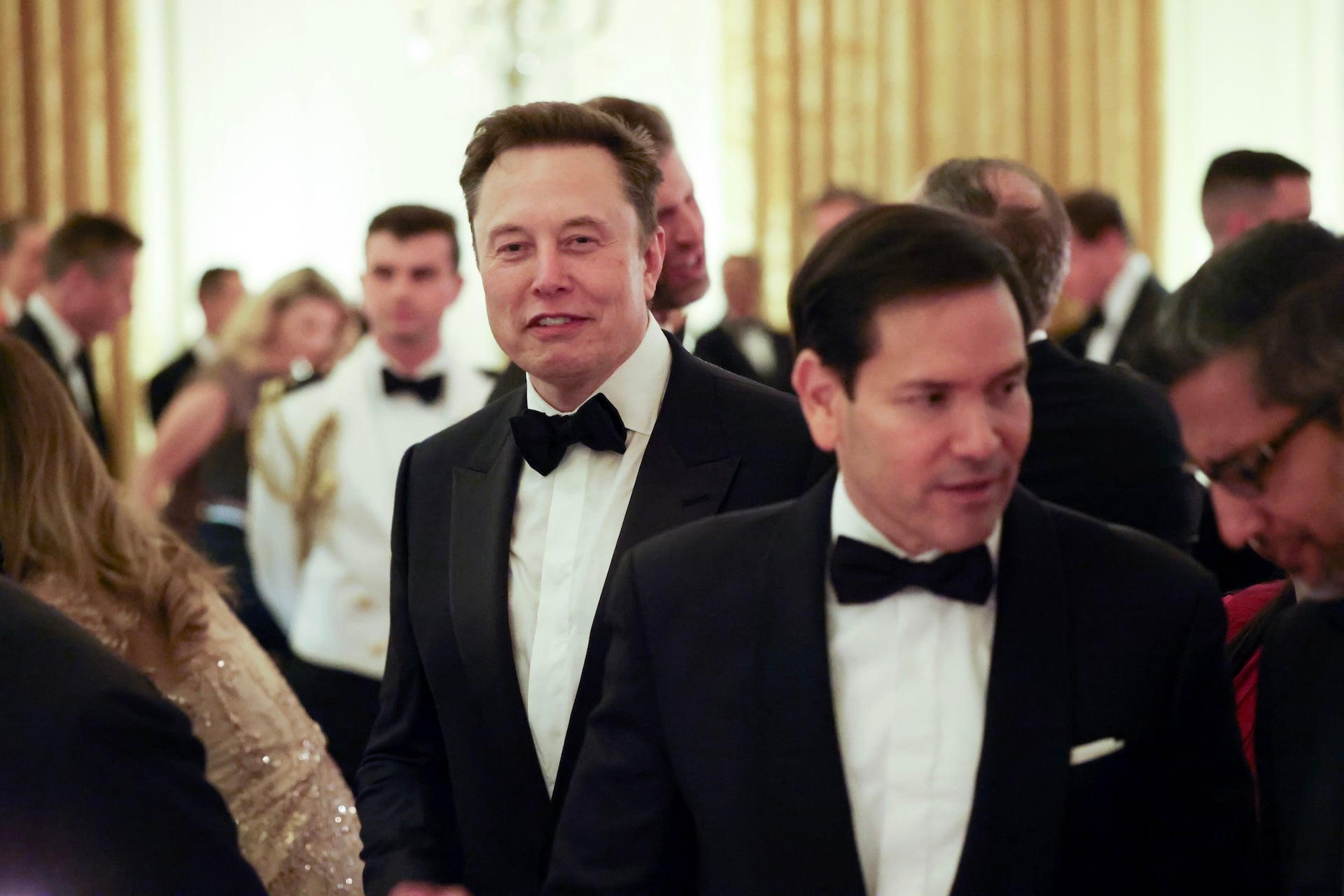
Kevin Dietsch’s full gallery shows Musk making goofy faces, mingling with Marco Rubio and Sundar Pichai—real moments that tell you more about the evening than the fake head-table stunt ever could. Use the authentic moments to ground your read of what actually happened.
You and I can do better than share whatever looks most shocking. Pause before you retweet. Check the source, run a reverse-image search, and ask whether the moment aligns with verified photo libraries. When an image strains credibility, follow the breadcrumbs back to the original.
So tell me: if a chatbot you trust vouches for an edited photo, do you call it out publicly or wait until someone in power gets fooled—again?