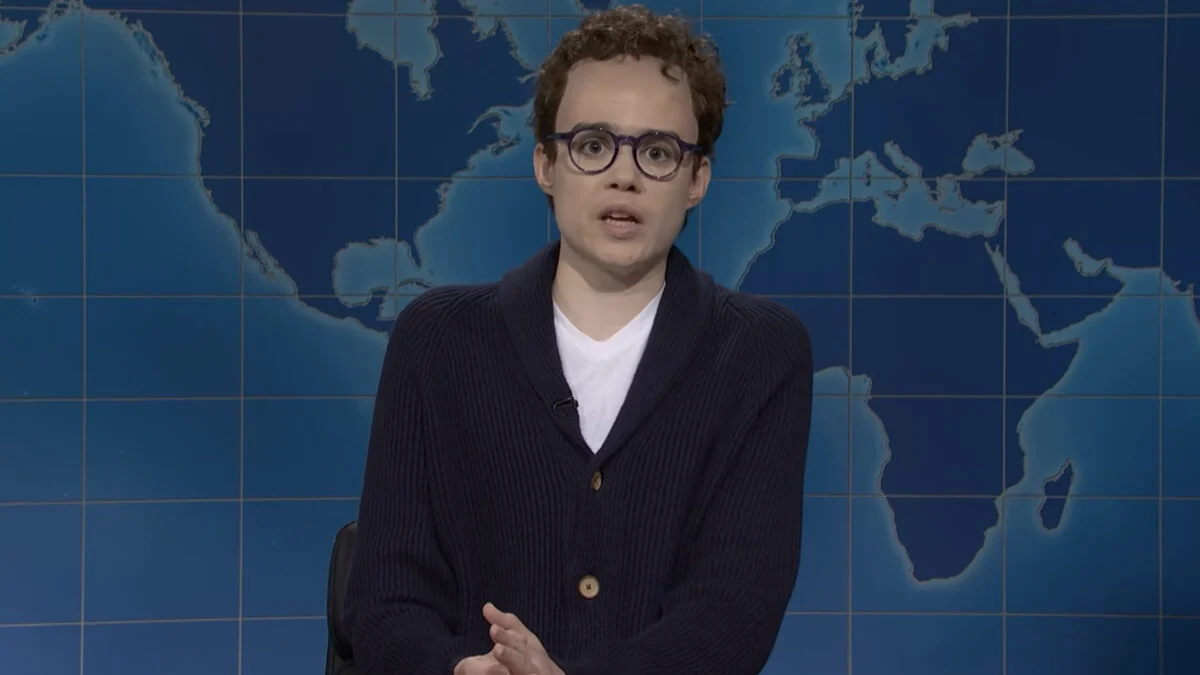
I was scrolling through the usual Sunday recaps when a six-minute sketch stopped me. The room went quieter, not because the joke landed, but because the sketch named a fear we all half-know. For one beat, the joke made a public conversation feel less alarmist and more human.
I’m asking you to watch the Saturday Night Live segment about Dario Amodei. I say that as someone who edits late-night recaps and who thinks most TV takes on AI miss the point. You don’t need to agree with me; you only need to see how a comedian and a CEO share a stage and what that stage says about the story we’re living through.
At the SNL stage last night, the Anthropic CEO became an onstage character
The sketch cast Jane Wickline as Dario Amodei and put Michael Che in the straight-man chair. Watching it, I felt a rare thing: a technical argument turned into a simple human scene. You get the talking points—existential risk, safety frameworks, policy alarms—but SNL turned them into behavior you can laugh at and then remember.
I won’t pretend the conceit was flawless. The Gollum-versus-Smeagol riff felt theatrical where a sharper satire might have landed harder. Still, when Che leans in and the bit lands—“AI is not a weapon. It’s a tool. A tool for building weapons, and I urge you to urge me to stop.”—that line opened a small, useful crack in the noise. For a brief moment, the segment was a pressure valve releasing.
Who is Dario Amodei?
He’s the cofounder and CEO of Anthropic, the startup often mentioned alongside OpenAI in conversations about advanced AI. If you follow the tech press, his name is in funding rounds, policy forums, and public rows about safety. Watching him—or a parody of him—on SNL is a sign that AI leadership has left blogs and entered mainstream culture.
At the center of the joke stood a public argument about fear versus competence
The sketch made a point you already sensed: people who design systems and people who fear them are speaking different languages. That gap usually looks like op-eds or hearing-room testimony. Here it looked like a sketch that let an audience laugh at the anxiety and then think about why the anxiety exists.
I don’t mean to reduce policy to punchlines. But comedy can act as a mirror held up to a theater of science, and for once the reflection nudged toward reason instead of panic. You learn faster when you can name the fear without being paralyzed by it.
What did SNL say about AI?
It didn’t offer a white paper. It dramatized the tension: doomsaying versus pragmatic stewardship. The show lampooned rhetorical extremes—grand pronouncements about apocalypse and hand-wringing resignations—while letting a straight man press for common-sense replies. If you want to understand how mainstream culture is interpreting AI alarms, this sketch is a short, vivid sample.
If you care about the public frame around Anthropic, OpenAI, policy debates, or how CEOs are portrayed, the clip matters. Watch it to see what language the public gets when technologists step onto a comedy stage—and then ask yourself whether satire or punditry is shaping the next policy moves?